

Version 1.0.0-alpha.1latest
Chapter 1.7
Domain packs and verticals
What a domain pack adds to Nexus for one industry, the ten packs Adverant offers, how a pack is switched on for one unit, and what a pack needs in your licence.
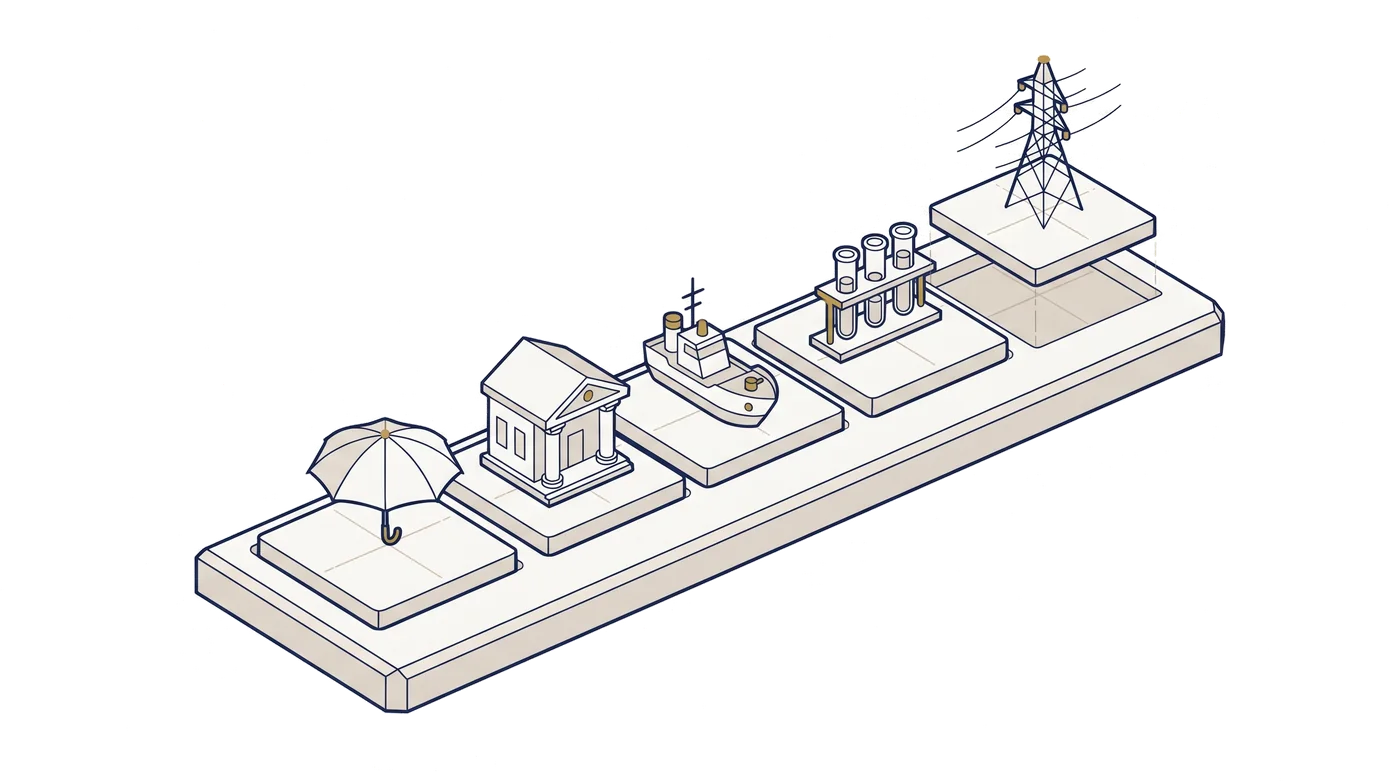
Sinéad Kavanagh runs claims at Larkfield & Vane. When she opens Nexus in the morning she sees the same menu and the same assistant as the finance team down the corridor. What's different is one extra group in her menu, a claims lens that puts the claims waiting on a decision at the top, and an assistant that knows what a reserve is and which policy wording applies. That extra layer is the Insurance pack.
A general chatbot doesn't know what a customs hold is. A domain pack teaches Nexus one industry's vocabulary and rules, and the shape of its work, without changing anything else about the product. This chapter explains what's inside a pack, walks through the ten packs Adverant offers, and shows how one gets switched on.
What a pack is
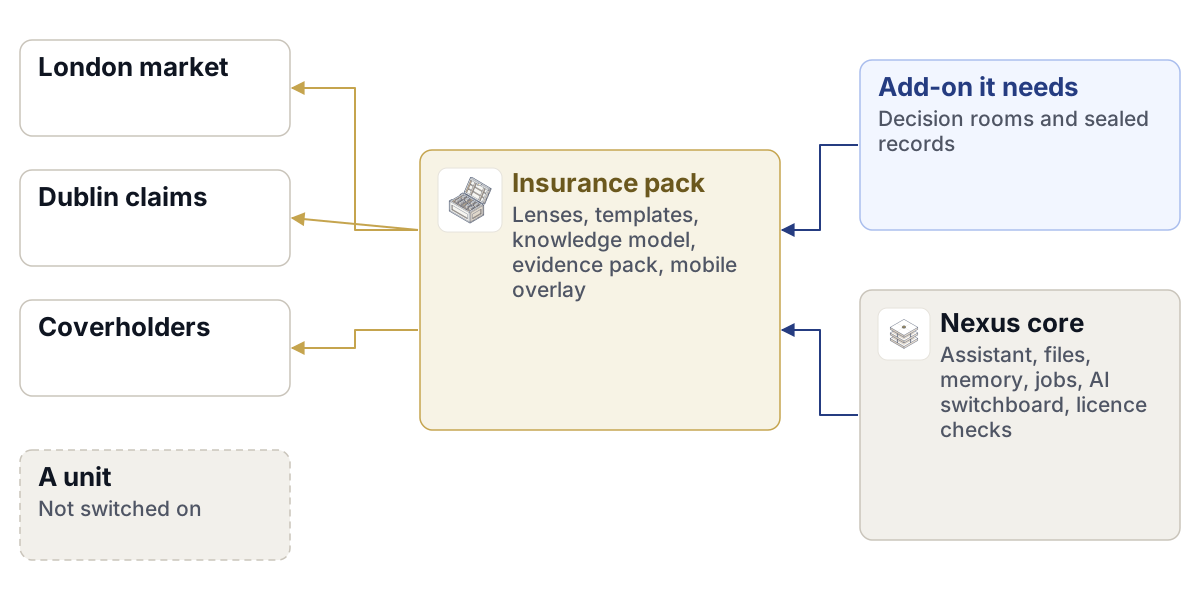
Think of Nexus as the building and a pack as the fit-out for one trade. Sign-in, permissions, files, chat and the artificial intelligence (AI) switchboard stay exactly as they are. The pack brings five things on top.
| What the pack brings | What it is |
|---|---|
| Lenses for each role | A lens is what one role sees. A claims handler and an auditor can look at the same claim, and each sees the part their job needs. |
| Templates | Agents, workflows, skills and seat layouts for the industry's routine work, such as claims triage or a credit paper draft. Each is switched on or off per unit, and switching one off keeps its past runs. |
| A knowledge model and its connectors | The things the industry deals in and how they link, plus its vocabulary. Connectors read your existing systems and never write to them. |
| An evidence pack | The rules the industry answers to, each split into what it asks for and matched to the records Nexus keeps. Gaps are written in words, each with an owner. |
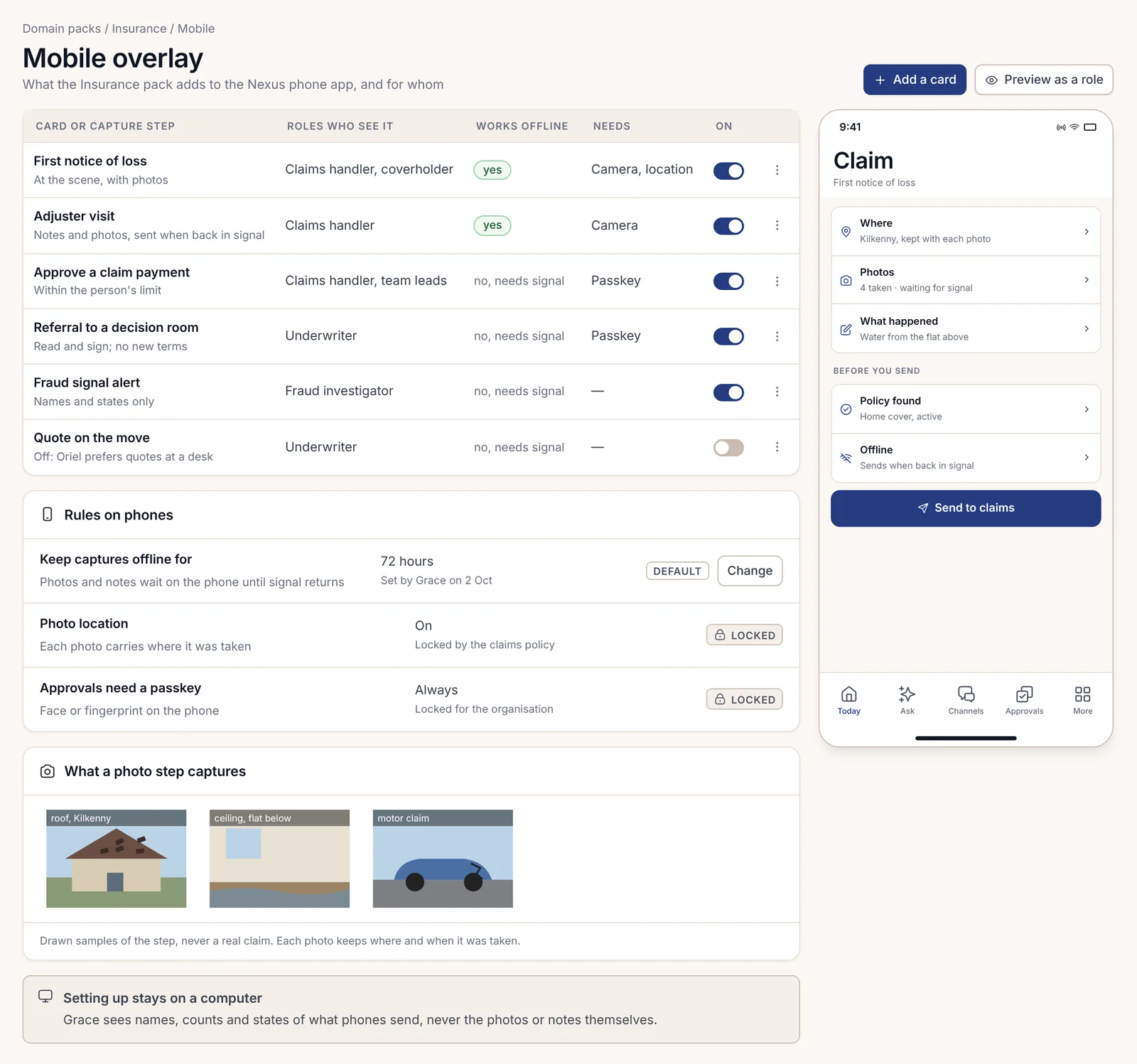
| A mobile overlay | The cards and capture steps the pack adds to the phone app, chosen per role. |
A pack never changes the shell. It adds its own menu group and its own words, and it uses the components and writing rules every other part of Nexus uses. It also can't widen what anyone sees. A lens only narrows what the person's role already allows, and permissions still come from roles and policies.
The ten packs
Every pack is built from the same parts. The sample customers in the screens are illustrative, and your own administrators decide which lenses and templates you use.
Insurance. Claims from the first call to a sealed decision, with underwriting, reinsurance, delegated authority and the Lloyd's market alongside. The assistant cites each fact to its page and raises fraud signals with their reasons. No claim is refused by a model: a named person decides, and the decision is sealed with its evidence. The worked example below goes through this pack in detail.
Banking and payments. It keeps the register of outsourced technology the rules ask for, with incident clocks and exit plans for critical providers, and then covers lending and card disputes. At Larchmont Bank, Omar Haddad's credit lens shows which applications wait and which rule held each one. The model drafts the credit paper. It never approves or declines one, because the pack locks that rule for the AI Act.
Capital markets and asset management. Calls on trading desks are recorded and kept for five years under the EU investment-services rules (MiFID II). Research stays behind a wall until it's released, and a wall-crossing log records who was brought over. Phones get the morning research briefing and release approvals. Orders never reach a phone; they stay in the order system.
Government and public sector. Benefit claims and planning applications, plus information requests. A caseworker records a home visit on a phone with no signal, and the decision is left for the office. Each decision carries a plain-language reason the citizen can challenge. Data stays in the national cloud, and a connector that would send it elsewhere is refused before it runs.
Healthcare. Access to patient records and sharing them with other providers. Every time a person or an agent opens a record, the purpose is checked against what they may do and then logged. The clinician summaries lens writes handovers with each line cited. It never suggests a diagnosis or a treatment, and a template that would is greyed with the reason.
Life sciences. Deviations and corrective actions, batch record review and validated change control. The drug safety lens takes in adverse-event reports and runs the reporting clock, and a person confirms each case. Each signature states what it means. Study documents are never edited on a phone, since editing stays validated on the desktop.
Critical infrastructure and energy. Incident clocks, inspections and work orders for grid and network operators. The Network and Information Security Directive 2 (NIS2) wants an early warning within 24 hours and a notification within 72, then a final report within a month. The incident manager lens carries all three clocks, locked by the pack. Switching instructions never go to a phone.
Defence and security. Field reports sit beside alerts from Nexus Edge devices, each item marked with who it may be shared with. The pack runs with no outside connection on accredited hardware. Its mission planner lens drafts plans, but a model never commits an action. A person signs every plan, and nobody can change that rule on the installation.
Legal and professional services. Every new matter gets a conflict check against parties and contacts. When a conflict is cleared, an ethical wall goes up, and it binds the assistant as well as people. Lifting a wall takes two partners. Lawyers capture time on their phones, but privileged files never reach one.
Logistics and maritime. The knowledge model knows ports and vessels, carriers and customs holds. Every new carrier is checked against sanctions lists before its first booking, and a person releases every hold. Port inspectors record yard and berth inspections on their phones, and releasing a hold there needs a passkey.
Worked example: Insurance at Larkfield & Vane
Larkfield & Vane runs the Insurance pack on Enterprise, with the Decision rooms and sealed records add-on the pack needs. Here's what its administrators set up, and what Sinéad and Priya Natarajan, the compliance officer, get from it.
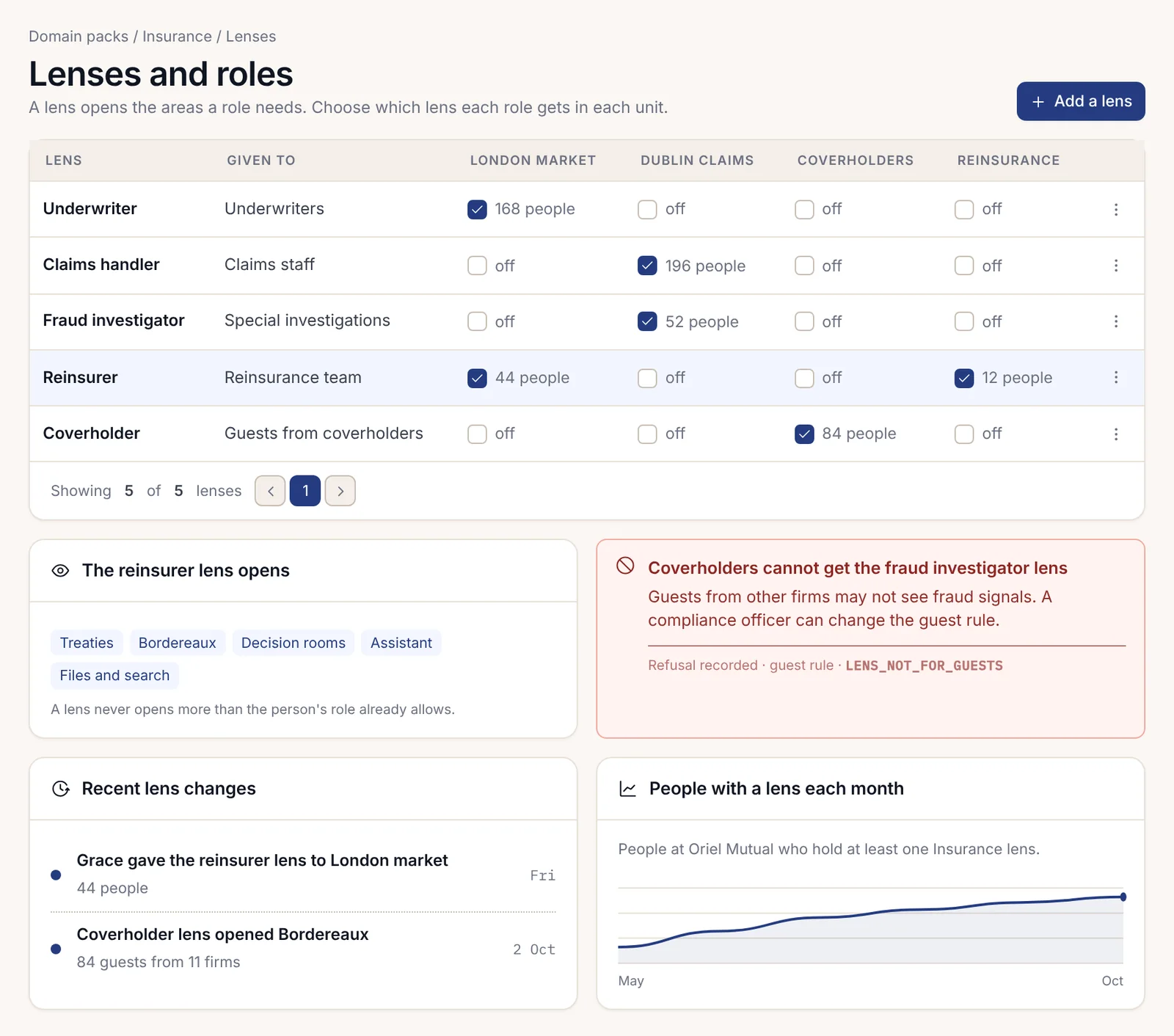
The lenses are set in one matrix of role by unit. Underwriters in the London market unit get the underwriter lens; claims staff in Dublin get the claims handler lens. Guests from coverholder firms get a coverholder lens, and that one matters. Coverholders see the bordereaux they send and claims on their own business, but never a fraud signal. If an administrator tried to give guests more than their role allows, Nexus would refuse the change with the reason.
The templates arrive with the pack. Claims triage and a bordereaux check are on in Sinéad's unit. A template that needs an add-on Larkfield & Vane doesn't hold is greyed with that reason, never hidden.
The knowledge model knows policies, claims and treaties, and its vocabulary includes Larkfield & Vane's own terms. Connectors read the policy system nightly and the claims system every 15 minutes. Nothing in either system is changed from Nexus, and each connector has a test you can run from the page.
The evidence pack is where Priya spends her time. It lists what Solvency II and the Insurance Distribution Directive ask for, with the Digital Operational Resilience Act (DORA) and the AI Act beside them, and against each item the records that answer it. A gap reads "two coverholder contracts not loaded" and has an owner. When the supervisor asks, she exports the covered items. Each claim decision adds sealed records as it goes, so the evidence exists before anyone asks.
The mobile overlay decides what the pack adds to phones. A claims handler at a storm-damaged house takes photographs and notes, which wait on the phone for up to 72 hours until there's signal. A repair estimate goes back as a suggestion the office decides. Signing off a claim can't be done out there at all. Chapter 1.10, Away from the desk, explains why.
Switching a pack on for one unit
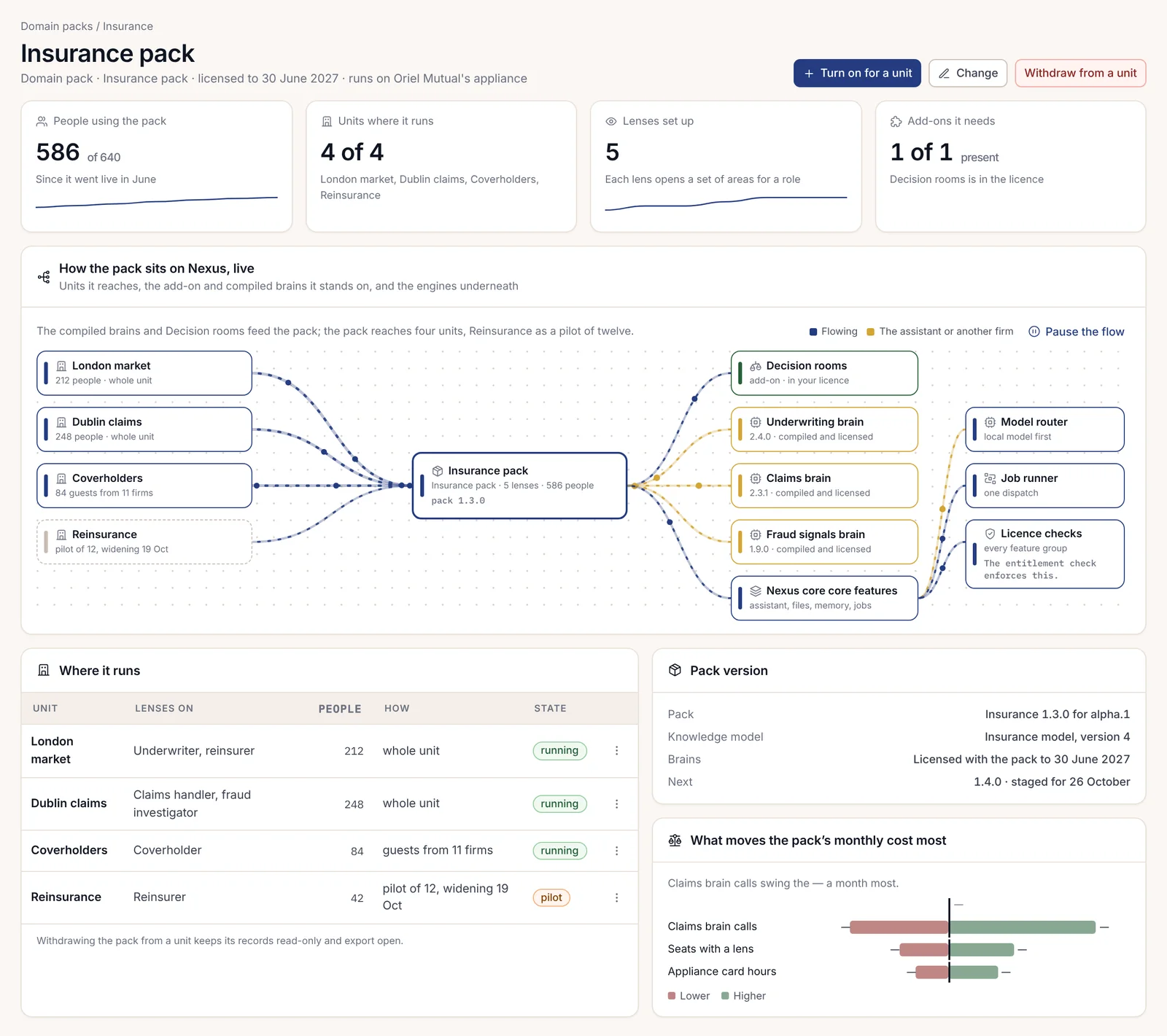
Adverant grants a pack in your licence. Where it runs is your decision, made unit by unit. Larkfield & Vane's reinsurance team started as a pilot of twelve people, and that's the pattern to copy.
The switch happens in stages, on the page for that unit:
- The licence check confirms the pack and the add-ons it depends on are in your licence.
- You choose a pilot group, for example one team of about a hundred people.
- You pick a settings preset for the unit. You can change it later.
- You preview who is affected: which roles gain which lens and templates, and how many people each.
- You set a date to widen to the whole unit, and choose whether people get a note on their Today page.
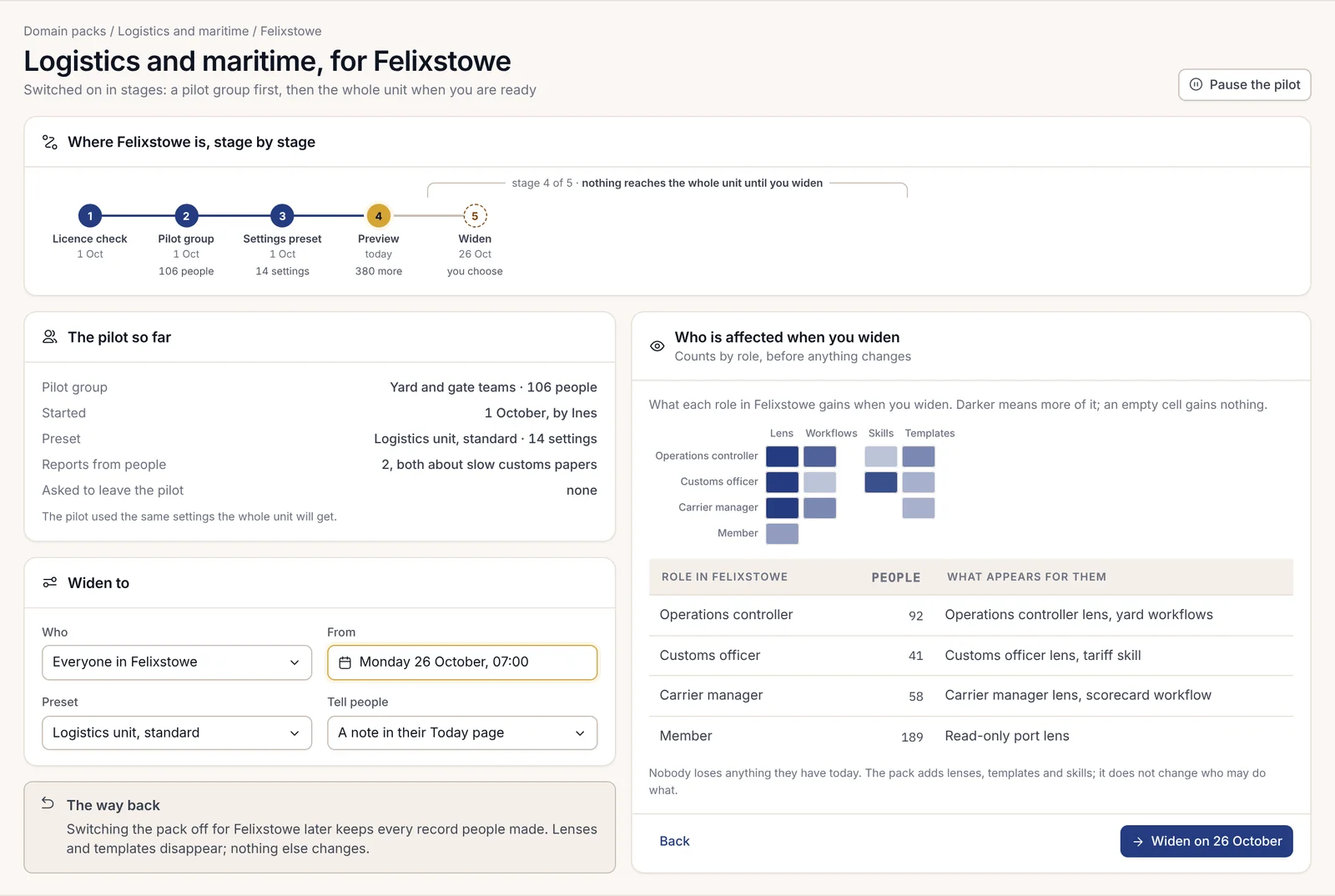
Nobody loses anything they already have when a pack arrives. The way back is written on the same page. Switching the pack off for a unit keeps every record people made: lenses and templates disappear, the records turn read-only, and export stays open.
What a pack needs
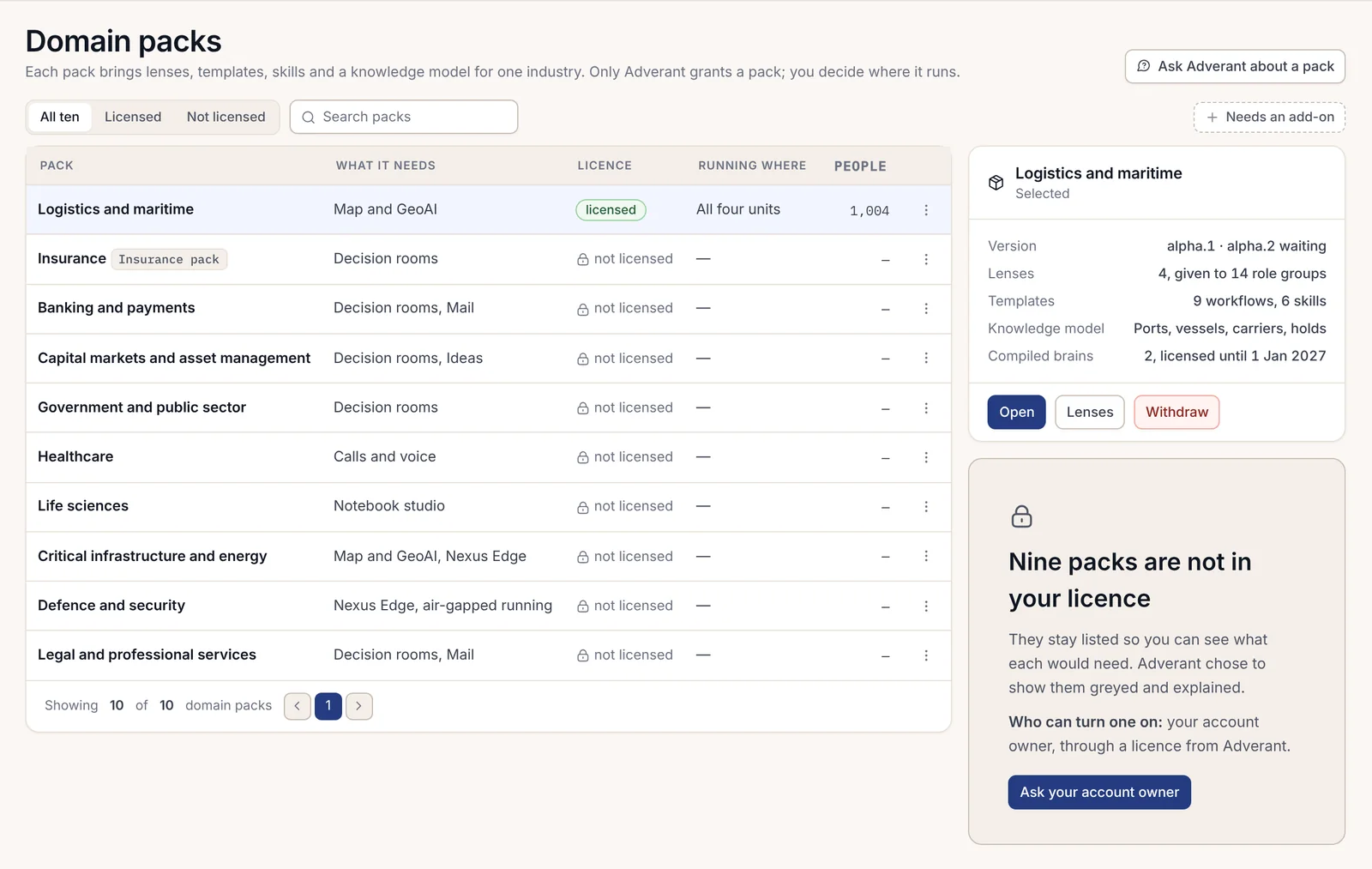
Every pack needs Enterprise. Some need particular add-ons as well, and the licence carries those dependencies.
| Pack | Also needs |
|---|---|
| Insurance | Decision rooms and sealed records |
| Capital markets and asset management | Decision rooms and sealed records |
| Legal and professional services | Decision rooms and sealed records, and Mail |
| Logistics and maritime | Map and GeoAI |
| Defence and security | Nexus Edge, for alerts from devices in the field |
| Any pack's phone screens | Mobile apps |
Adverant won't issue a pack without the add-ons it depends on, which means a pack never arrives half working. Many customers add more than the table lists. A bank often wants Mail, for instance, but that's a choice. Adverant quotes the price of each pack and add-on.
The packs you don't hold stay listed on the Domain packs page, greyed, with what each would need and who can turn it on: your account owner, through a licence from Adverant. Opening one loads nothing and sends nothing anywhere.
Building your own vertical
If your industry isn't on the list, a pack is built from the same parts as these ten. You describe the work, model the domain starting from the nearest existing pack, add lenses and rules, then test on sample data and release it unit by unit. Adverant can build it with your experts, or your own developers can use the developer kit, and a pack you build stays yours. Chapter 1.11, Making it yours, explains how to brief that work. Chapter 2.24, Building a custom vertical end to end, is the technical walk-through.