

Anything in. Opened safely, read properly.
Documents, scans, spreadsheets, video, maps, code and archives all come in the same way. Each file is opened in its own isolated machine, checked for danger, read by the reader that suits it, and written into the knowledge graph with its source attached.
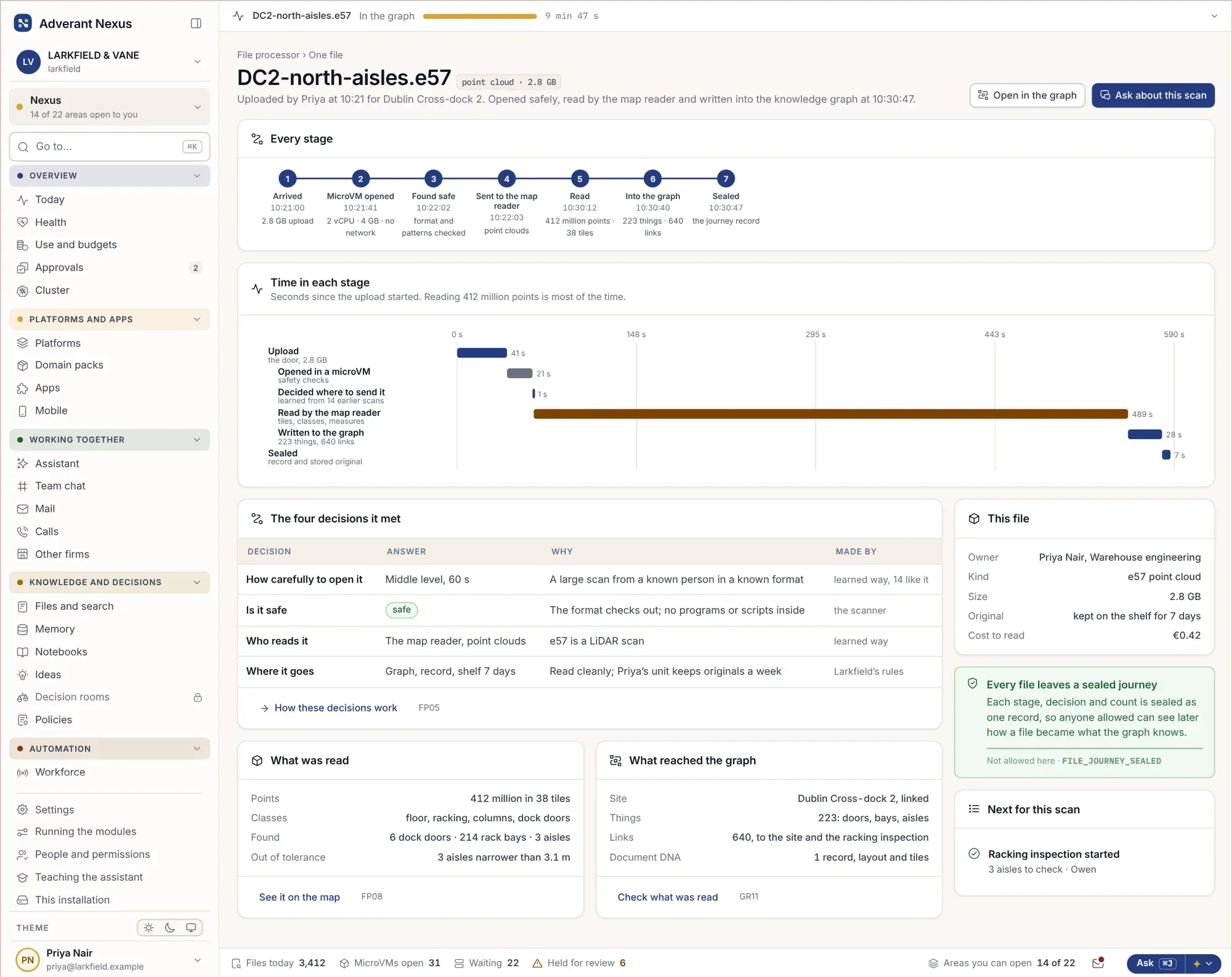
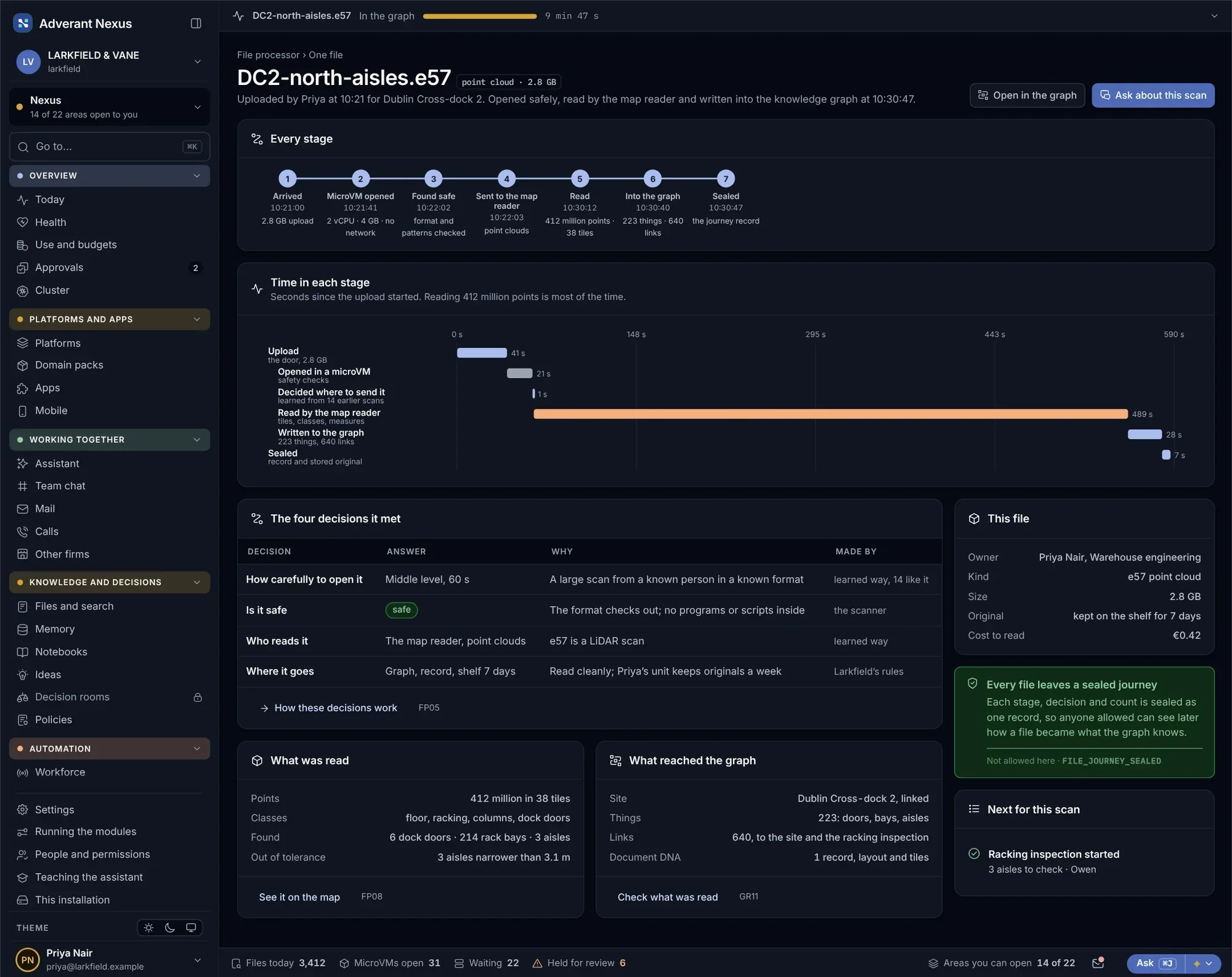
Every file gets its own sealed machine.
Before anything reads a file, it is opened in a throwaway machine that cannot reach your network. Suspicious files are held for a person to review, and the sender is told why a file was refused.
Inside the isolated machine
- One machine per file, thrown away after
- No network unless a rule allows it
- Everything that ran is recorded
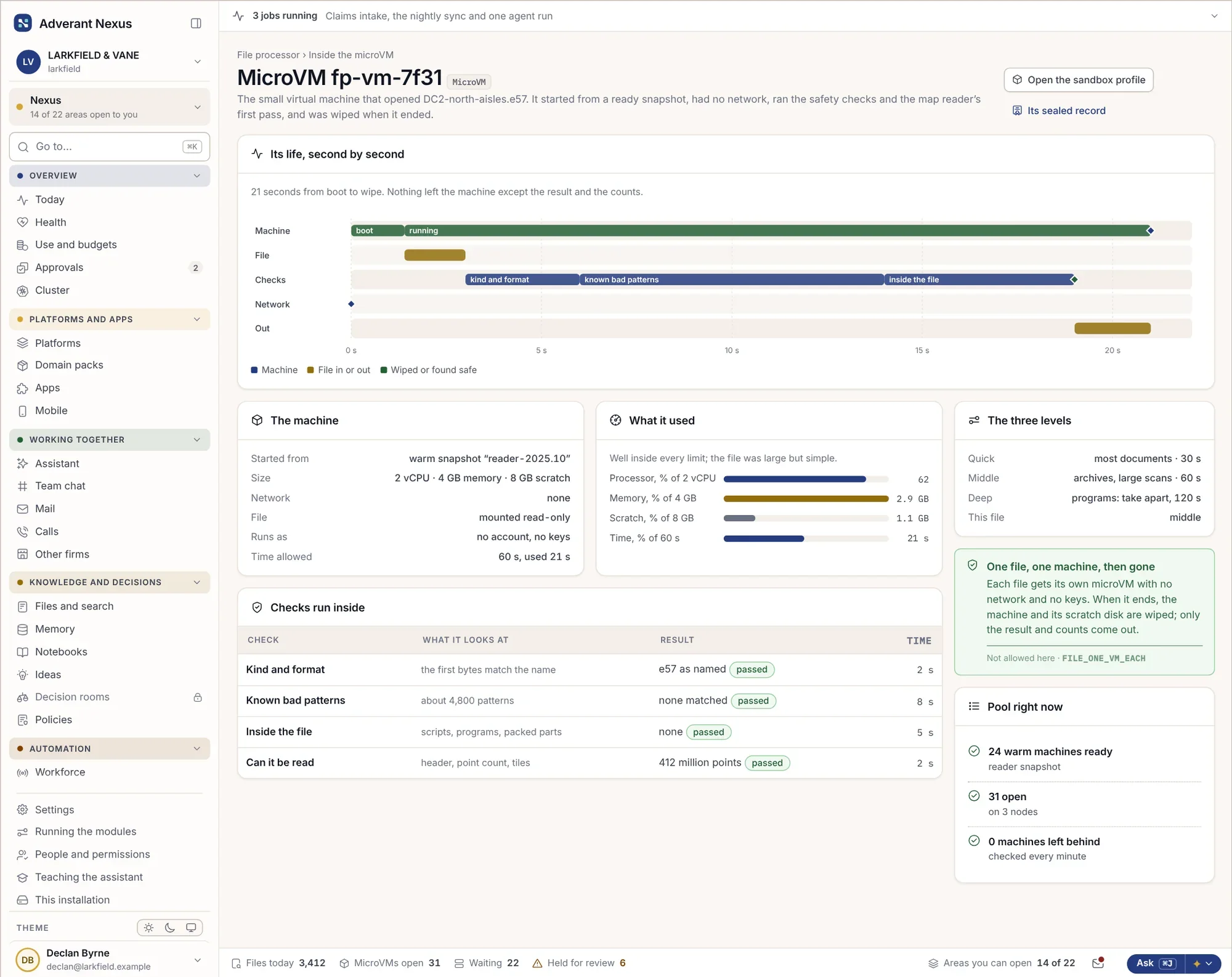
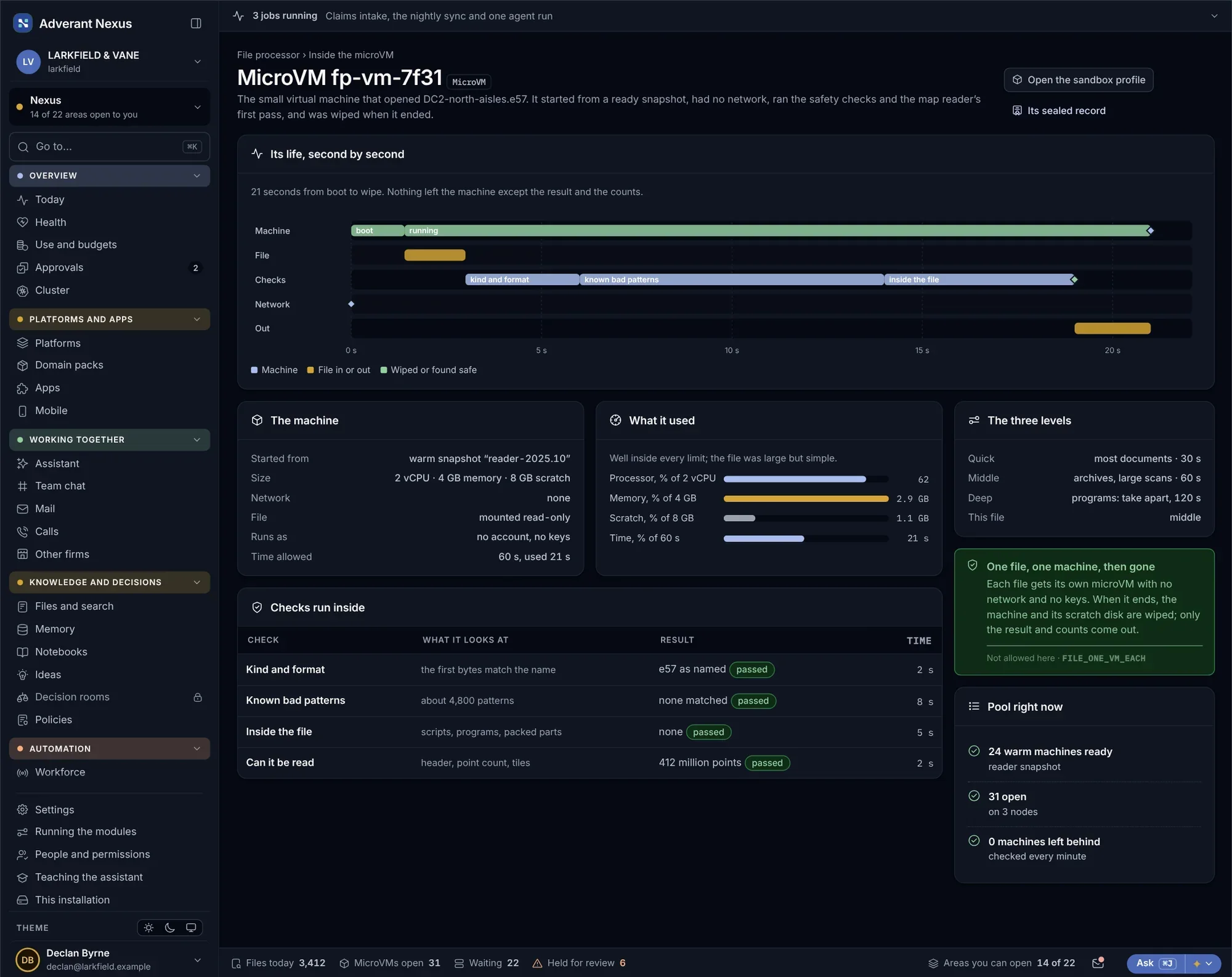
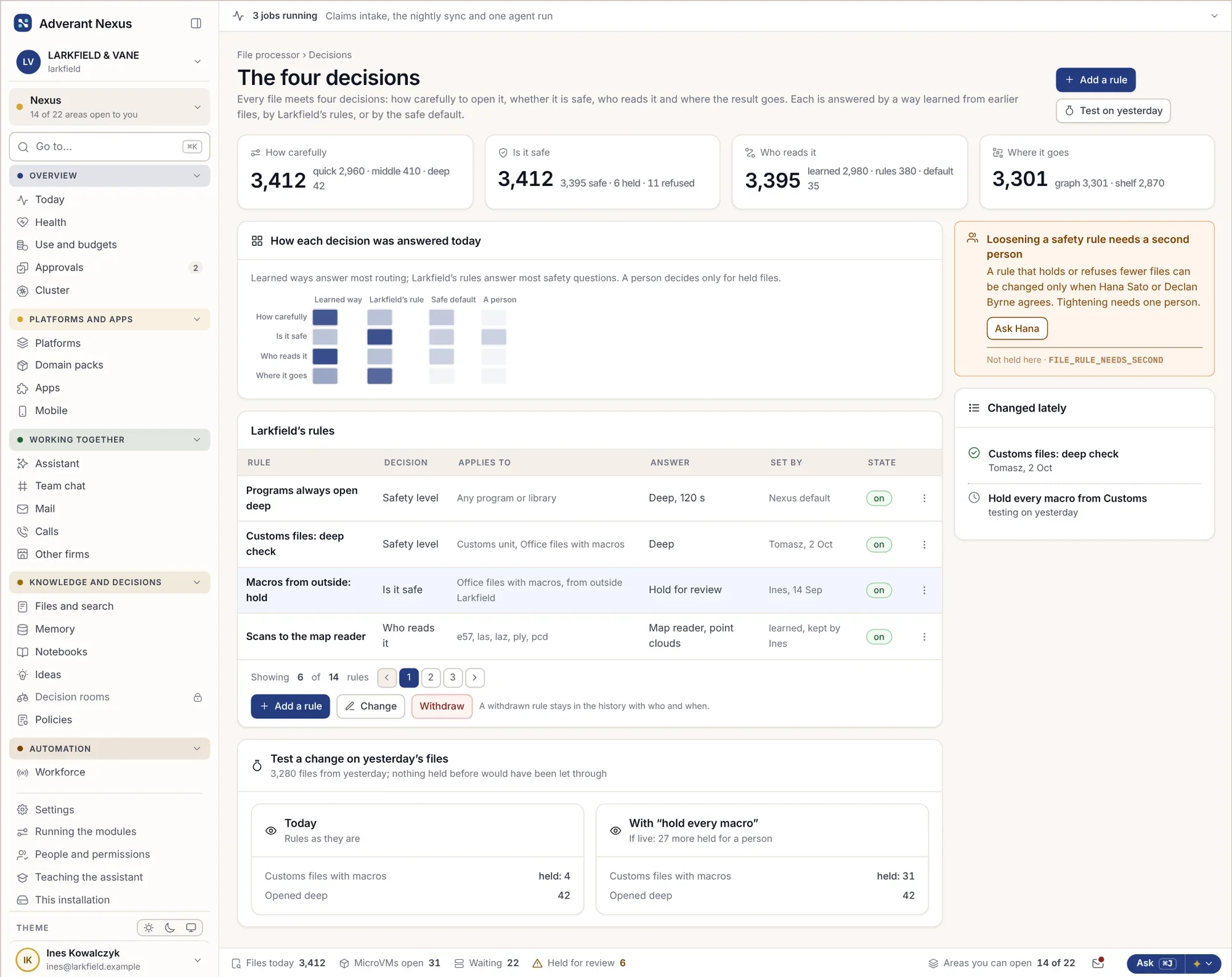
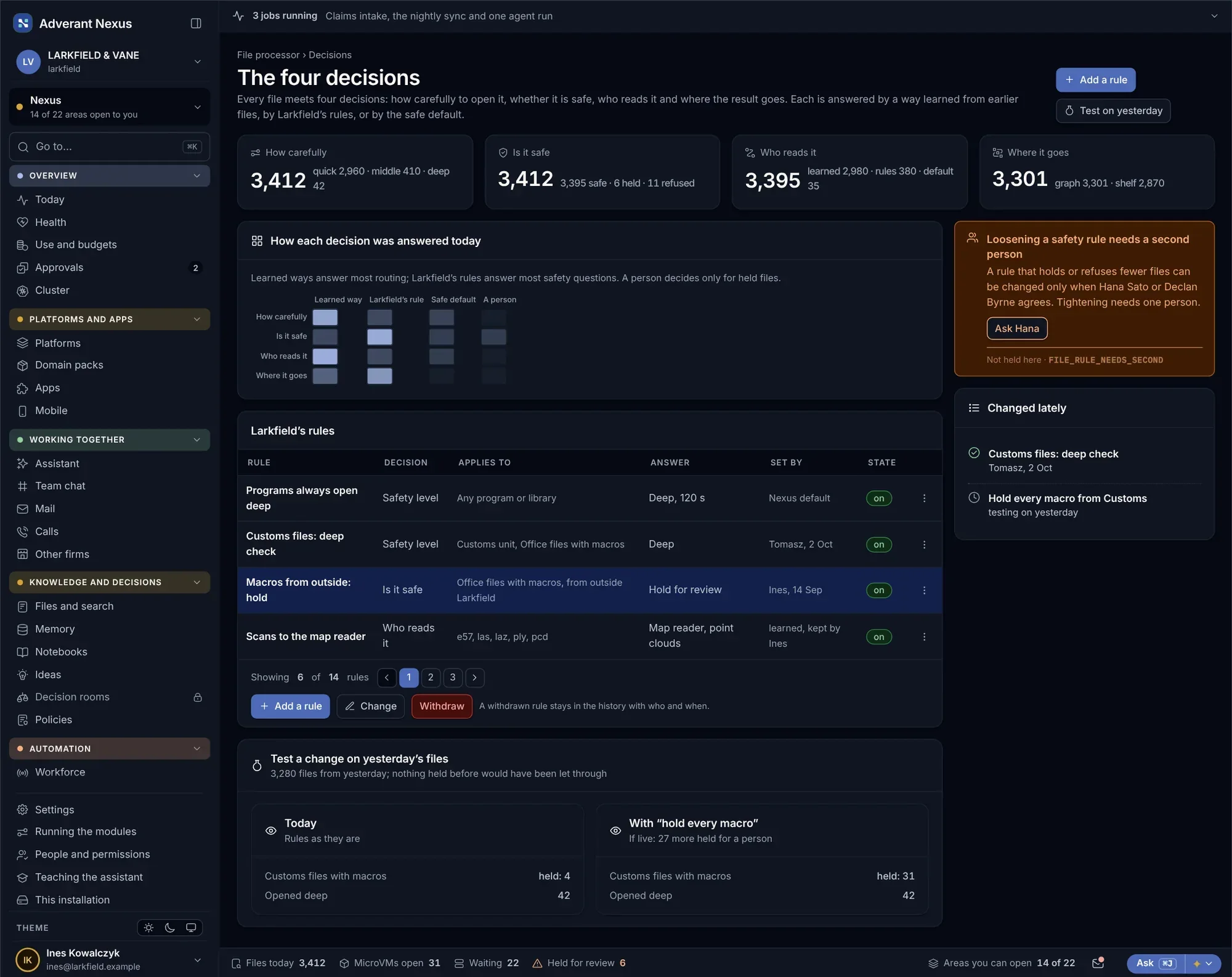
Four decisions per file
- Your own rules for each decision
- Held for review when unsure
- Refusals explained to the sender
The right reader for every kind of file.
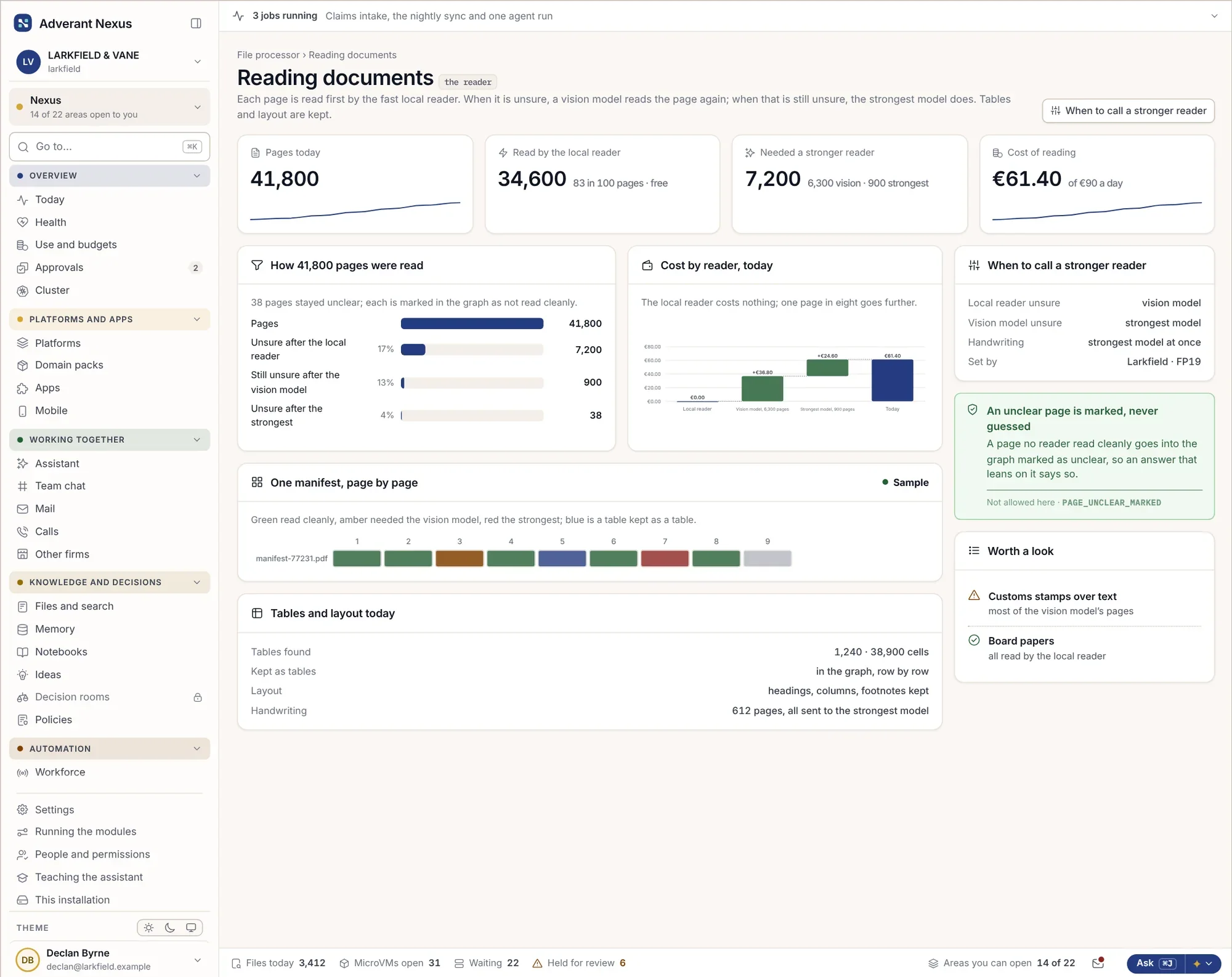
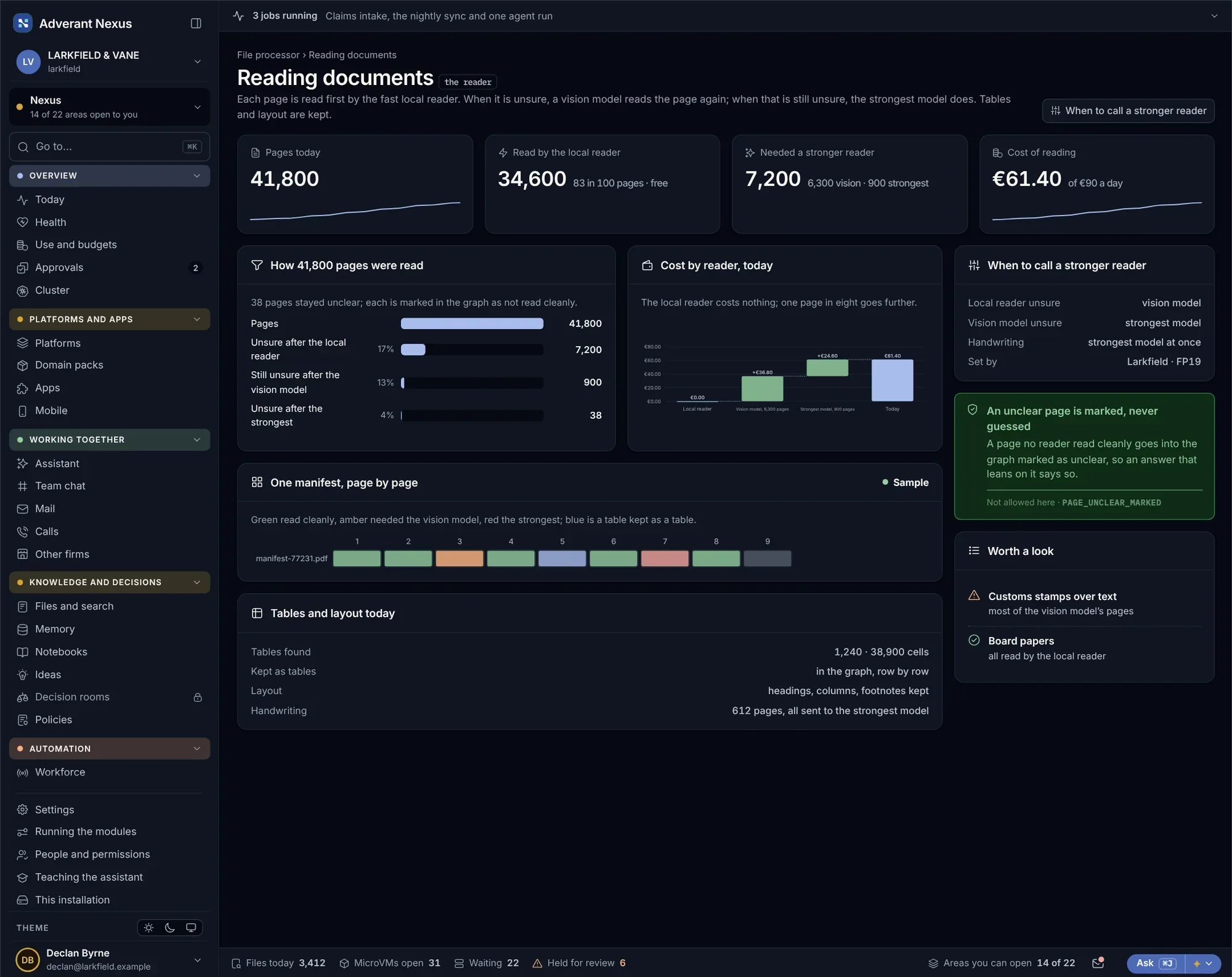
Documents, scans, maps and point clouds, code repositories, video, images and audio each go to a reader built for them. When a page is hard to read, a stronger reader is called and the cost is shown.
Reading documents
- Tables and layout kept
- Stronger reader only when needed
- Cost shown per file
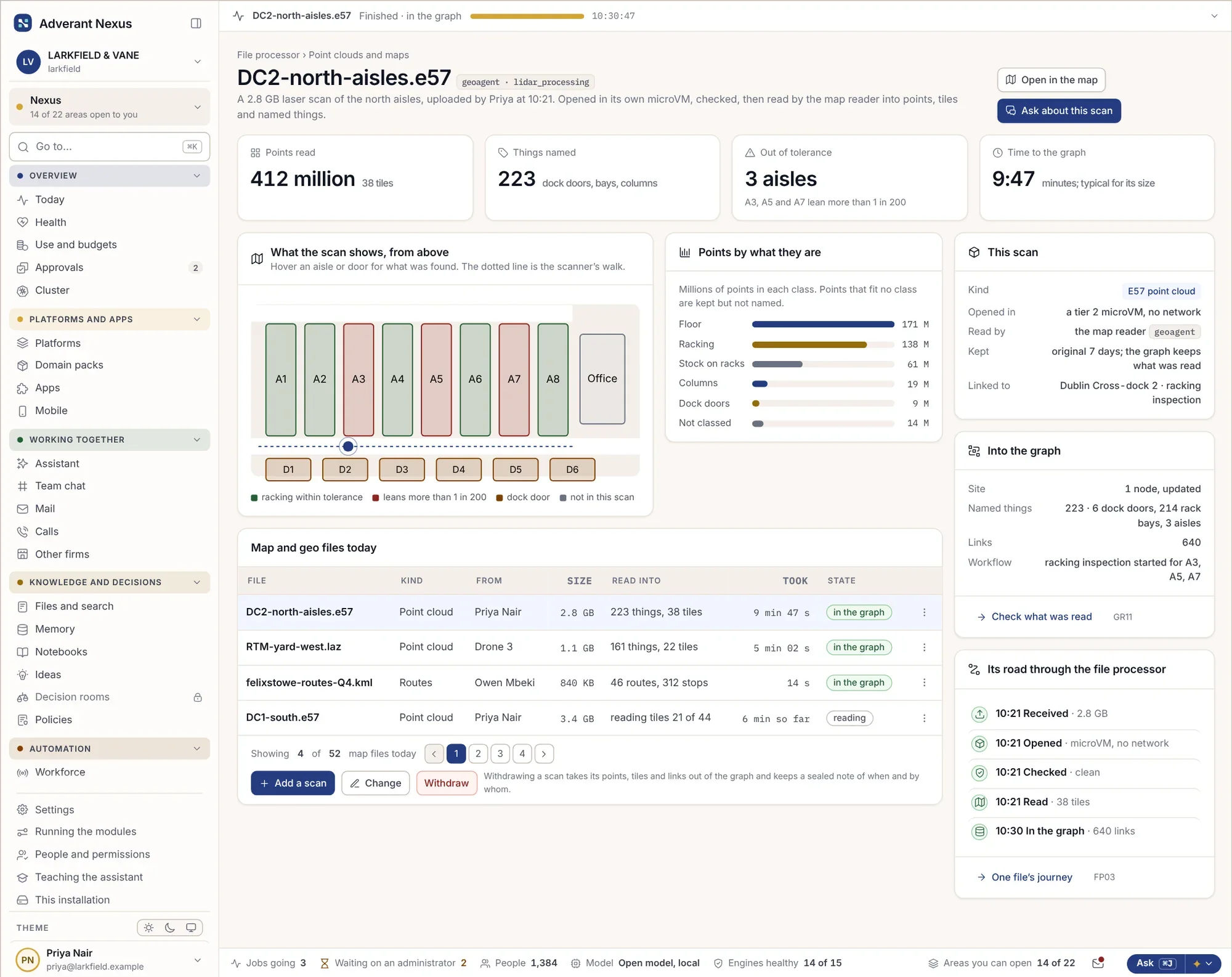
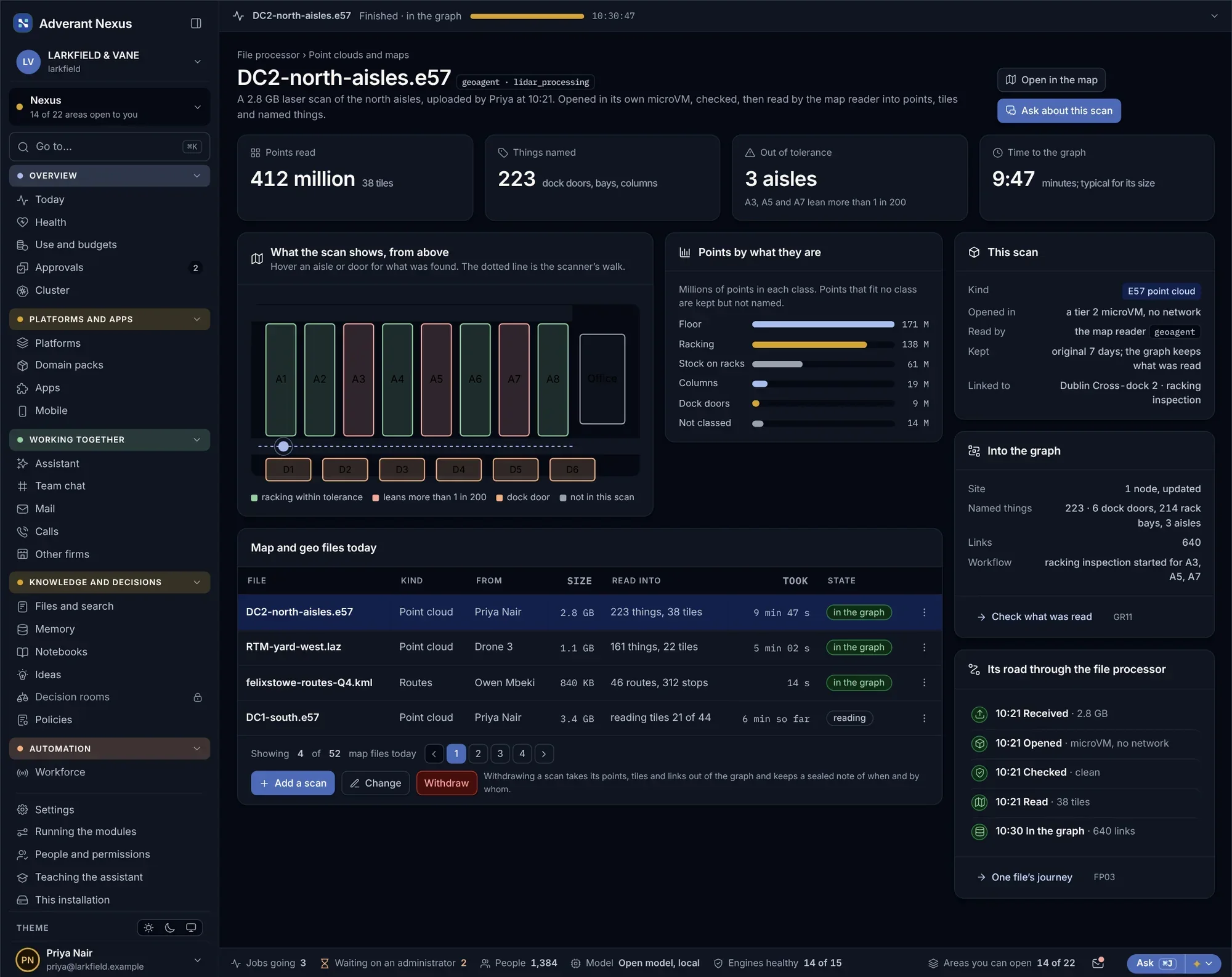
Point clouds and maps
Laser scans and map files read into places and objects the graph can use.
- Laser scans and map files
- Objects placed on the map
- Linked to the things they show
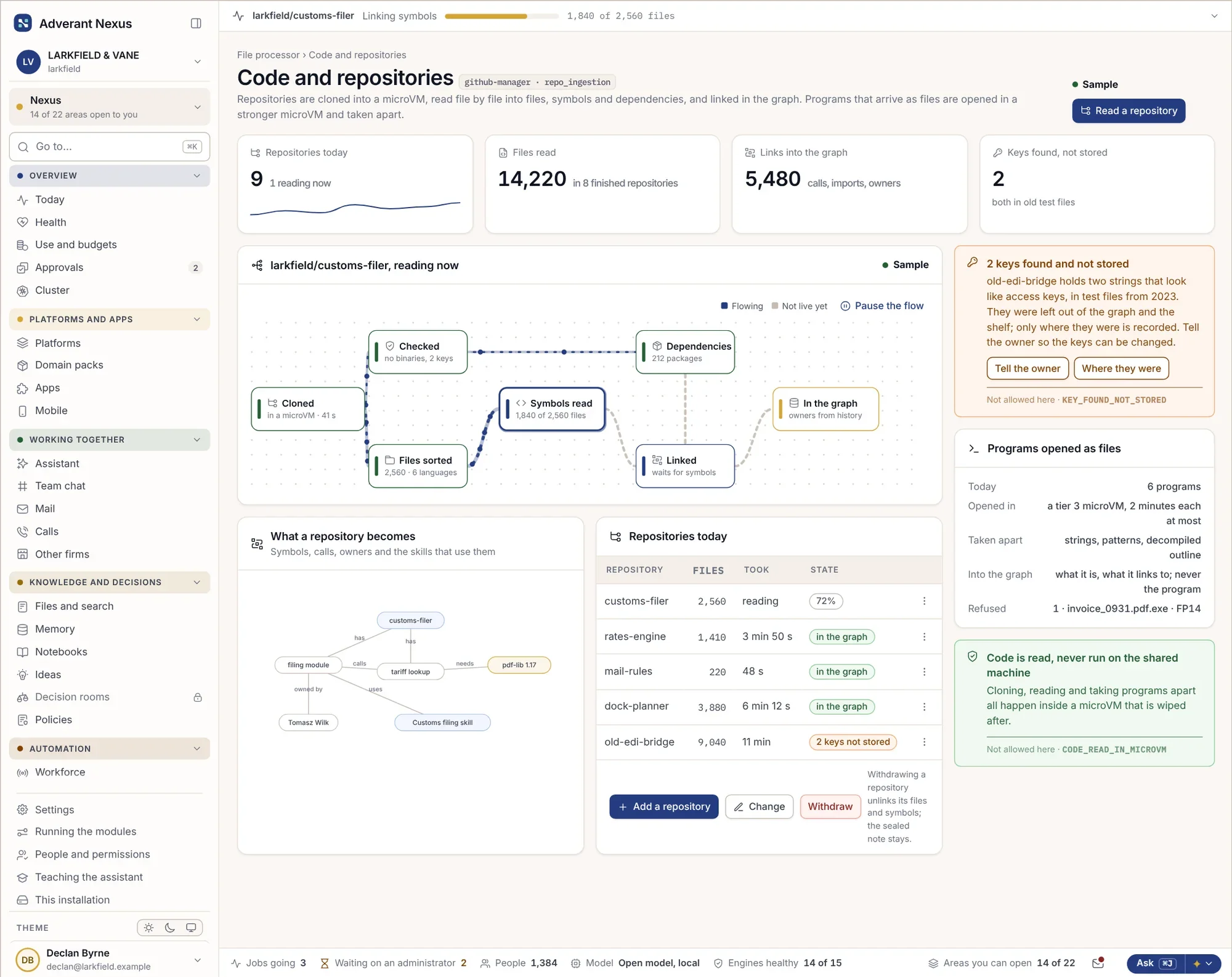
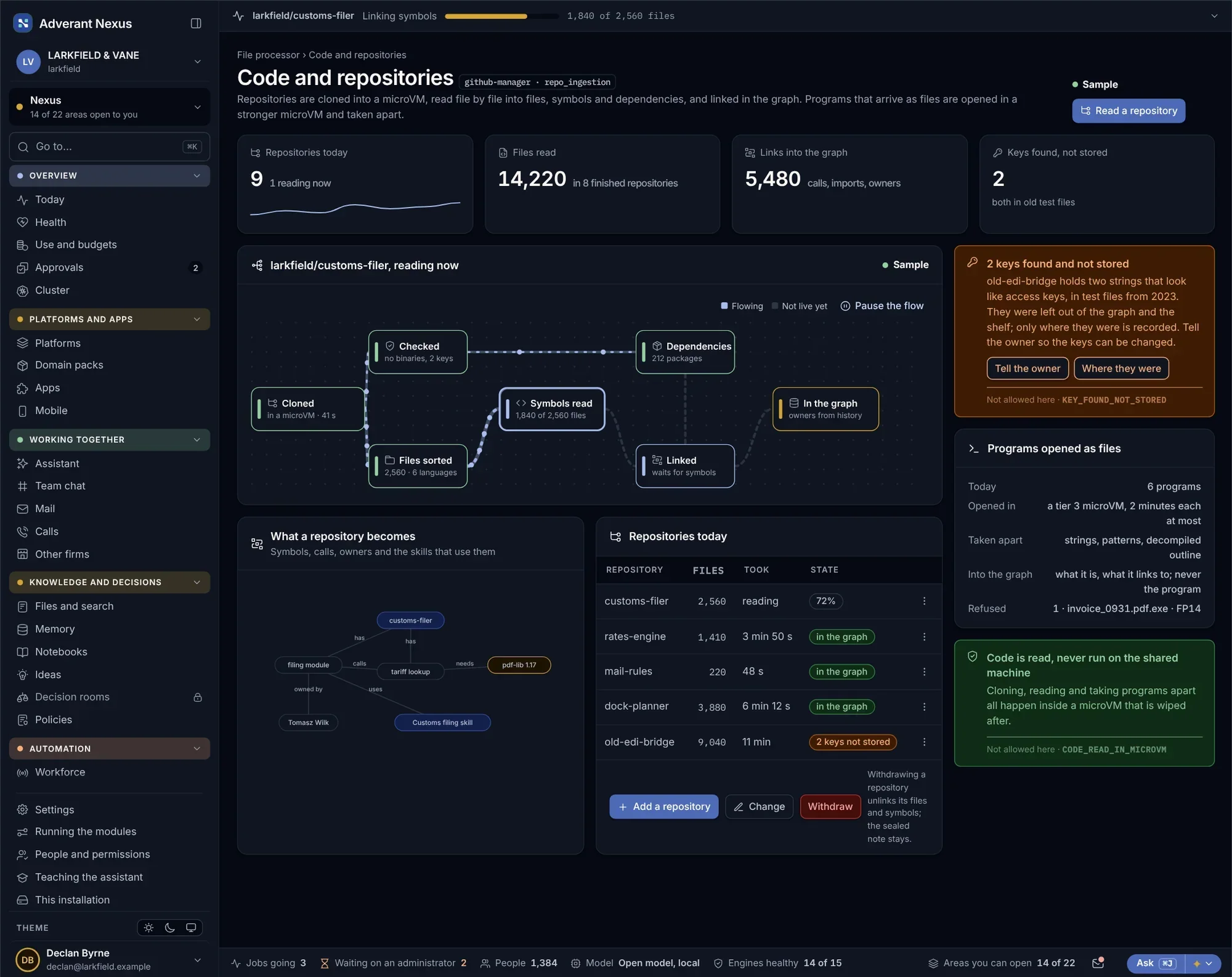
Code and repositories
Repositories read into the graph: modules, owners, dependencies and what the binaries showed.
- Repositories into the graph
- Owners and dependencies
- Binaries checked too
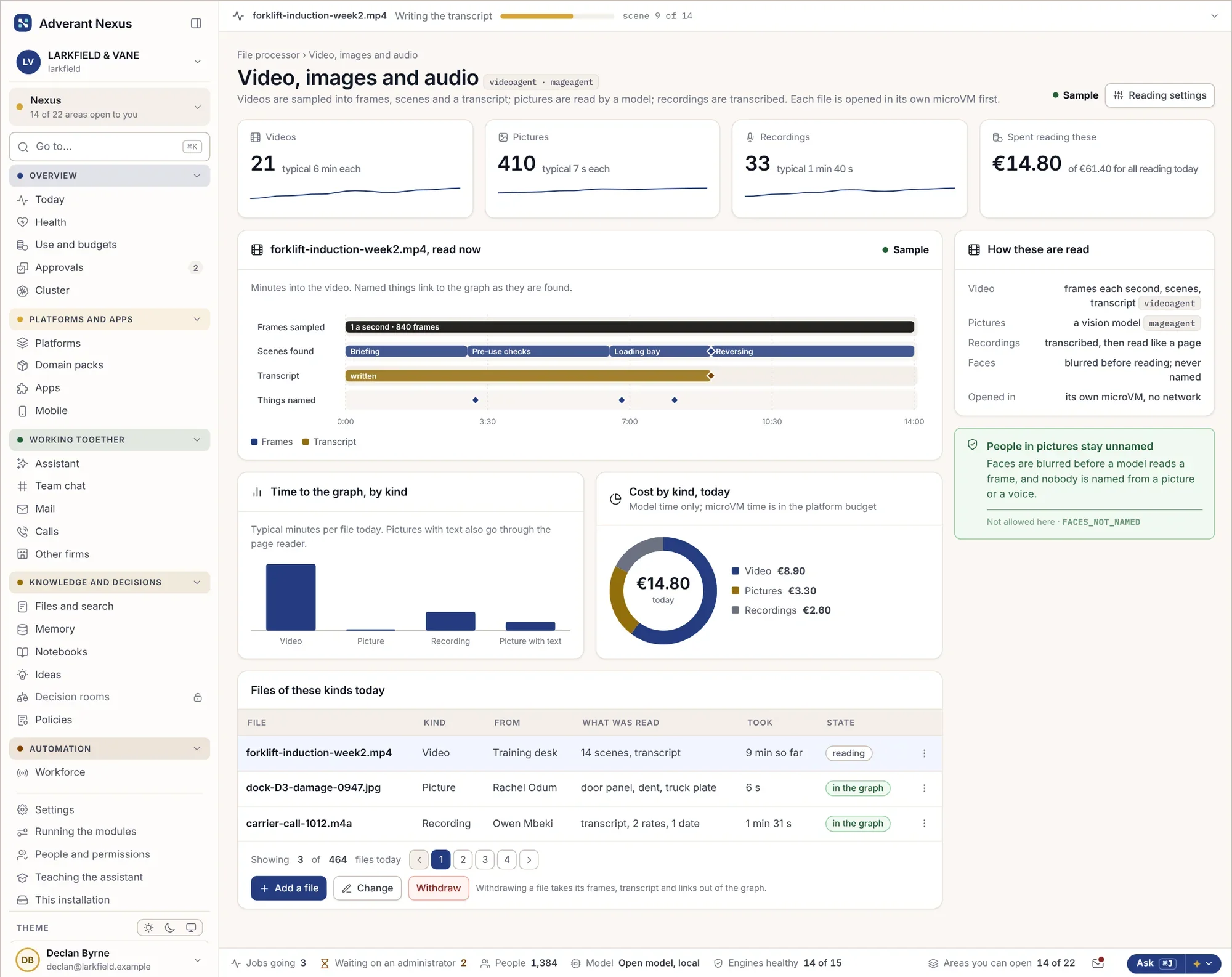
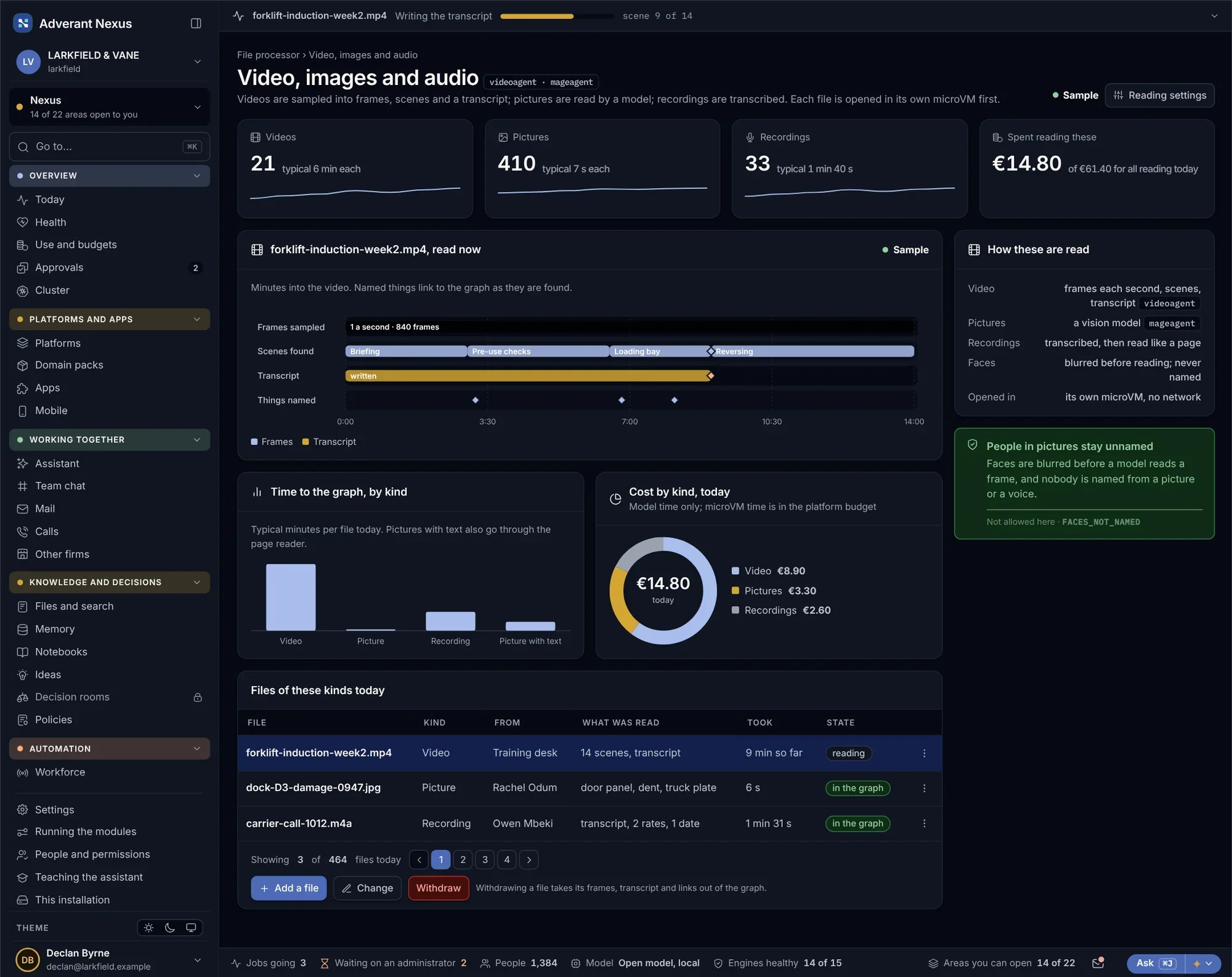
Video, images and audio
- Speech, scenes and text in images
- Time and cost per kind
- Linked to the record they belong to
Into the graph, and out again if it was wrong.
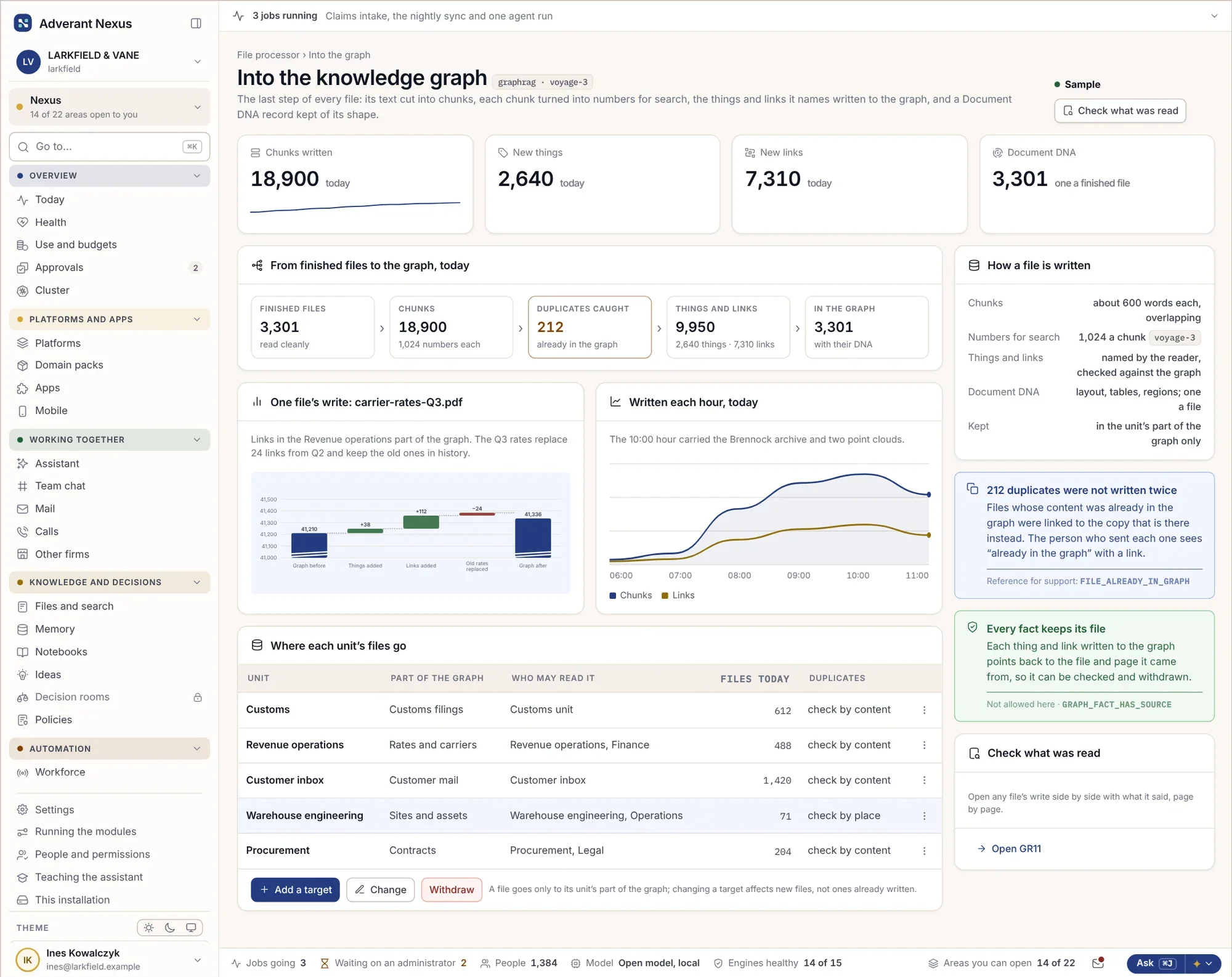
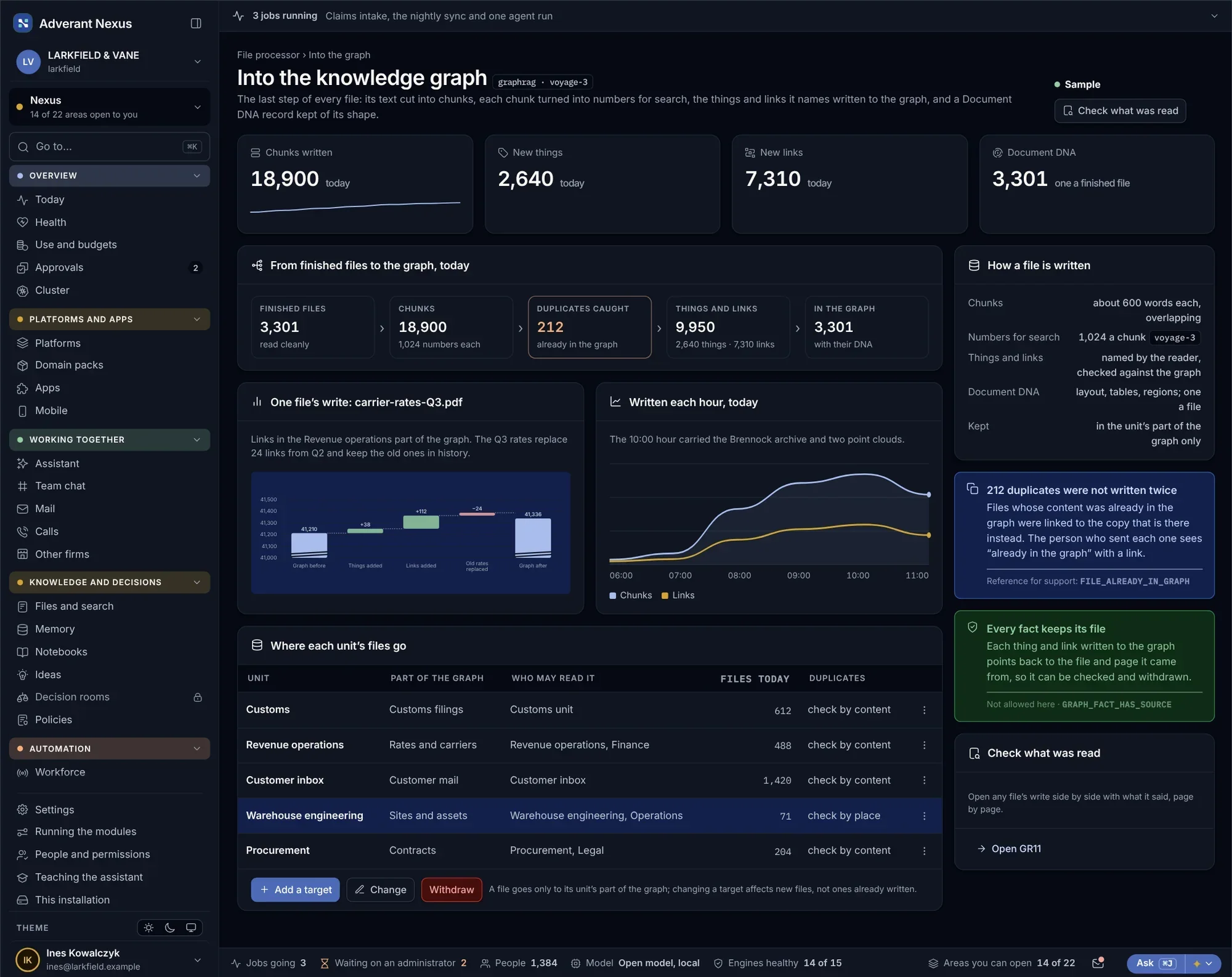
See what each file wrote into the graph, catch duplicates, and choose which part of the graph each unit’s files go to. If a wrong file got in, take it back out without breaking what other documents say.
Into the knowledge graph
- Facts per file
- Duplicates caught
- Each unit’s part of the graph
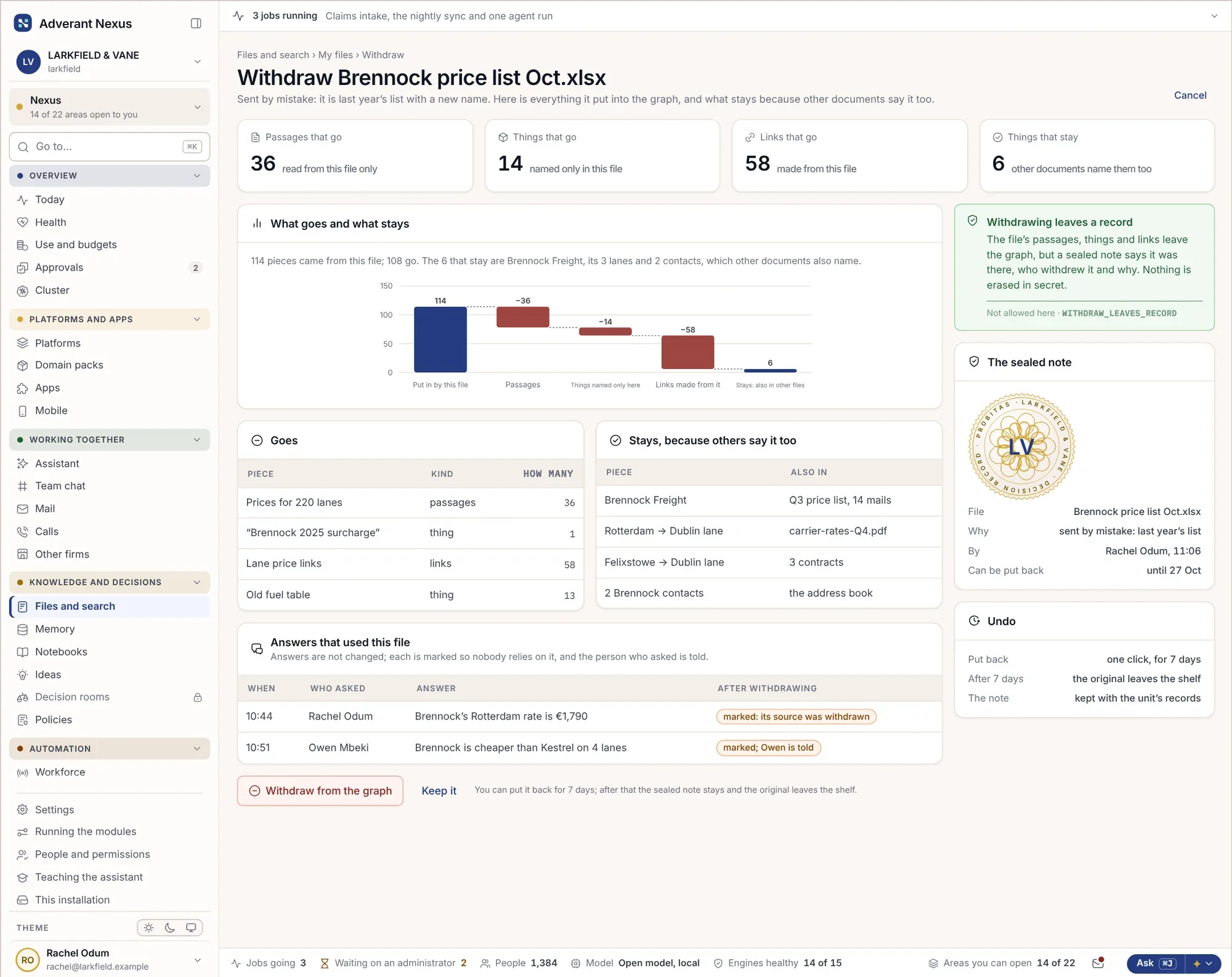
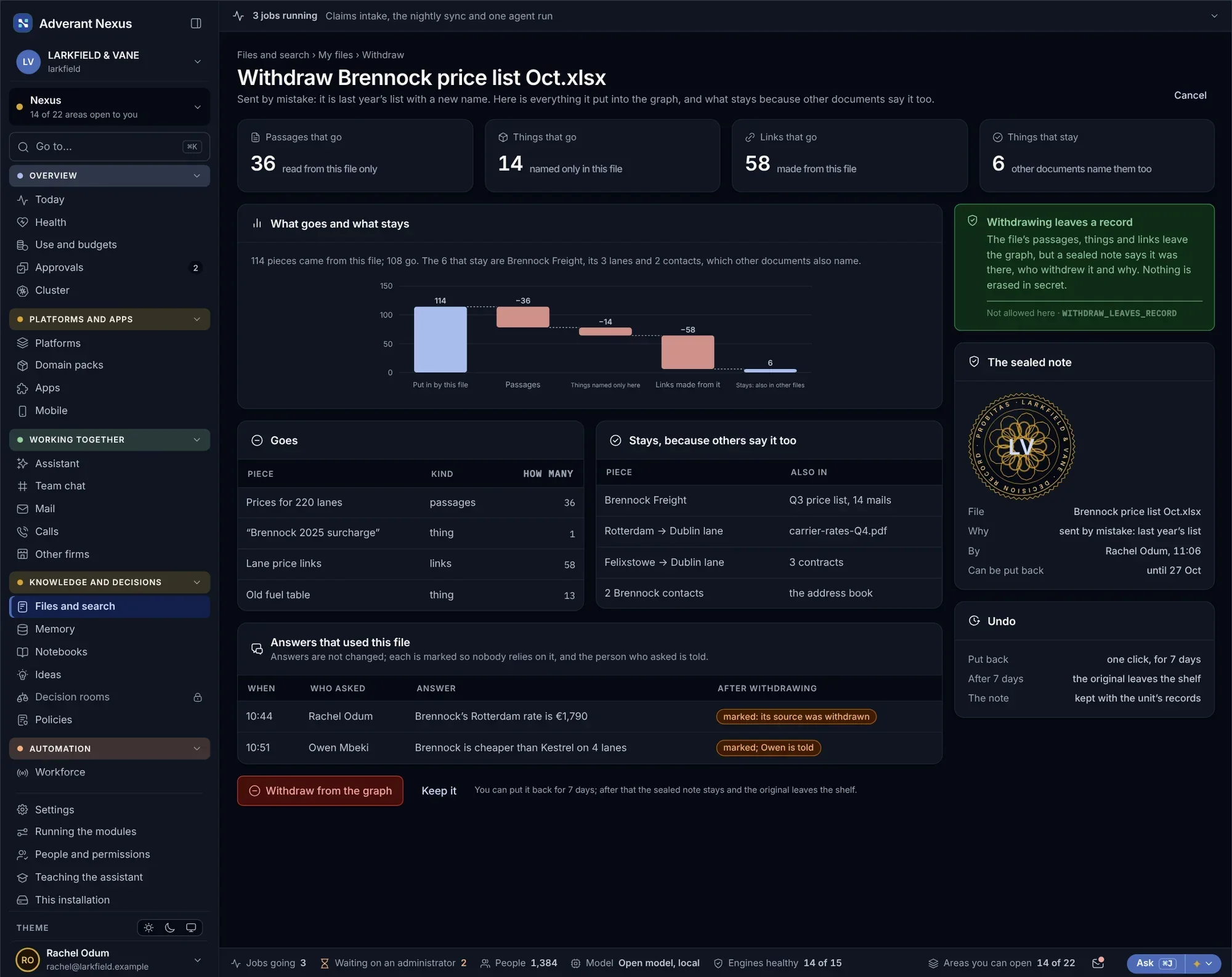
Withdraw a file from the graph
Remove a wrong price list and any facts that came only from it. Facts other documents support stay.
- Facts traced back to the file
- Shared facts kept
- Withdrawal on the record
About reading files.
Which file types can it read?
Documents, spreadsheets, scans, images, audio, video, map and laser-scan files, code repositories and archives. New file types can be added and tested before use.
Can files come in from our existing shares?
Yes. Sources are read on a schedule you set, read-only, and each source belongs to a unit.
What happens to dangerous files?
They are held or refused before anything reads them, and the sender is told why.
Go deeper
Send us your hardest files.
Scans, archives, drawings, recordings. We will show what Nexus reads from them and where it all lands.