

Start beside what you run. Move across when you are ready.
Nexus does not ask you to rip anything out. It installs next to your systems, reads from them without writing back, and builds your knowledge graph quietly in parallel. Teams start using it on one unit while the old systems carry on. Piece by piece, the work moves across. Engineers call this the strangler fig pattern: the new grows around the old until the old can be retired.
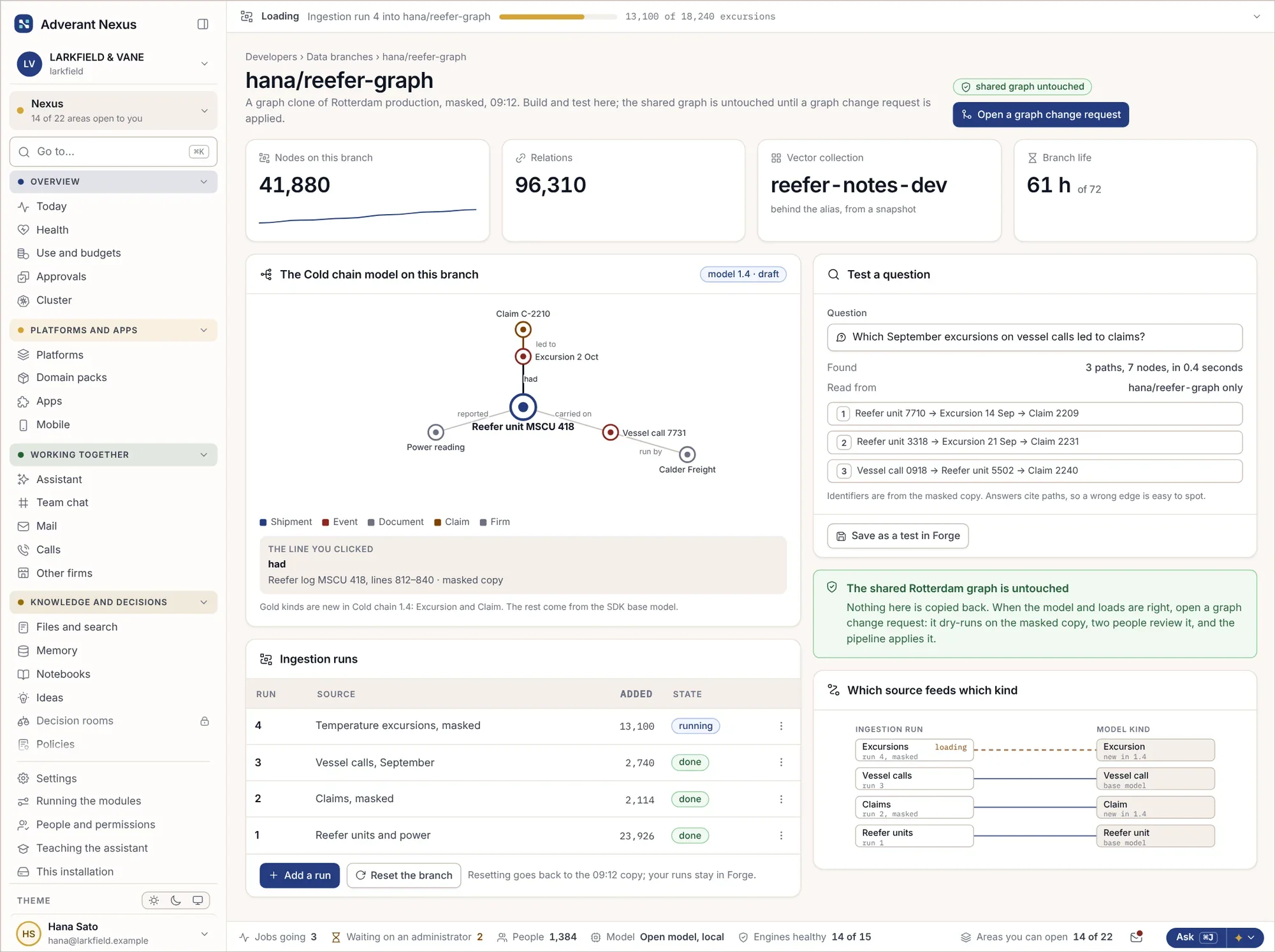
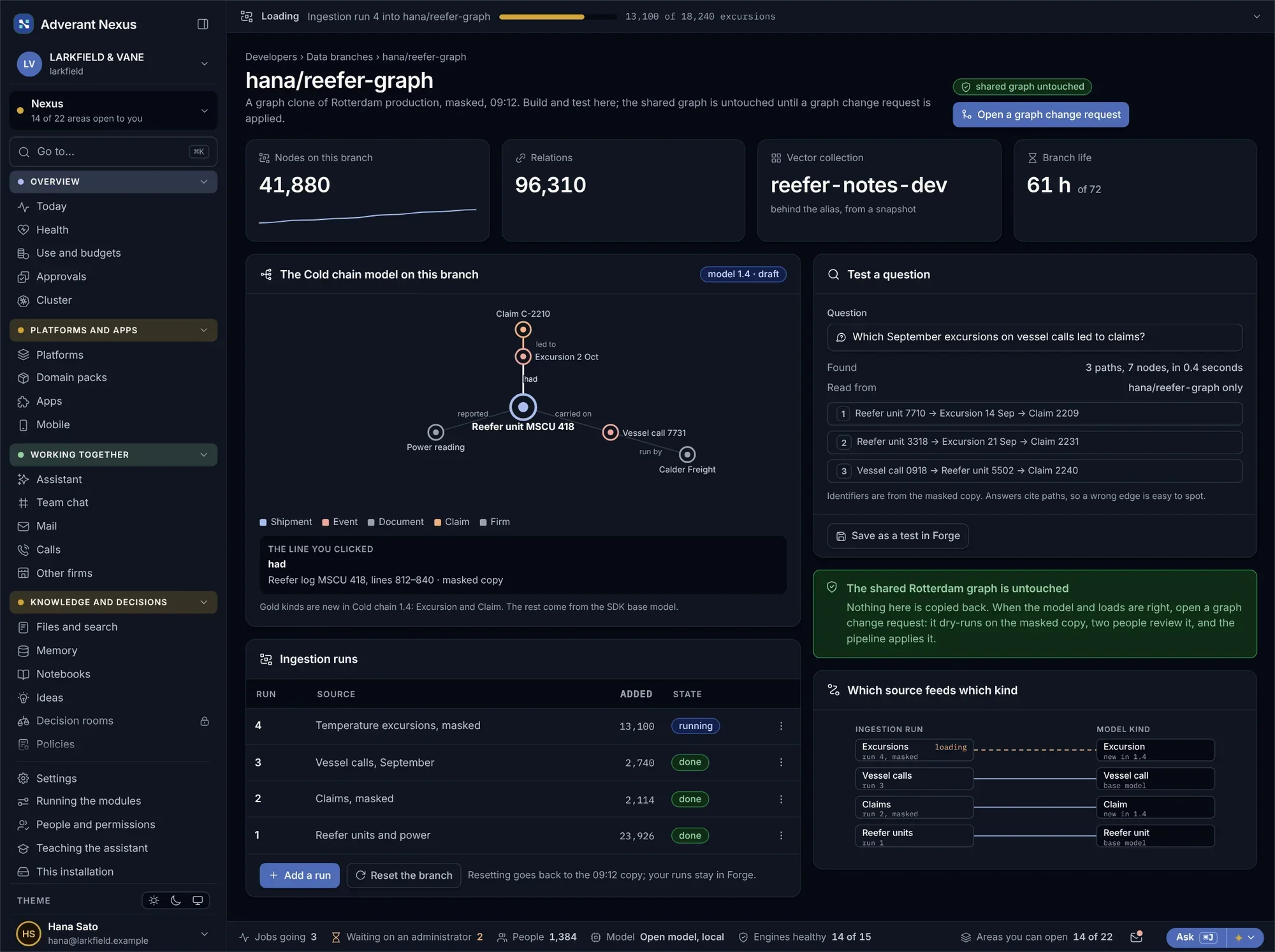
From install to everyday use, in six steps.
Nothing in your existing systems has to change for Nexus to start. Each step can be taken at your own pace, and each one is useful on its own.
Install
In your own cluster, on an appliance, offline or in our EU cloud. Checks run before anything is installed, and the first administrator is created in the browser.
Connect, read-only
Point Nexus at your file shares, mail, databases and business systems. It reads on a schedule you set and never writes back.
Build the ontology
Facts flow into the knowledge graph while your systems carry on as before. You shape the model on screen and see what each change touches.
Prove it on a copy
Ask the graph real questions on a masked copy of production. Compare its answers with what your teams already know.
Use it in one unit
Turn it on for one team, with the lens that suits their work. The old system stays the record until you decide otherwise.
Widen, then retire
Add units one by one, with a way back each time. Switch off old tools only when nobody needs them.
Installed in an afternoon, checked before it starts.
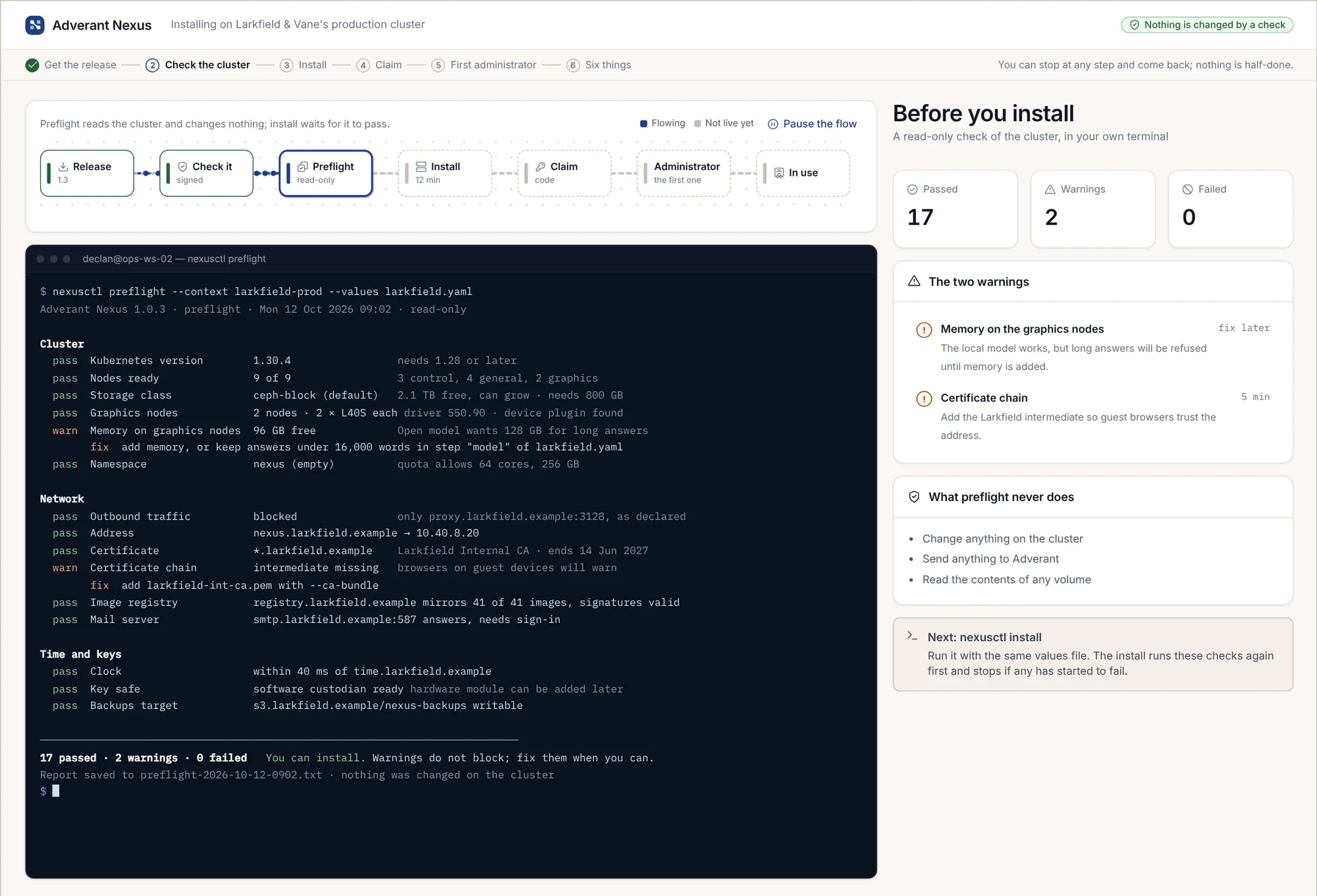
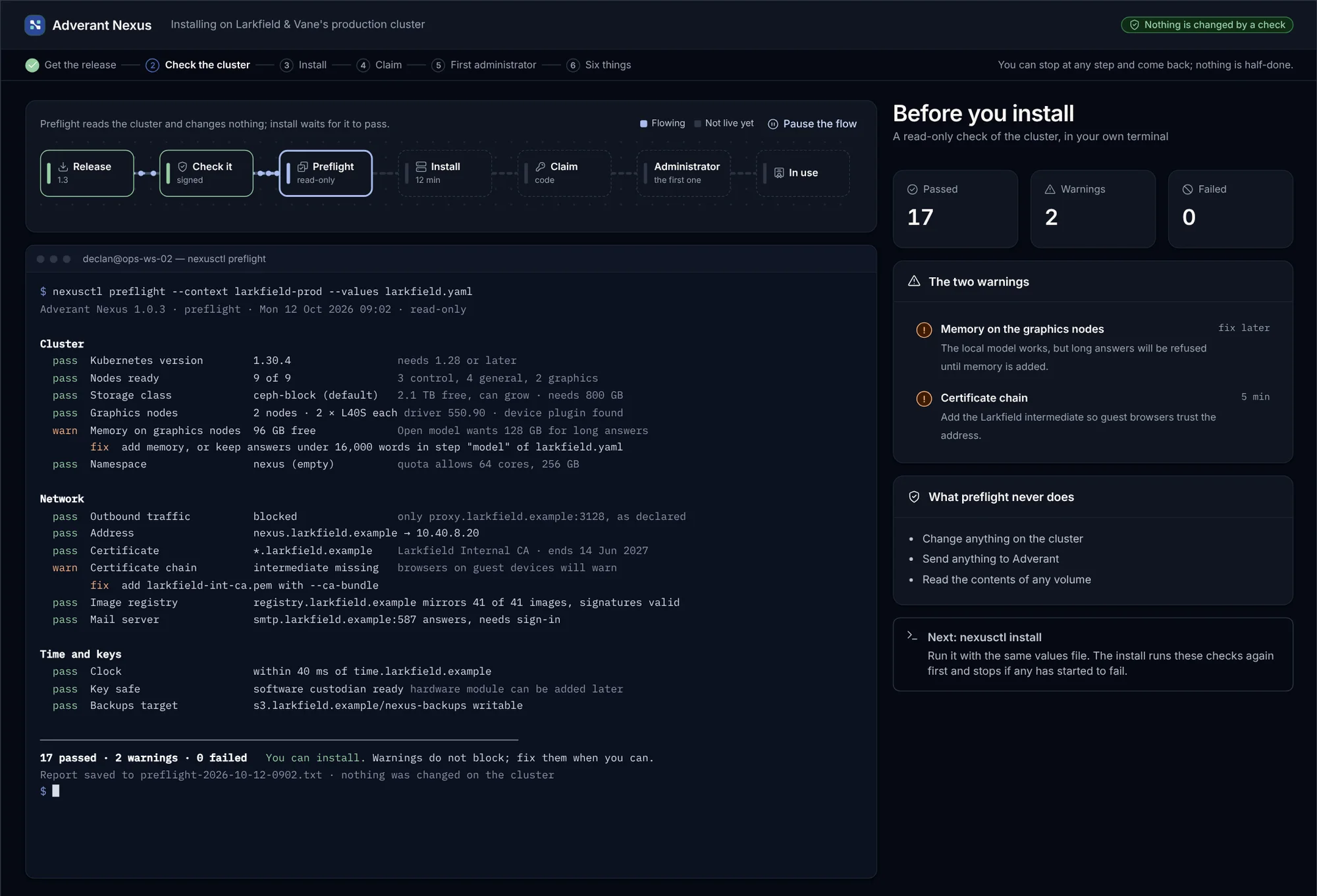
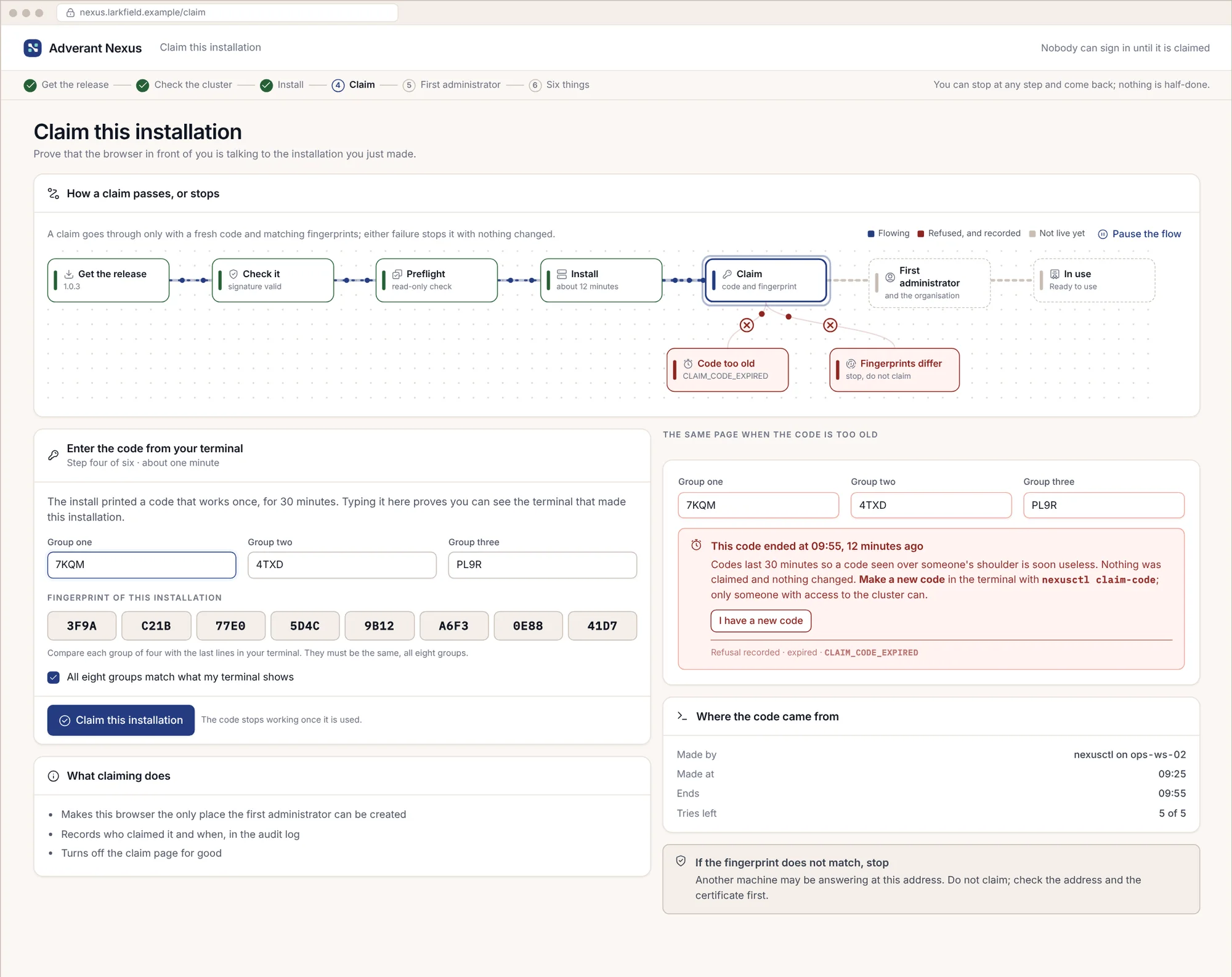
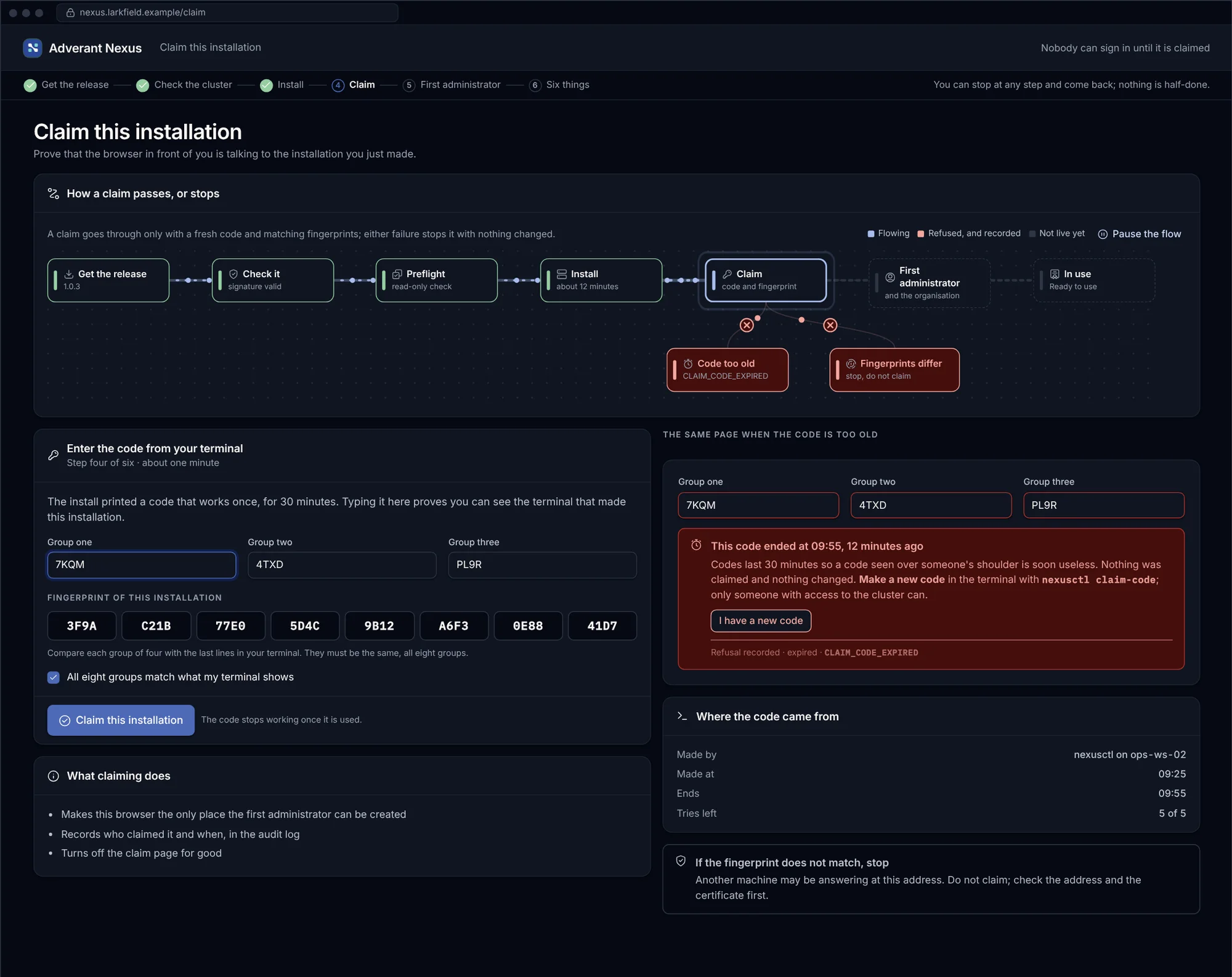
Before anything is installed, Nexus checks the cluster it will run on: compute, storage, network and certificates. Then it walks the first administrator through the six things that must be ready before anyone signs in.
Before you install
- Compute, storage and network checked
- Problems named, with the fix
- Nothing installed until it passes
Claim the installation
- A one-time code from the install
- First administrator created in the browser
- Bound to your Adverant account
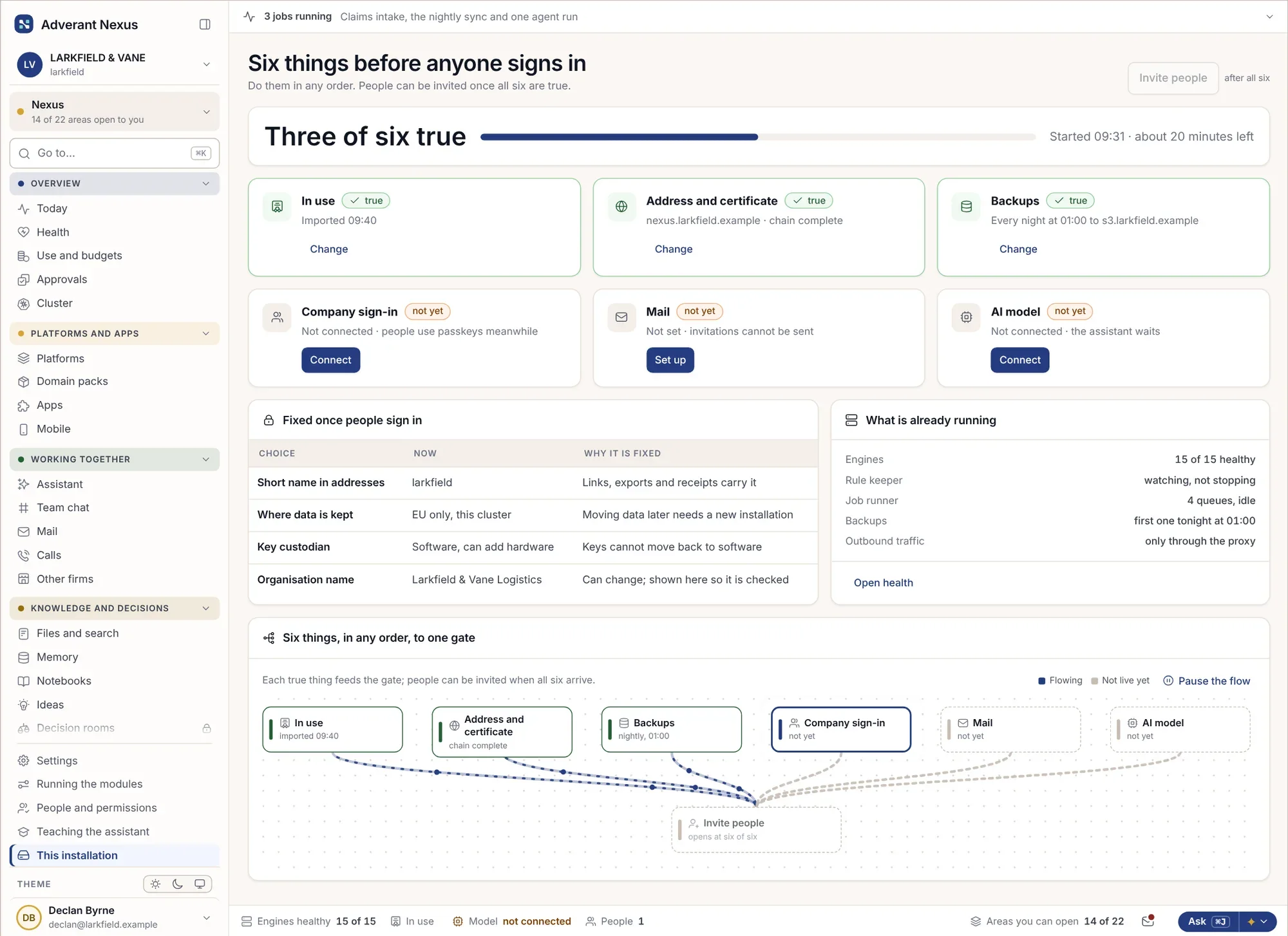
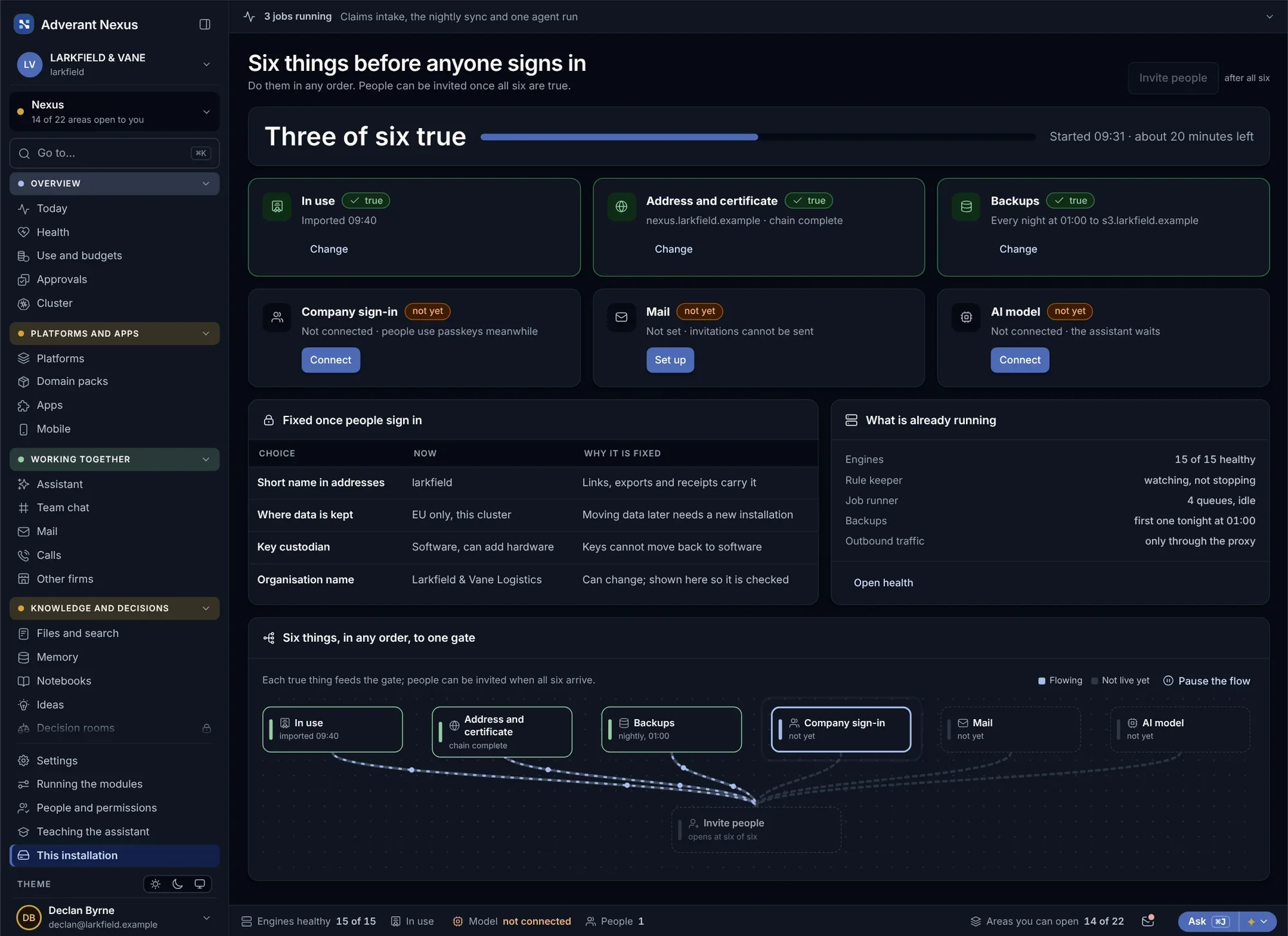
Six things before anyone signs in
Sign-in, network, mail, models, licence and backups: set them up in whatever order suits you.
- A checklist that shows what is left
- Each item tested as you go
- Nobody invited until it is ready
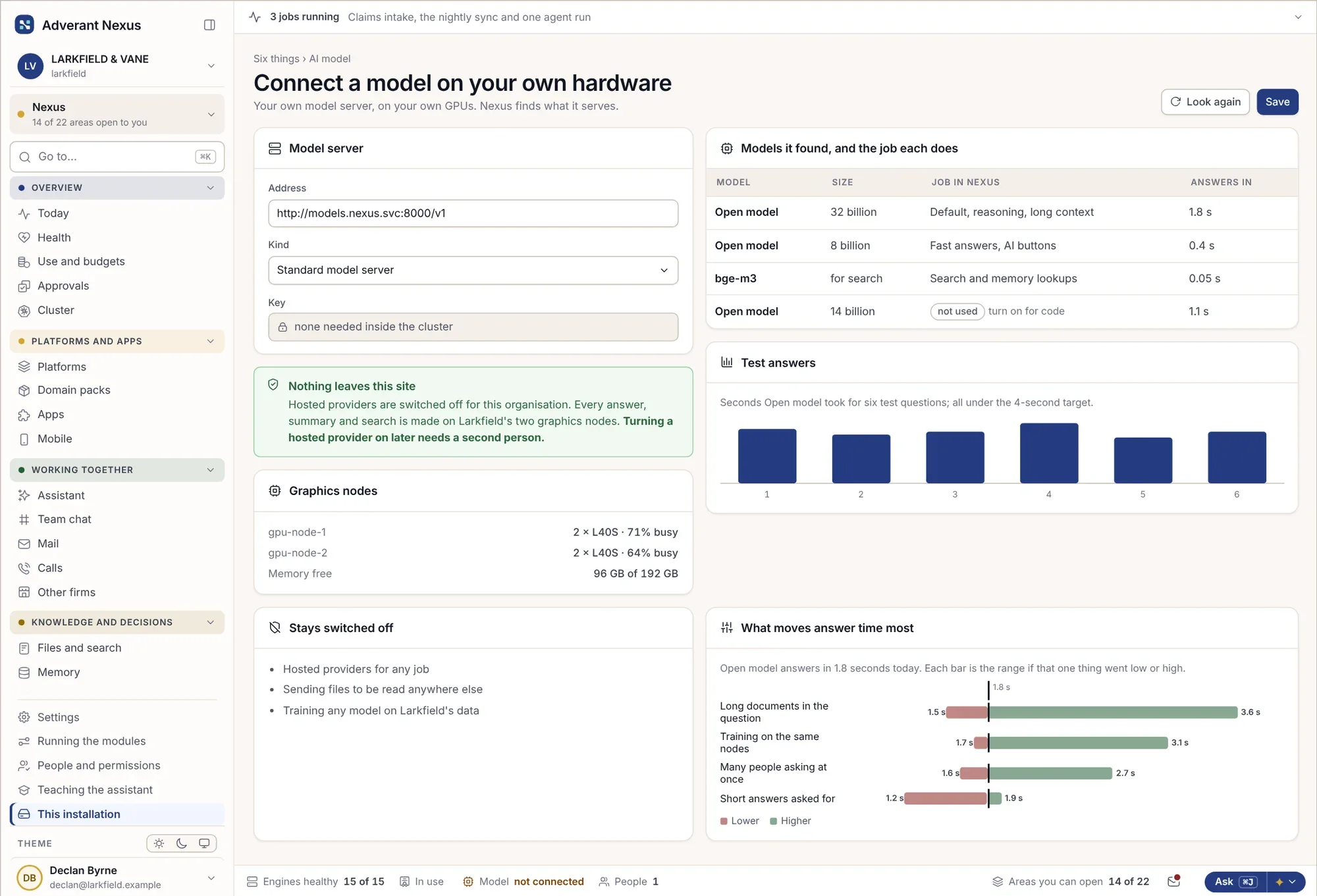
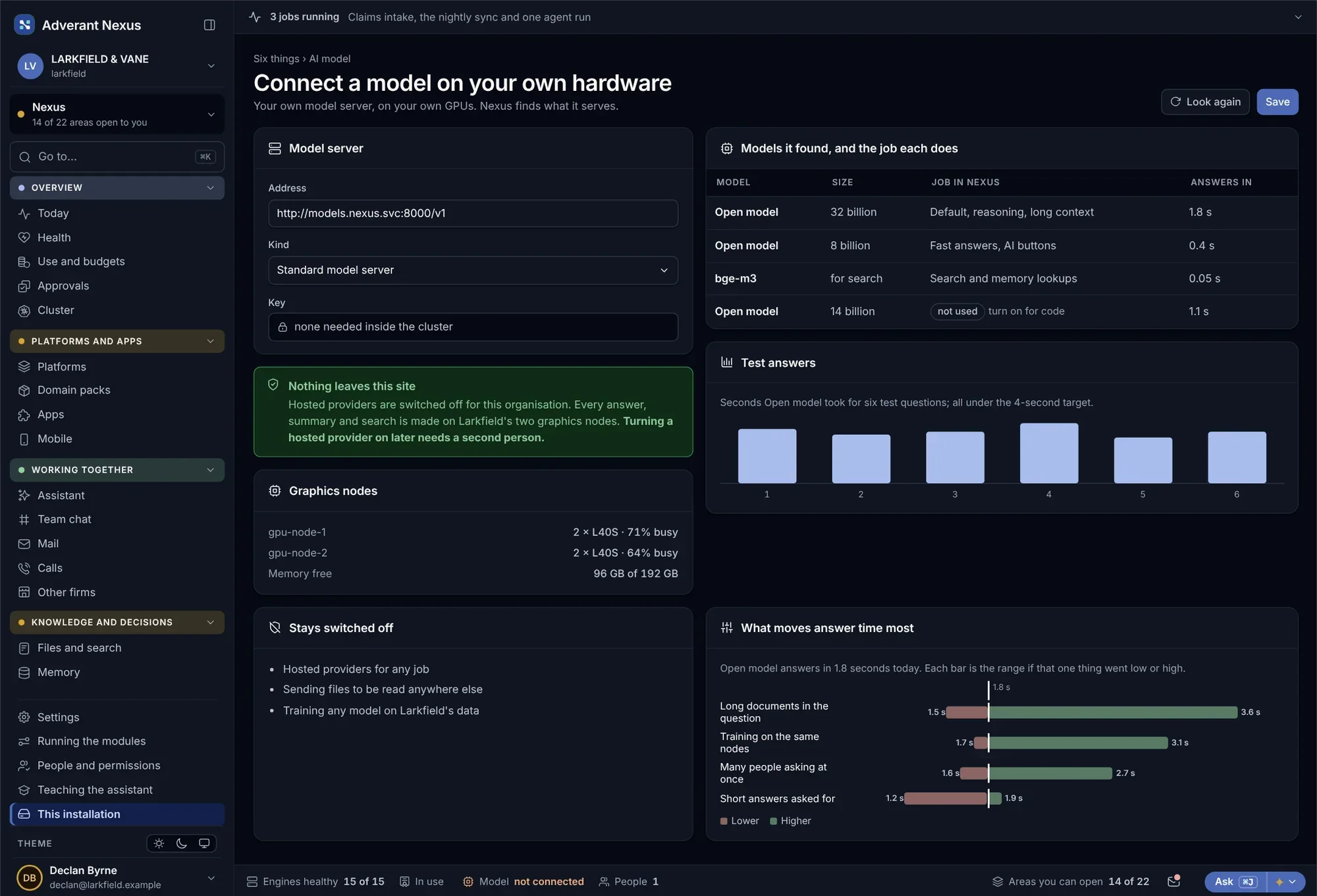
Connect a model on your own hardware
- Models on your own hardware
- Hosted models only if you allow them
- Tested before first use
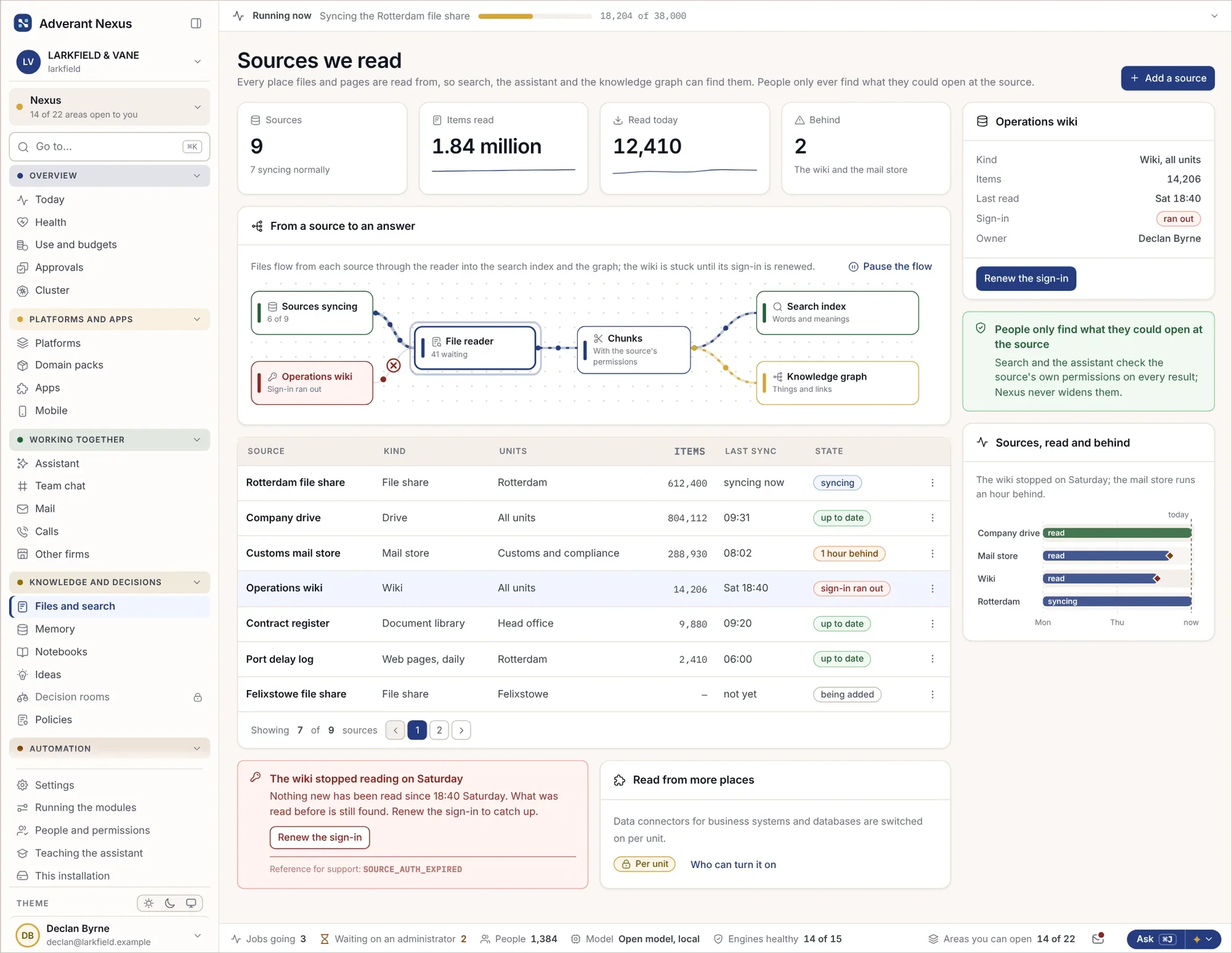
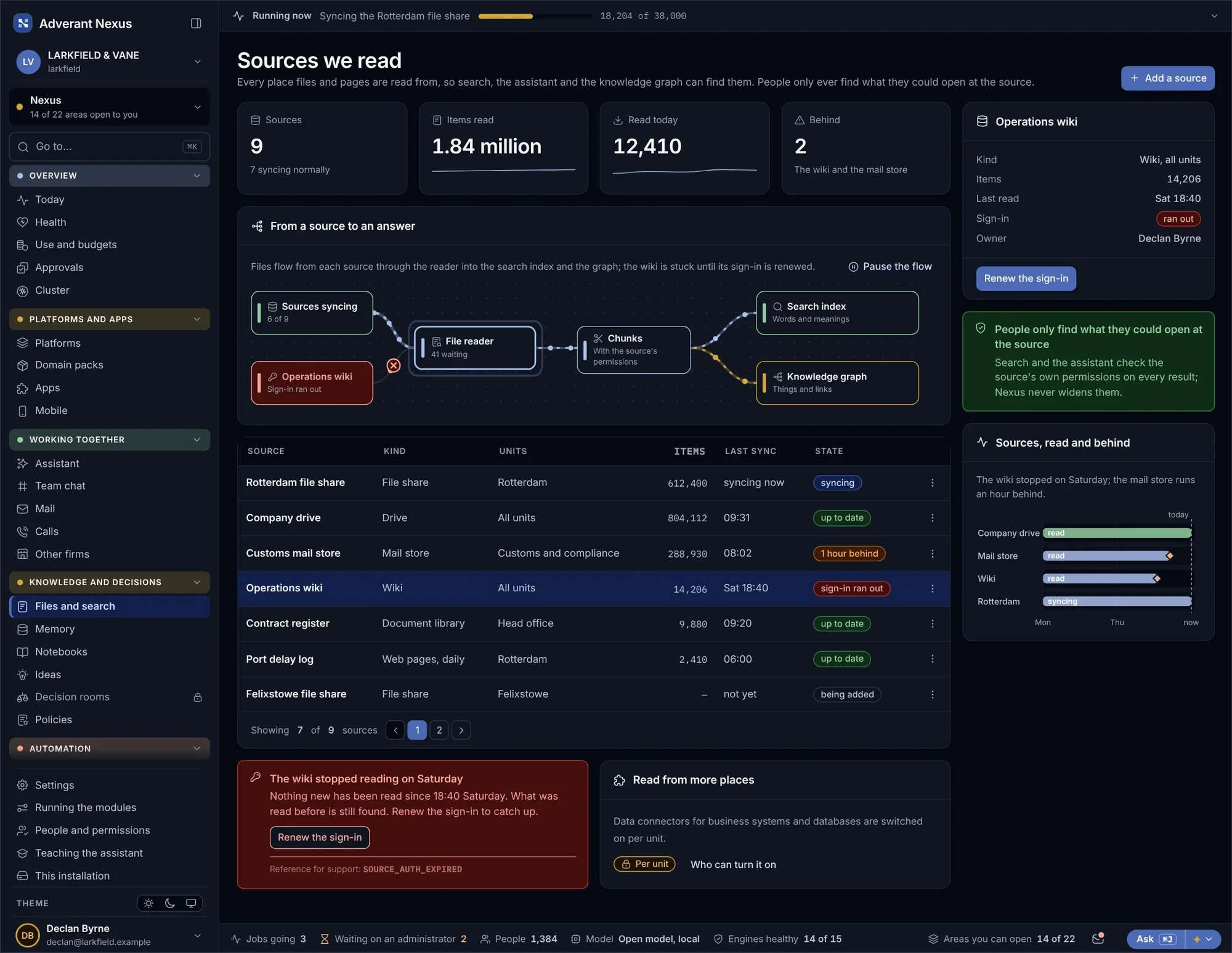
Read from your systems. Never write to them.
Nexus reads file shares, mail, databases and business systems on a schedule you choose, at a pace that leaves them alone. Every source belongs to a unit, and every file is opened safely before anything reads it.
- Read-only connections, set per source
- Sync pace you control, so systems are not slowed
- Each source owned by a unit, with its own permissions
- Every file opened in isolation first
Your knowledge graph grows quietly, in parallel.
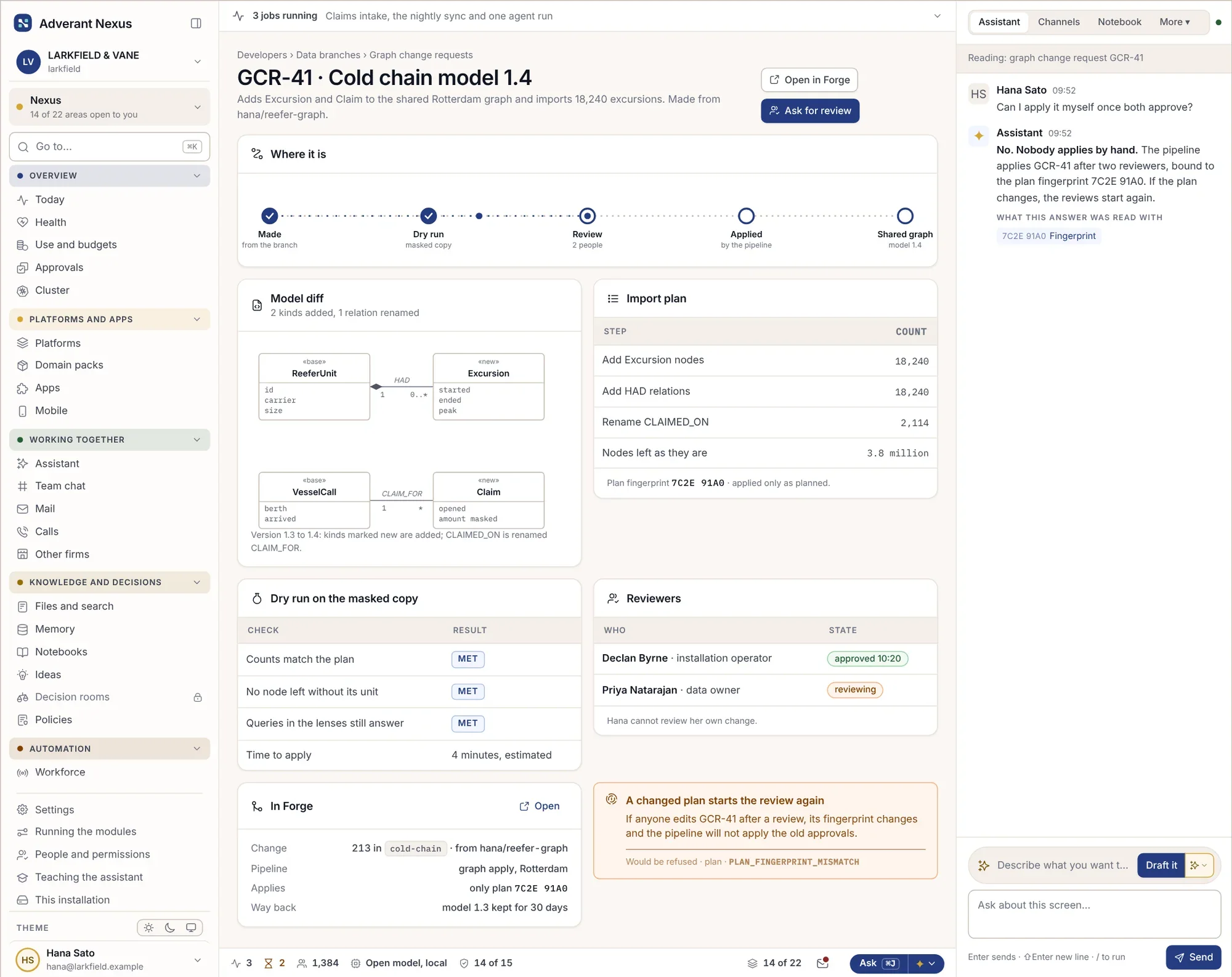
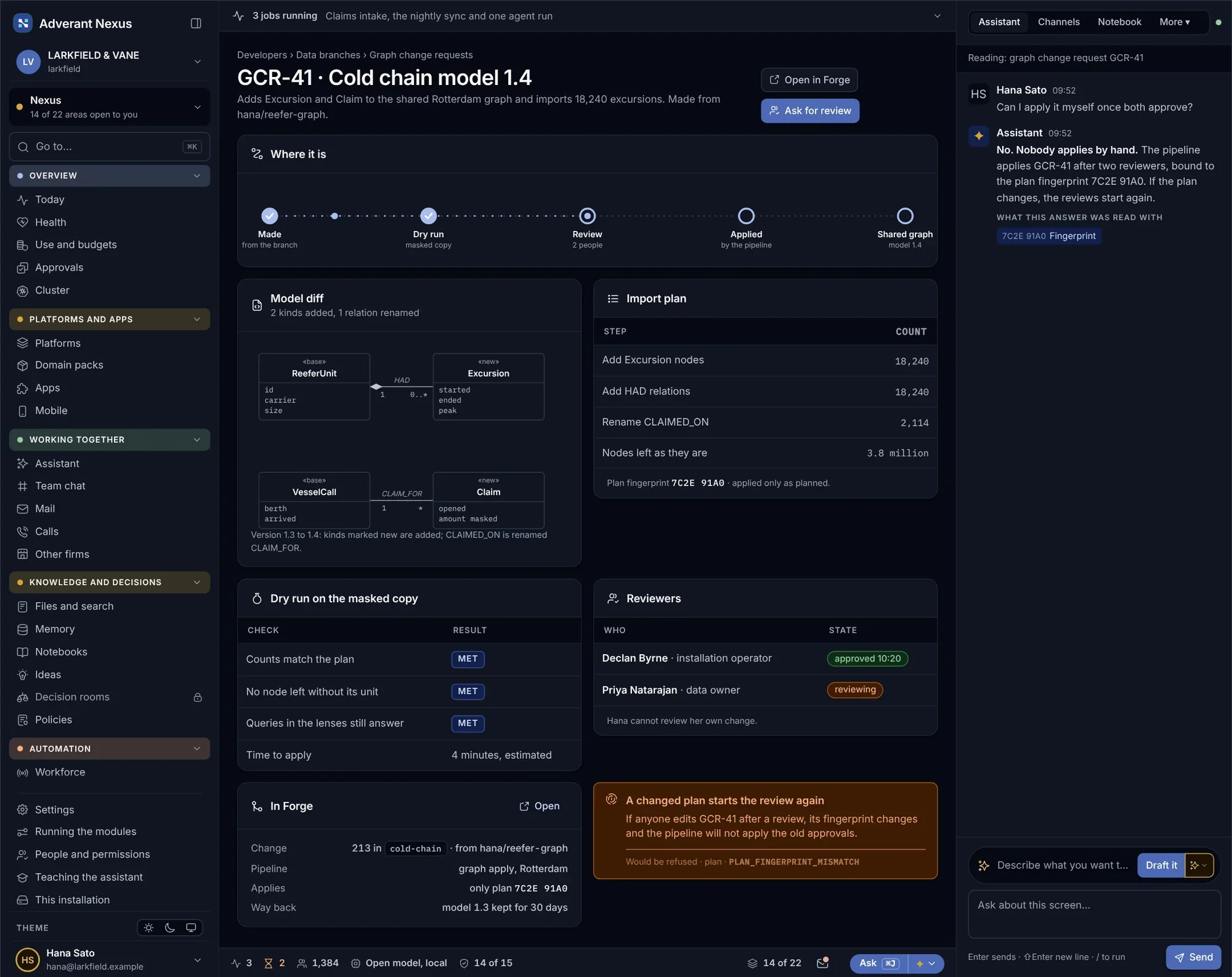
While your teams carry on as normal, facts from every source land in the knowledge graph. You shape the ontology on screen, from an industry model or from what Nexus finds, and try each change on a masked copy before it touches anything real.
Make a data branch
Work on a masked copy of production, so experiments never touch the real thing.
- Personal fields replaced before you see them
- Throwaway, with an end date
- Costs shown up front
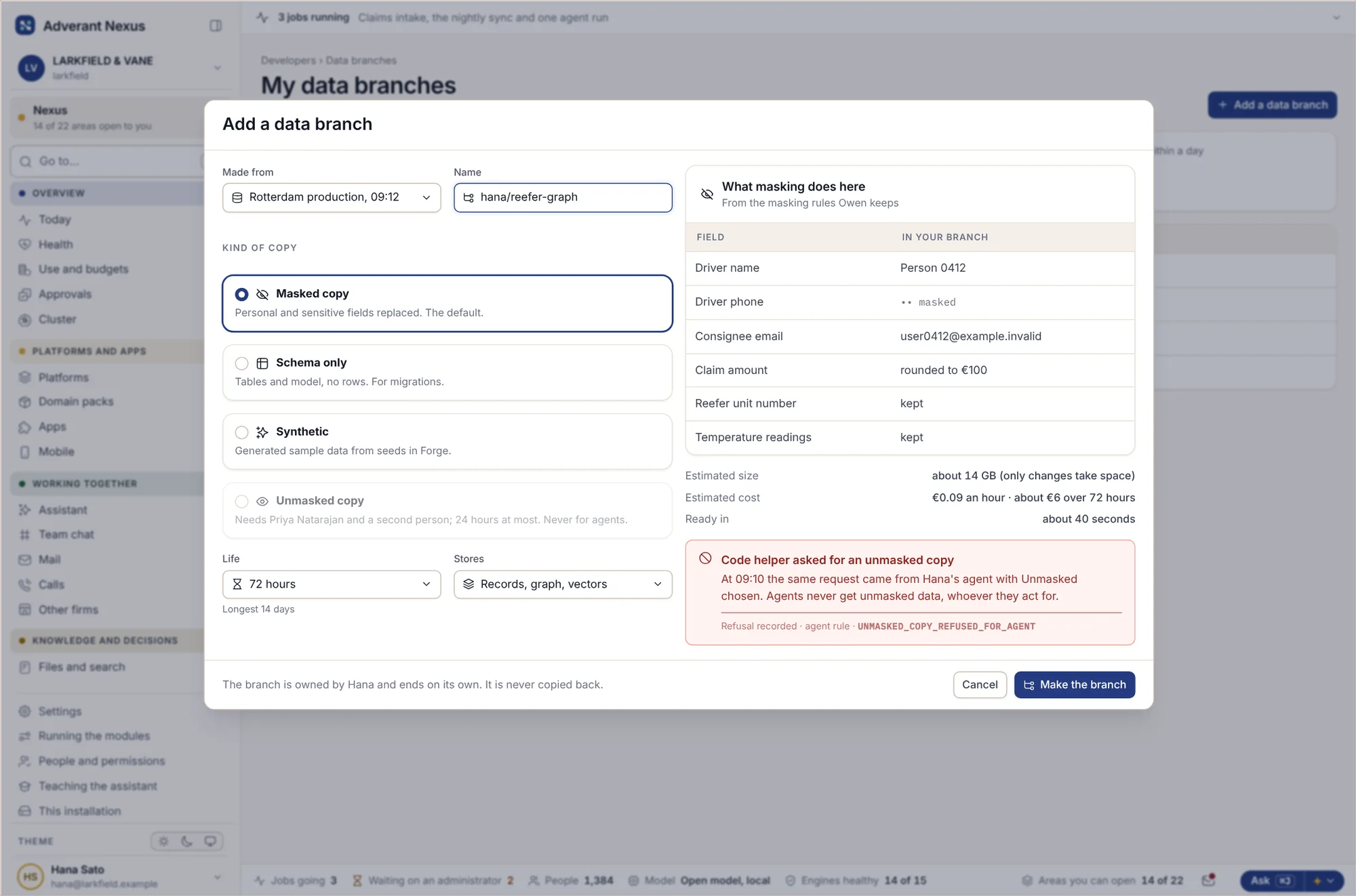
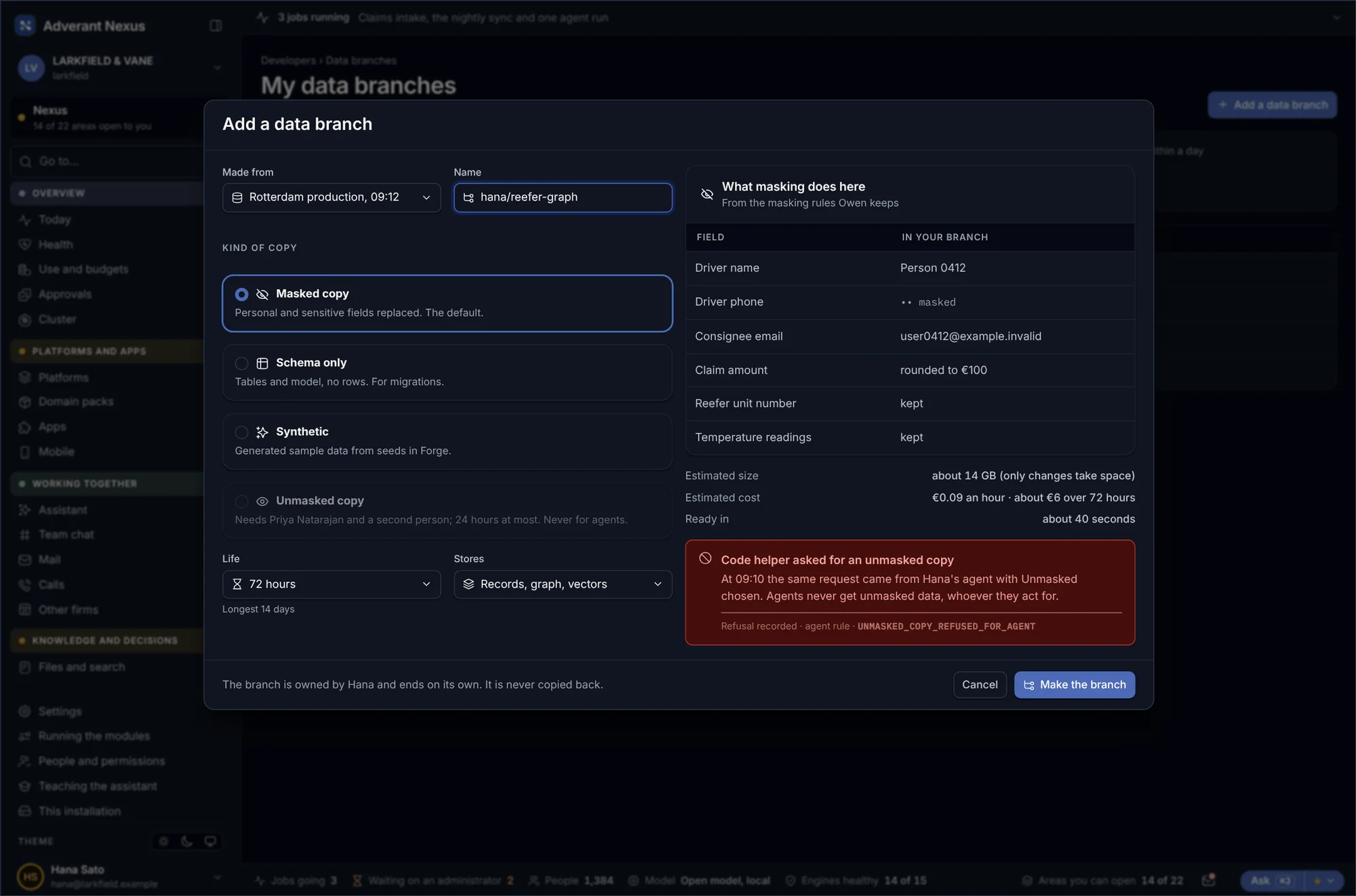
Shape the schema
Add the kinds of record your business deals with, such as customers, contracts and ships, and choose who sees them.
- Kinds, properties and links on screen
- Lenses for each role
- Versioned like code
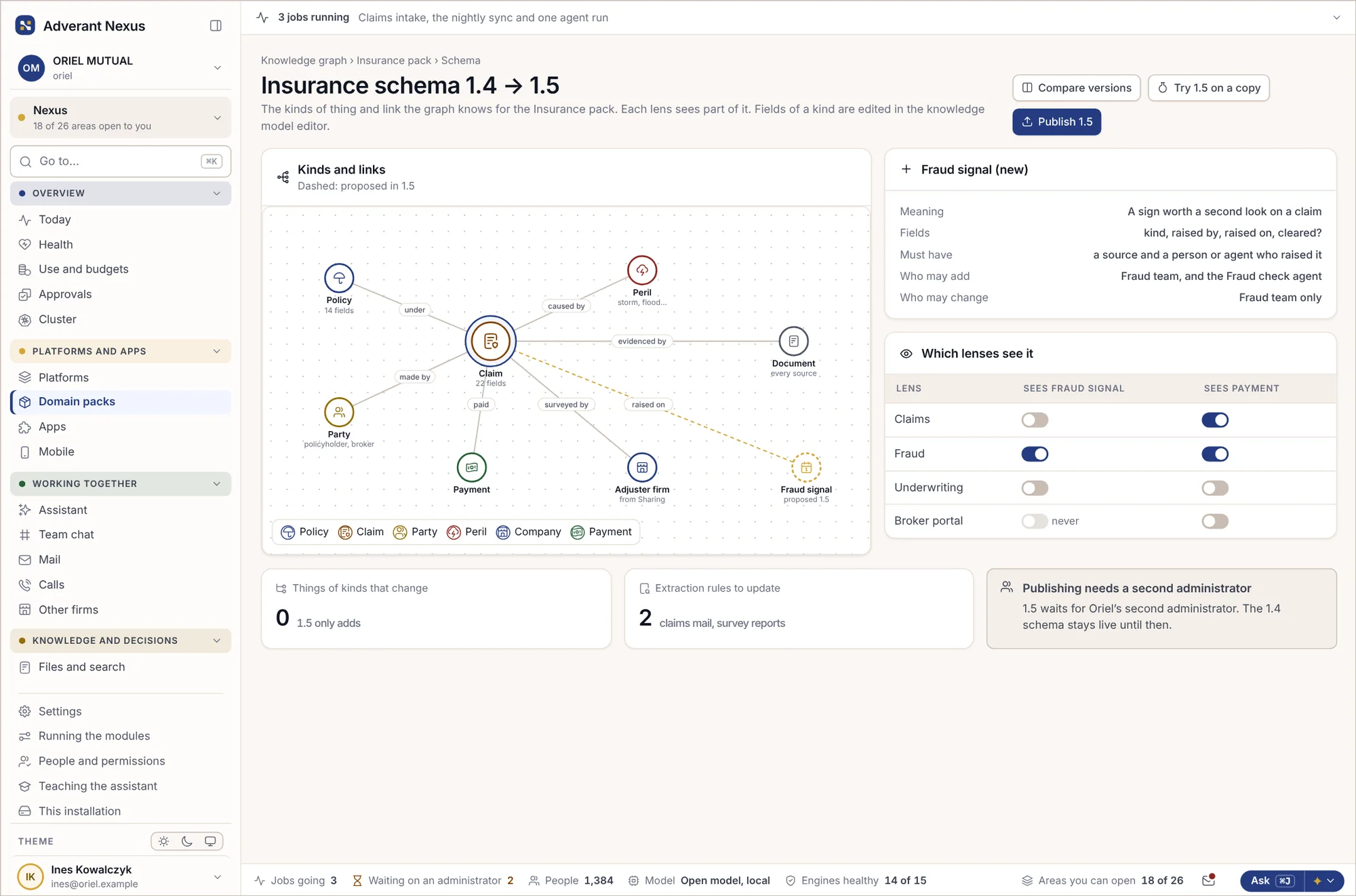
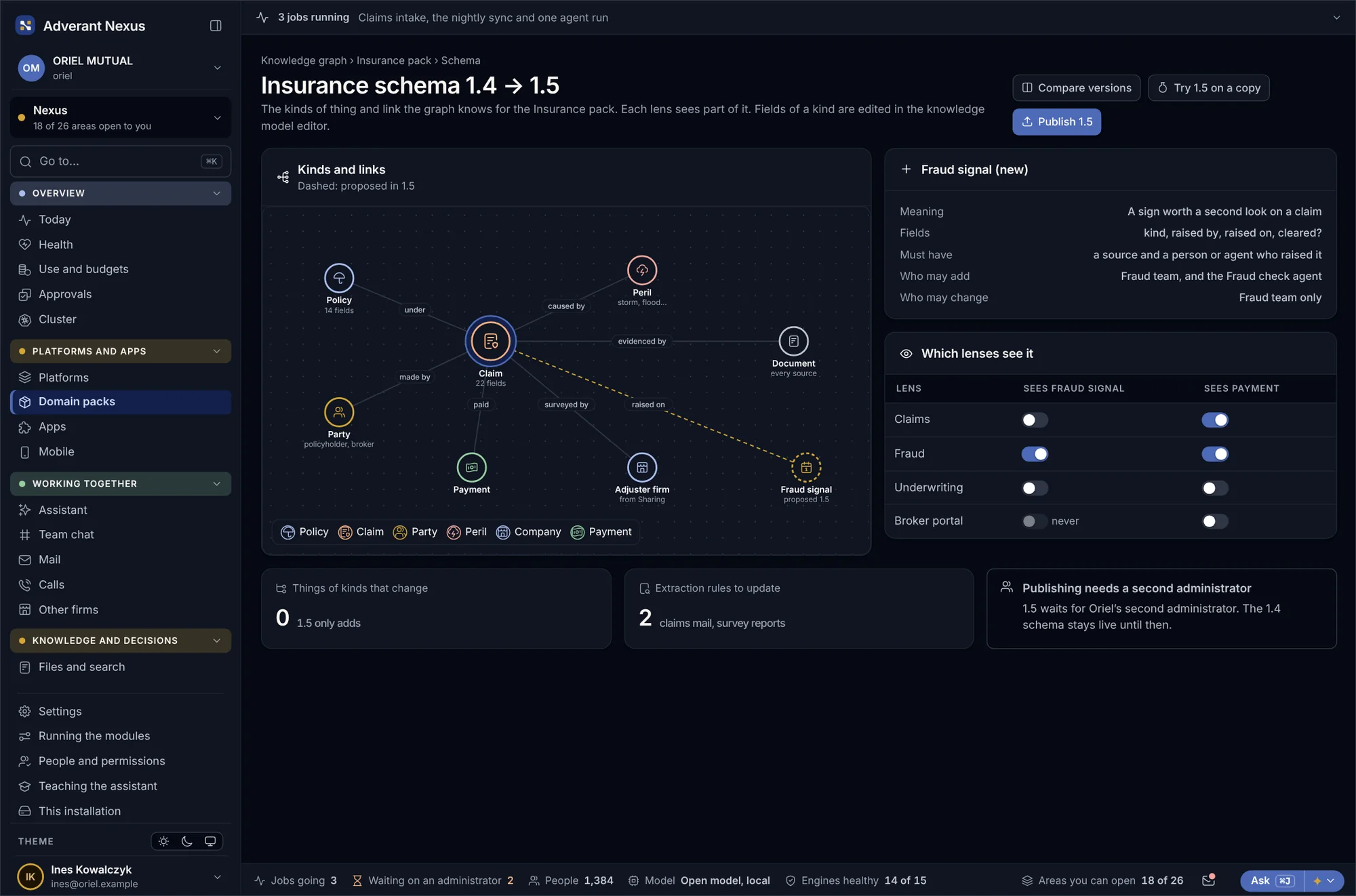
Send the model for review
- Dry run attached to the request
- Reviewed by a second person
- Merged only when approved
Answers in the first week, without changing how anyone works.
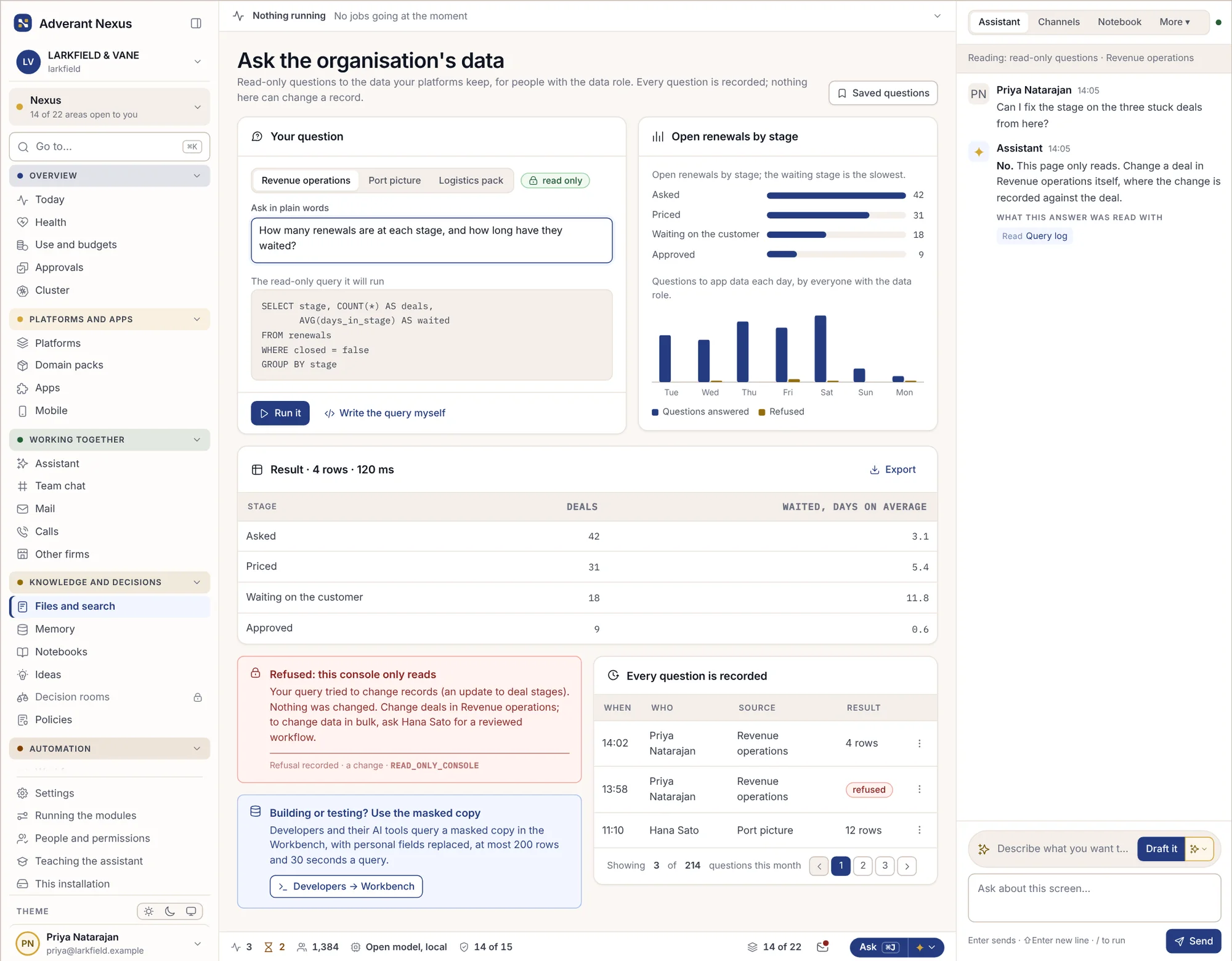
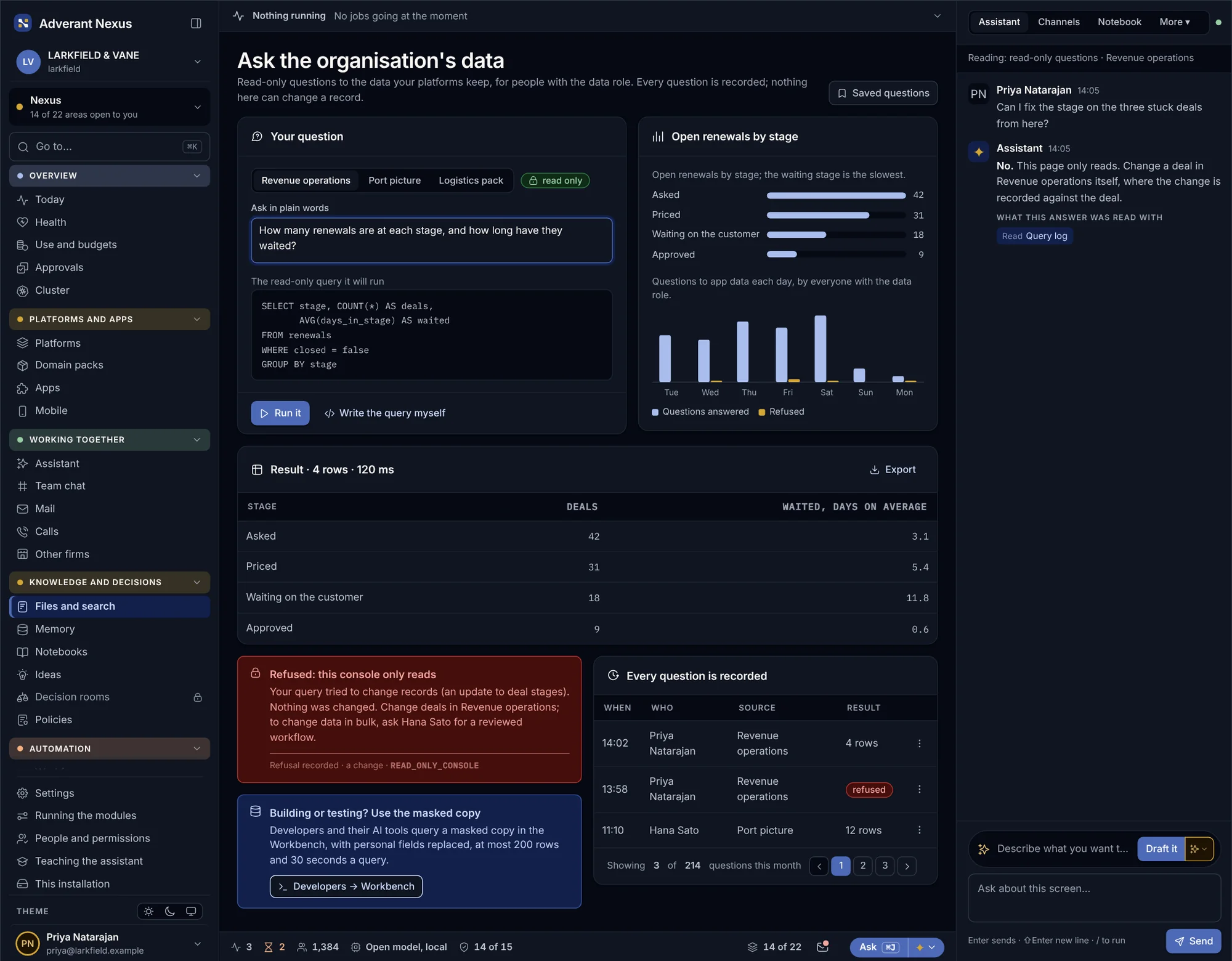
The first questions are often the ones nobody could answer before: how many renewals are stuck, which carriers keep missing slots, what the contract actually says. The answers come from the graph, with a source for every fact, and nothing in your systems changes.
- Questions in plain words, answered from the graph
- A source for every fact
- Read-only, so nothing is changed by asking
One unit at a time, with a way back.
Turn Nexus on for one team, then the next. Updates roll out unit by unit, and each step can be undone. When a unit no longer needs an old tool, you switch it off there. When no unit needs it, you retire it.
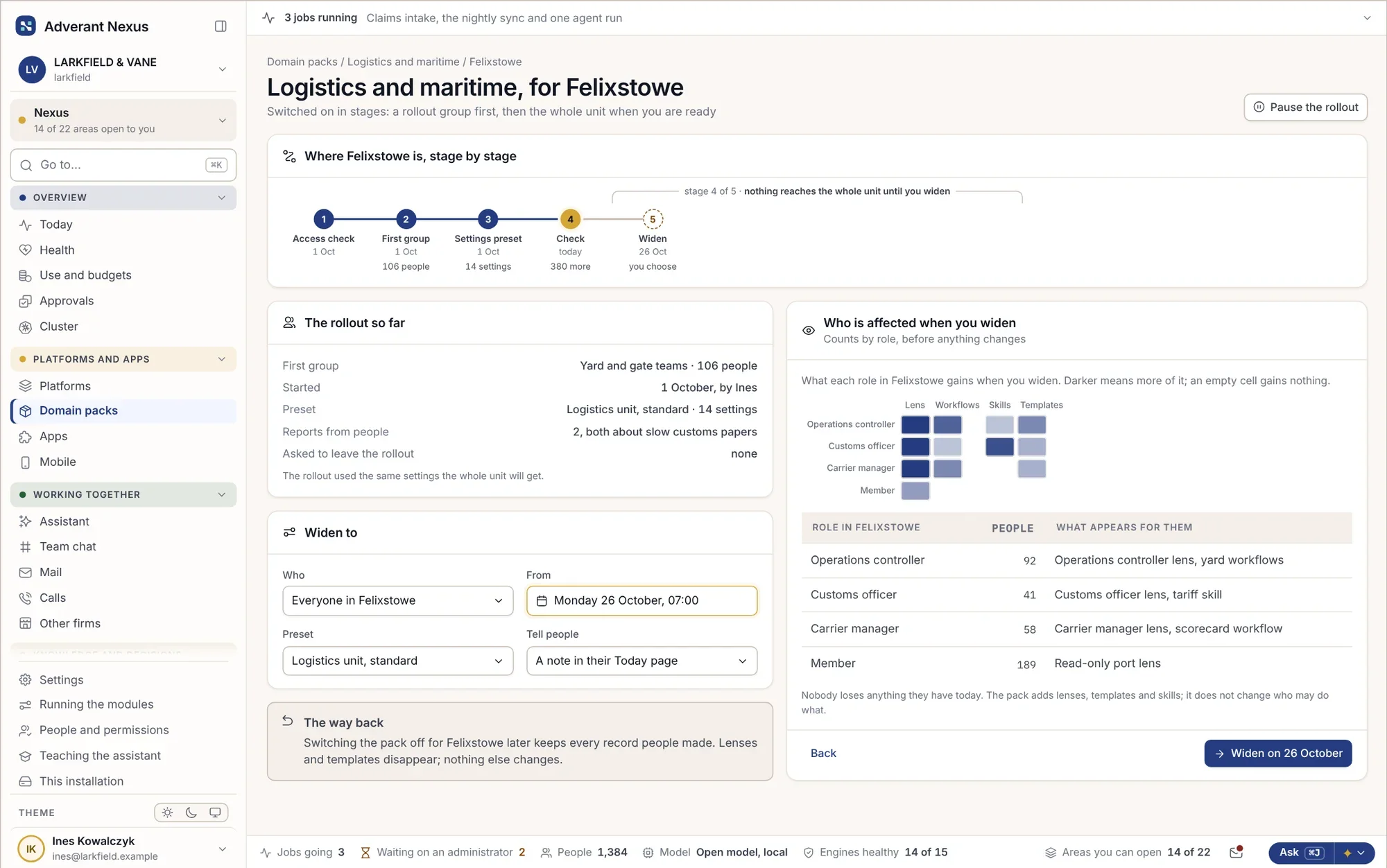
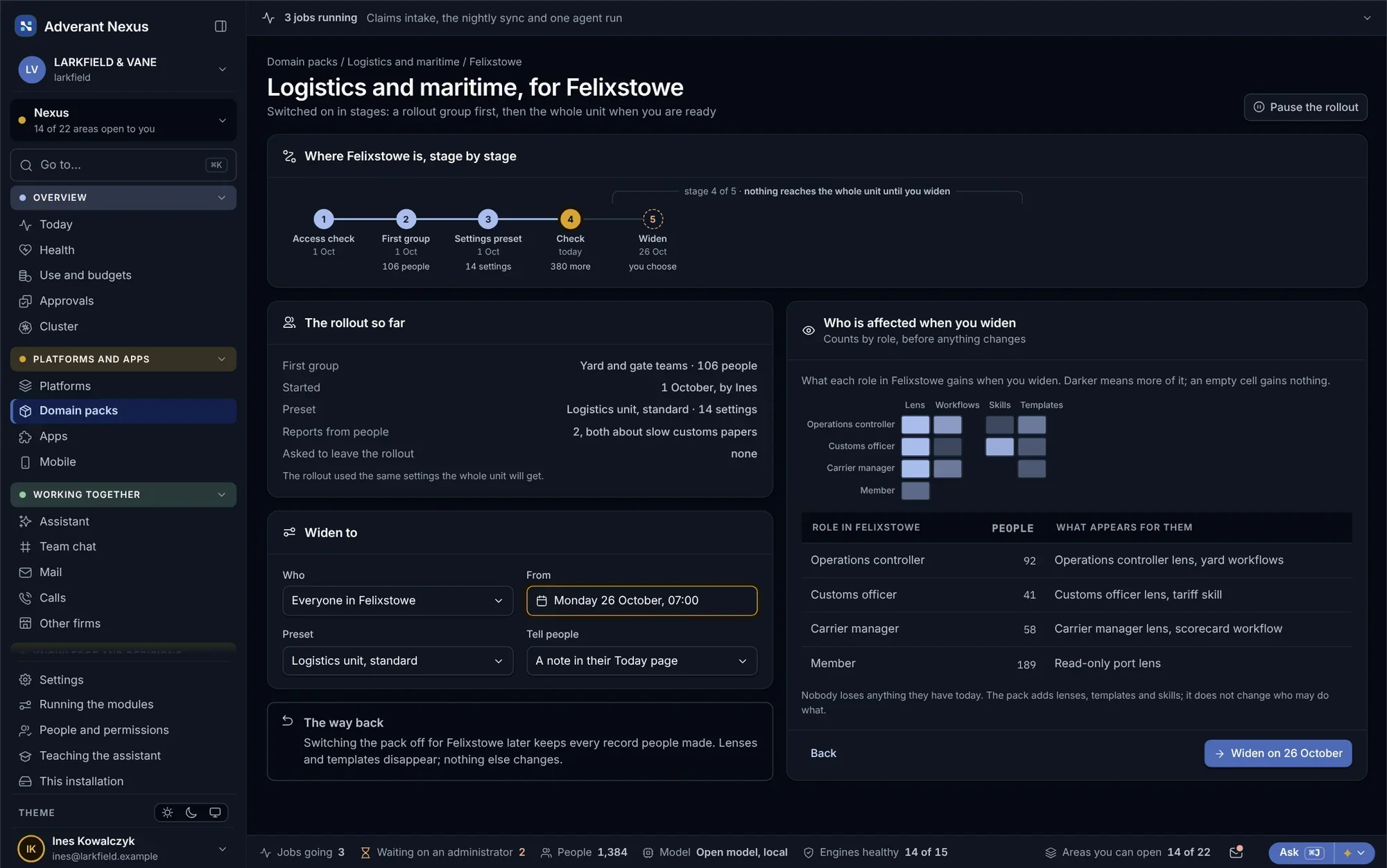
Turn a domain on for a unit
Widen a domain pack from a handful of people to the whole unit.
- Start small, widen when ready
- Lenses chosen per role
- Every change on the record
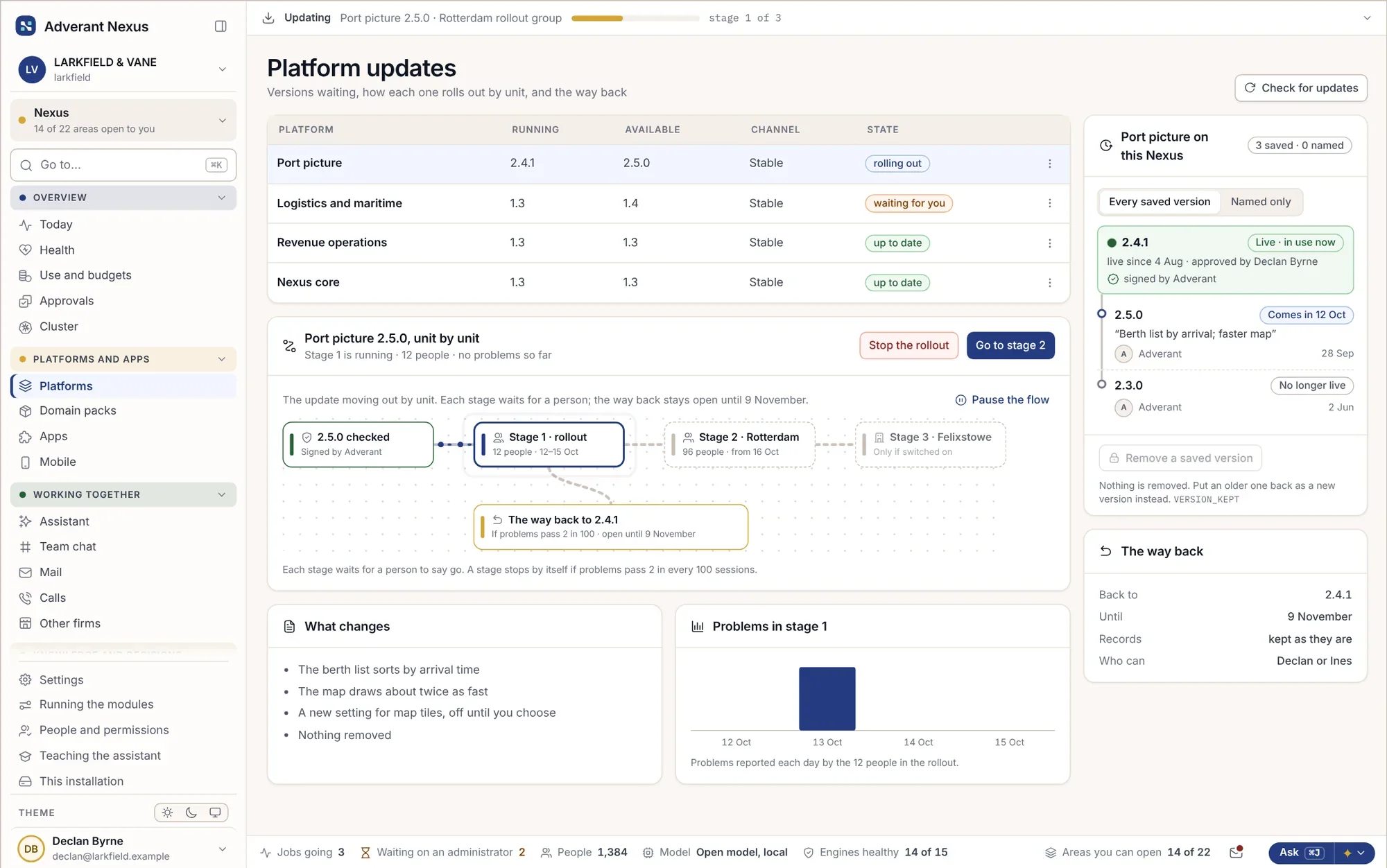
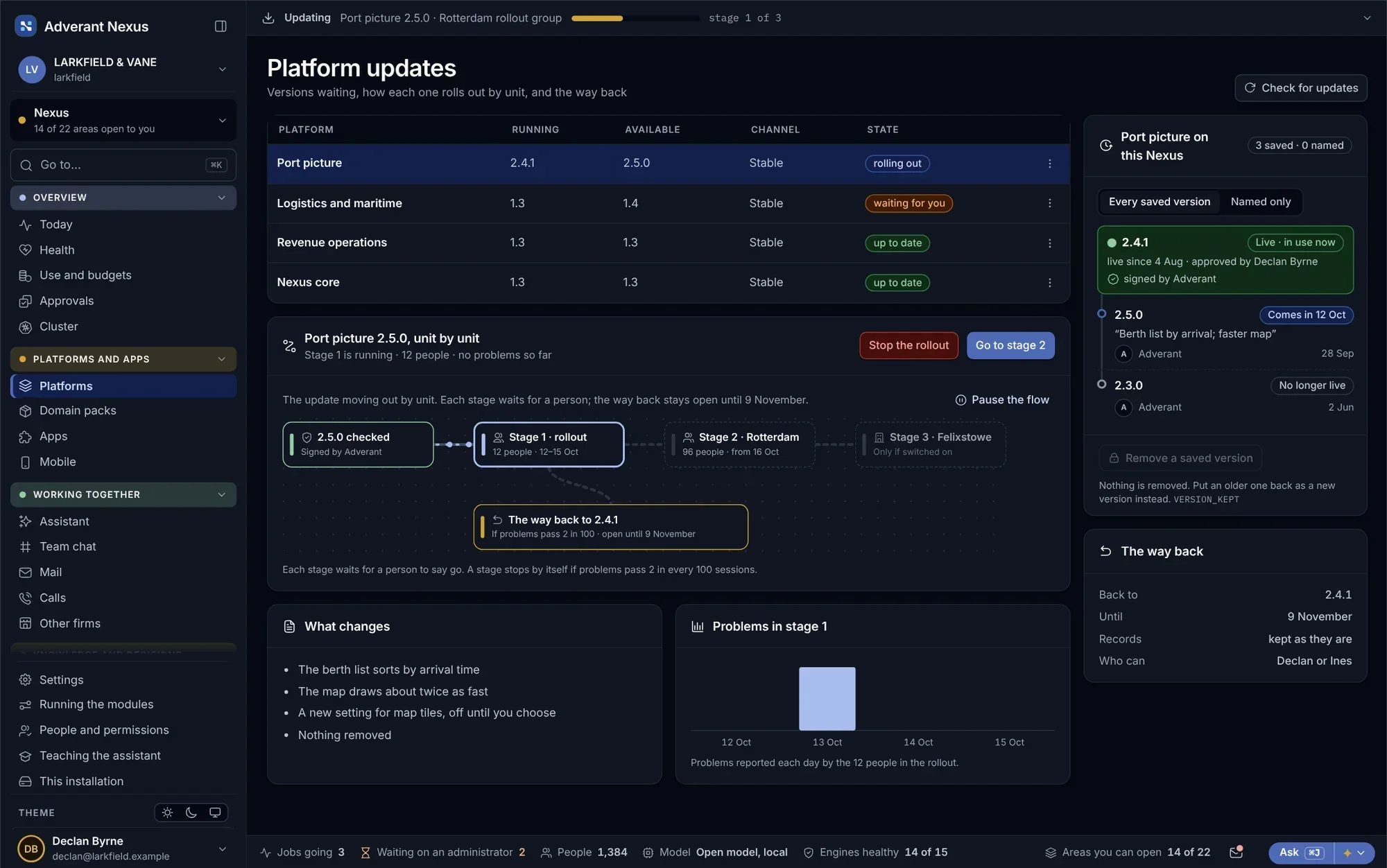
Updates, unit by unit
- Staged by unit
- Rolled back in one step
- Who did what, recorded
Light on your estate, with costs you can see coming.
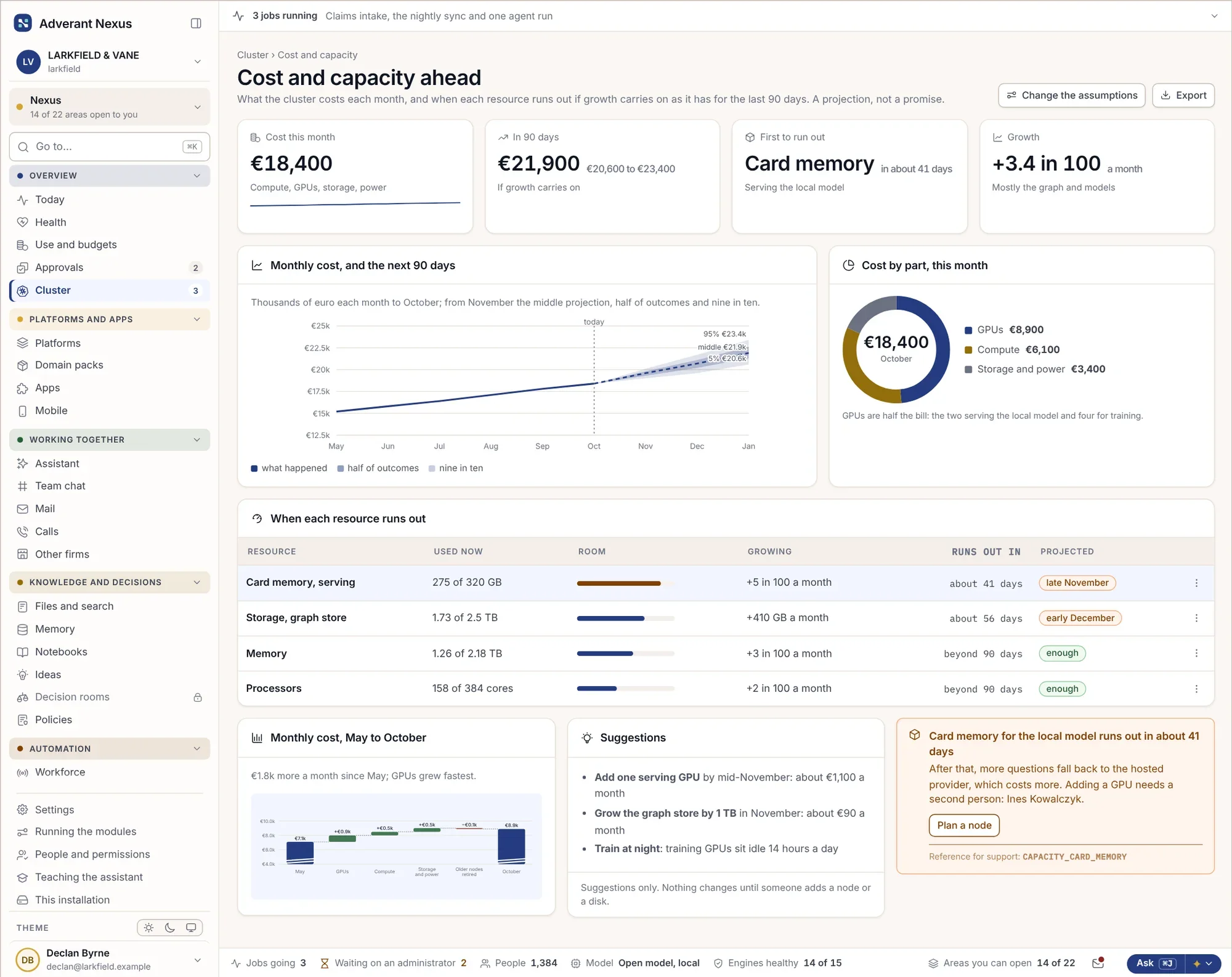
Each unit gets its own space in the cluster, with limits it cannot exceed and walls it cannot cross. You see the capacity Nexus will need over the next 90 days, and what it will cost, well ahead of time.
- Each unit in its own space
- Limits it cannot outgrow
- Capacity and cost forecast ahead of time
Getting started.
Will Nexus slow down our existing systems?
No. Connections are read-only, and you set how often and how fast each source is read. Heavy reading can be scheduled overnight.
Do we have to move data to start?
No. Nexus reads where your data already lives. What it learns goes into the knowledge graph inside your own boundary.
How long before we see something useful?
Most teams ask the graph their first real questions within days of connecting their first sources.
What happens to our old systems?
They keep running for as long as you need them. As units move across, you switch off the old pieces one at a time, and only when nobody depends on them.
Go deeper
Plan your first unit.
Tell us which systems you run today. We will map the first sources, the first unit and the first questions with you.