

Where the work happens. With AI that shows its sources.
Every platform on Nexus comes with the tools a team needs to work together: chat, notebooks, calls, mail and decision rooms. The assistant sits beside all of them and cites what it read.
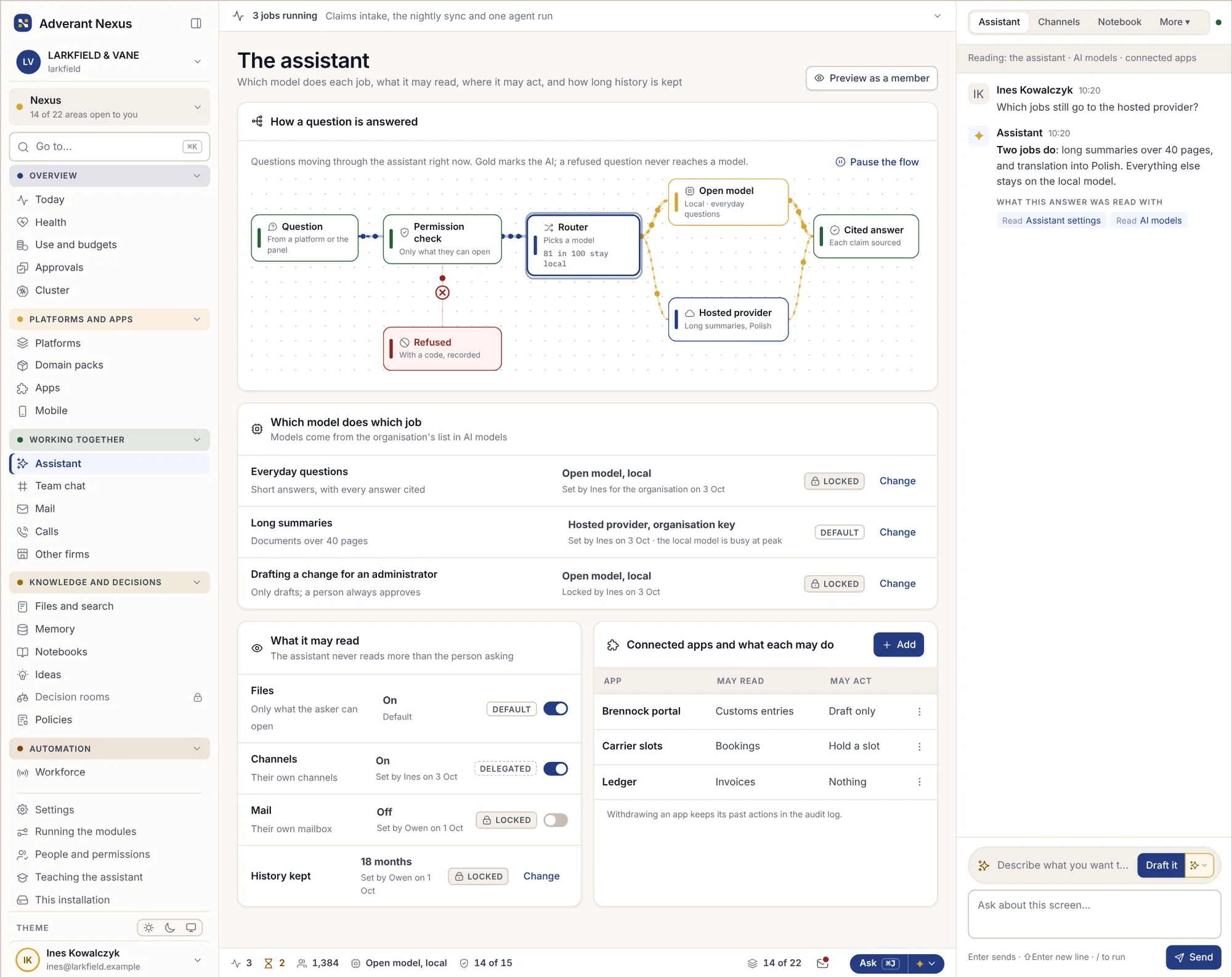
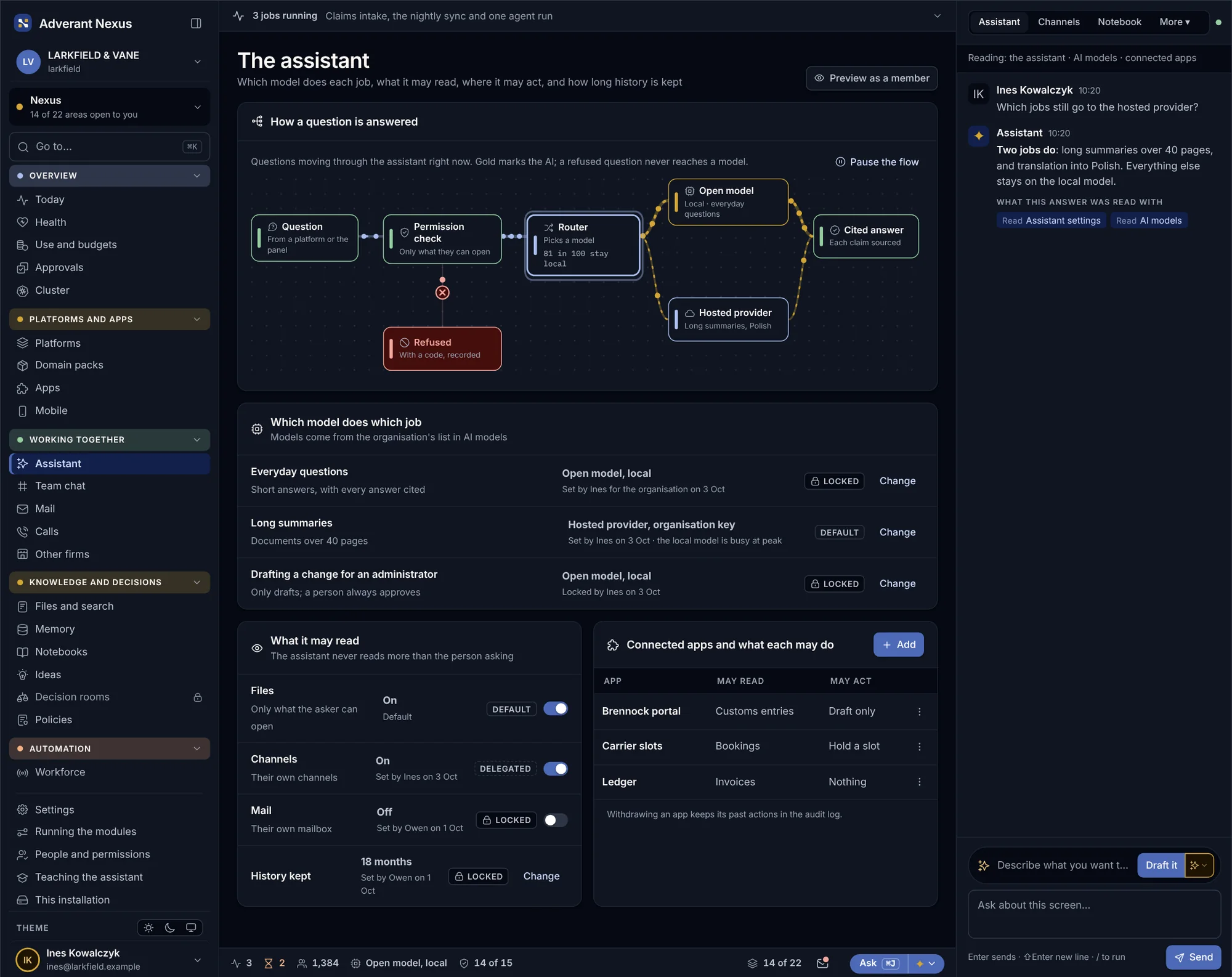
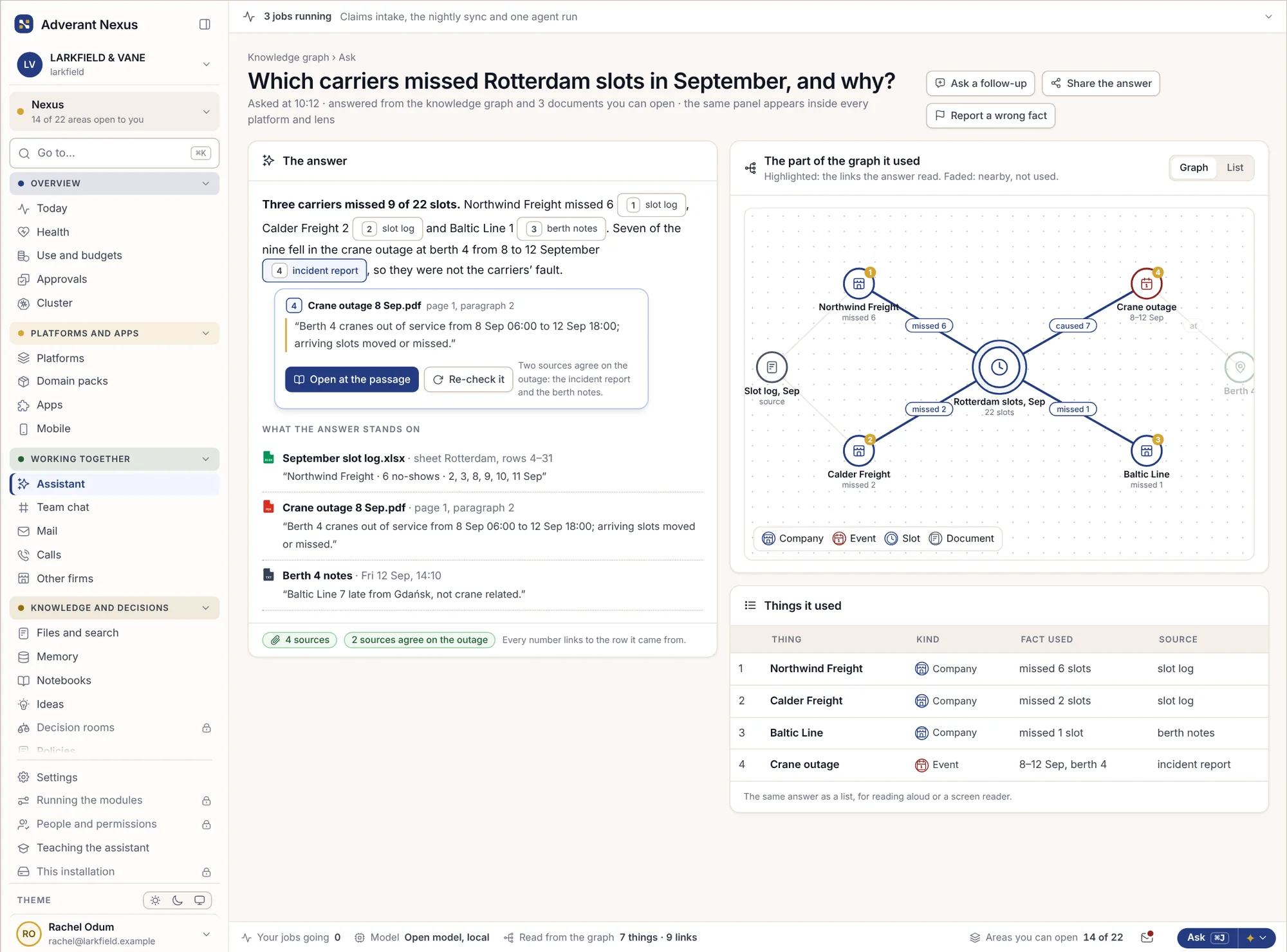
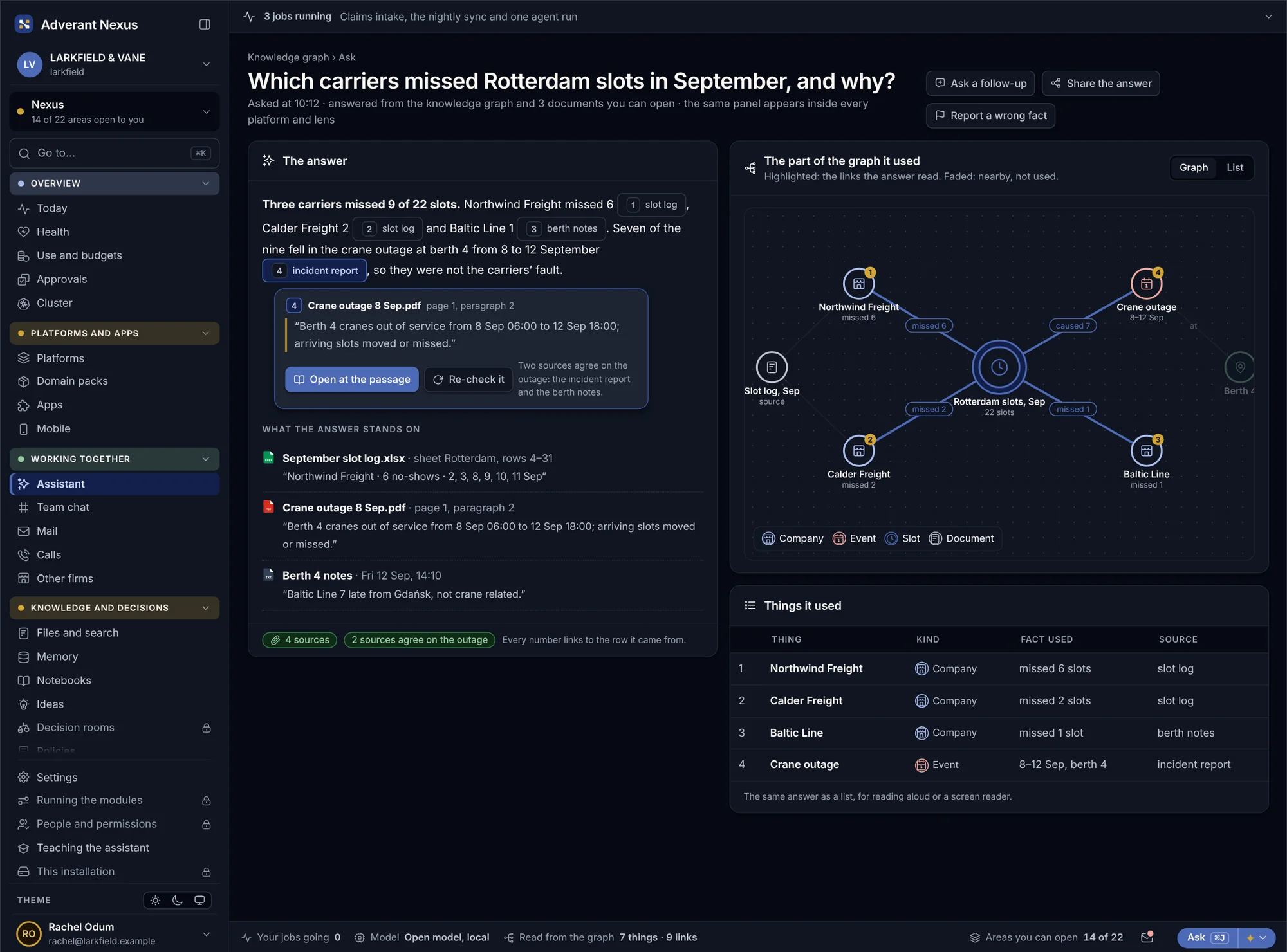
Ask anything. See why it answered.
The assistant reads your documents, records and the knowledge graph, then answers in plain words. Each sentence points to the page it came from, so anyone can check it in one click.
- Answers only from what the person asking is allowed to see
- Each claim links to the page, cell or recording behind it
- Says so when it does not know, instead of guessing
- Runs on the model your organisation chose, in the place you allowed
Everything a team needs. Already connected.
The tools share one set of people, permissions and records. Nothing needs gluing together, and nothing leaves the platform without a rule saying it may.
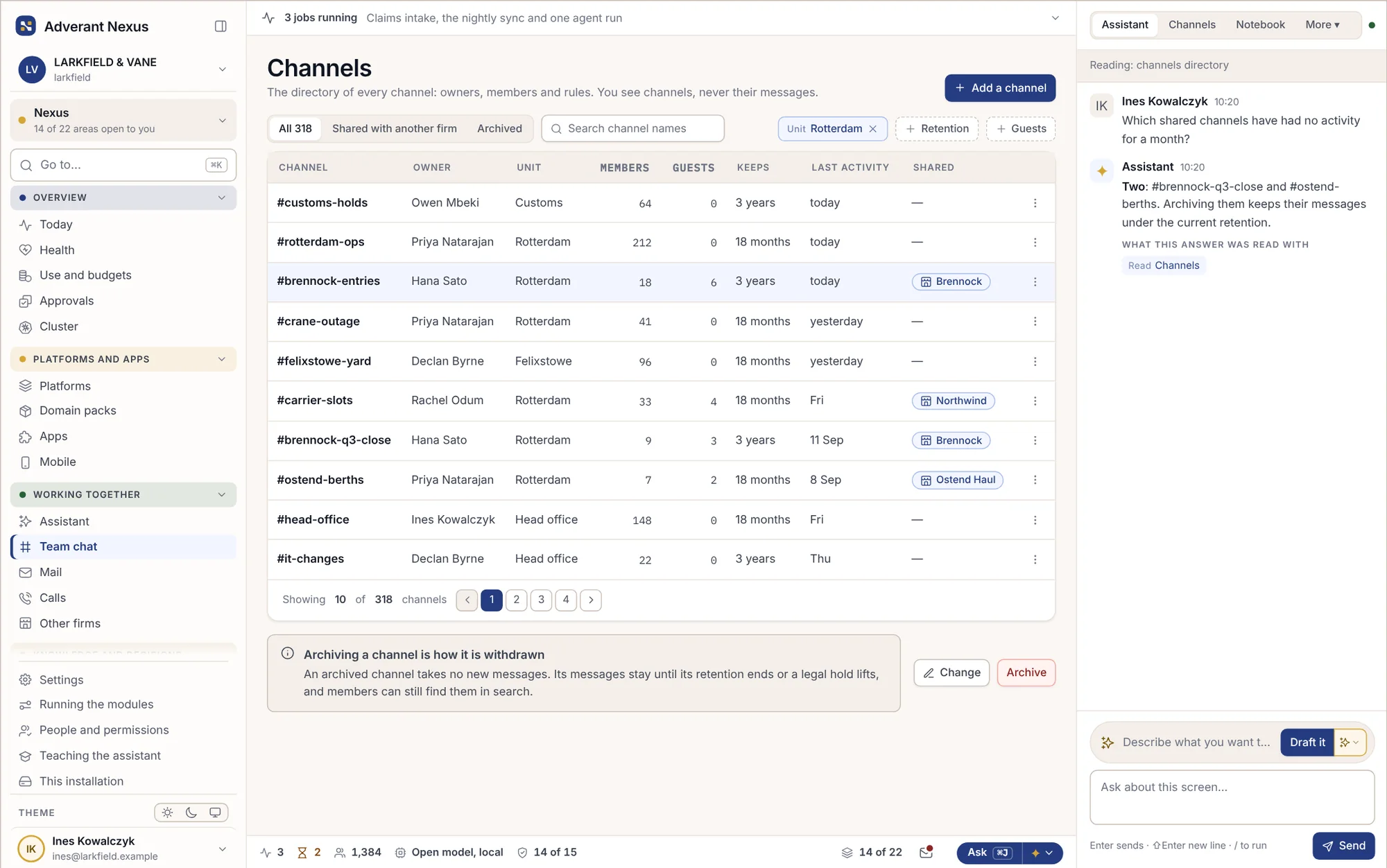
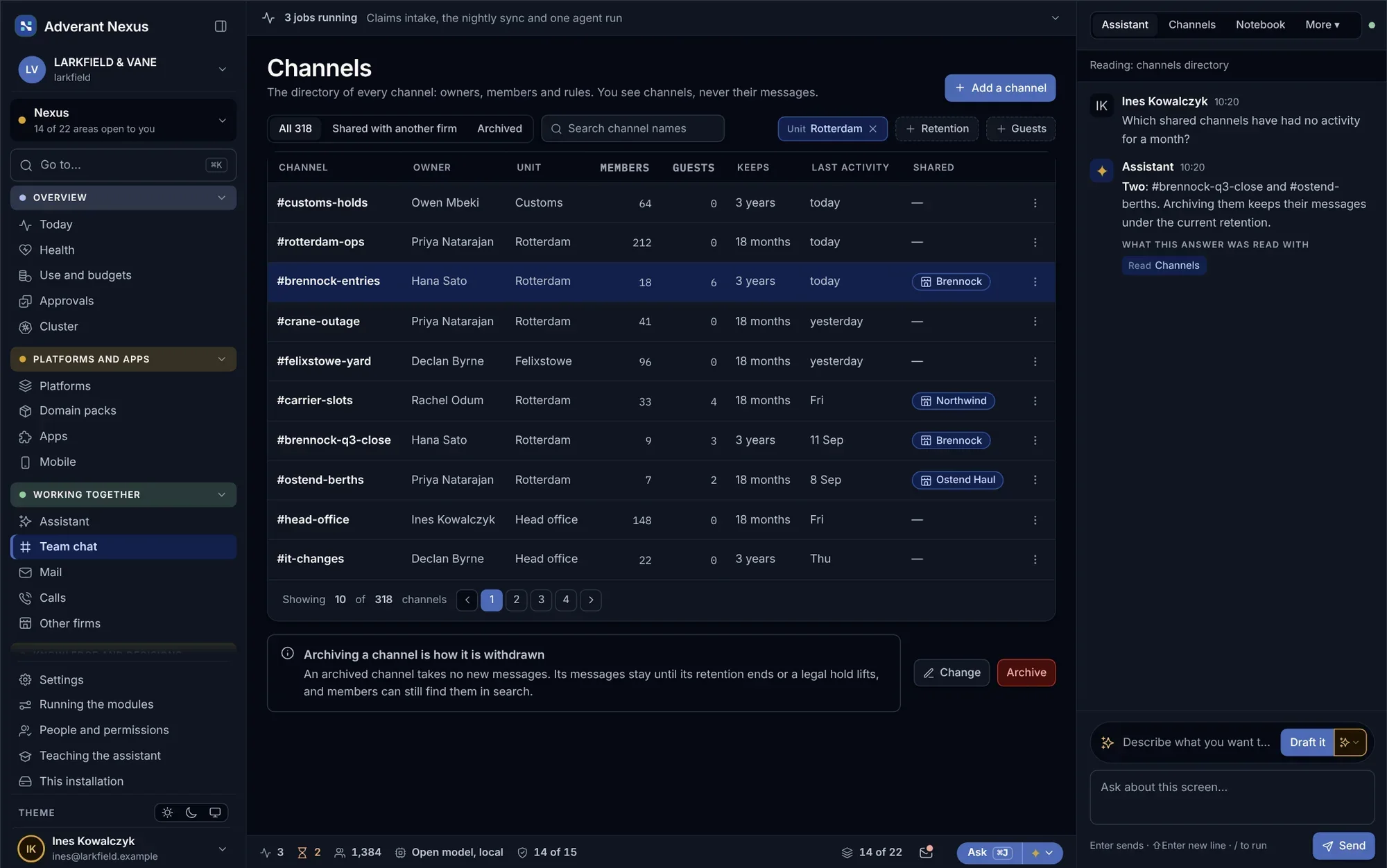
Team chat
Channels for each team, case or project, with the assistant in the room. Retention and legal holds follow your rules, and guests from other firms see only the channels they were invited to.
- Channels per case or project
- Retention and legal holds
- Guests kept to their own channels
Notebooks
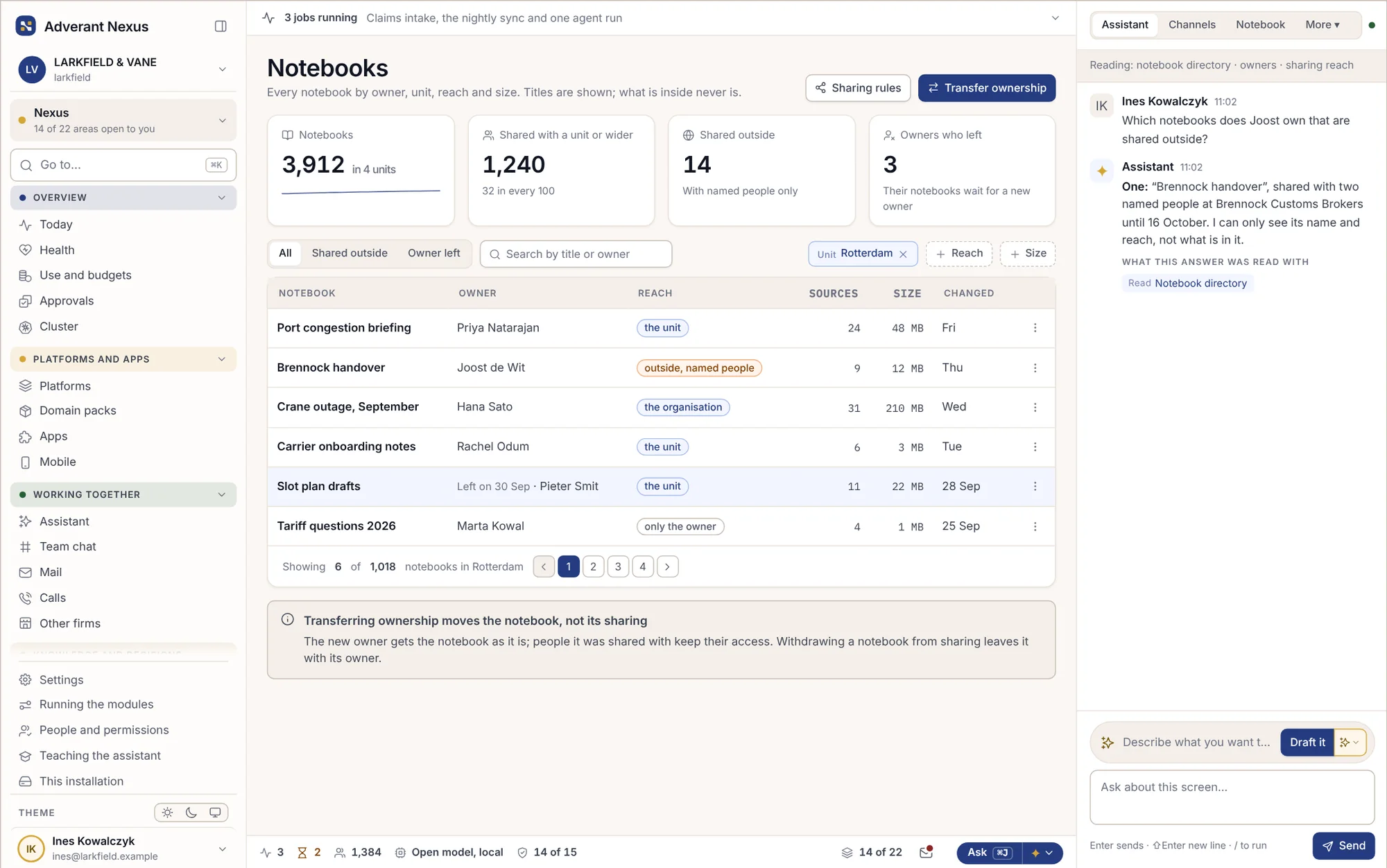
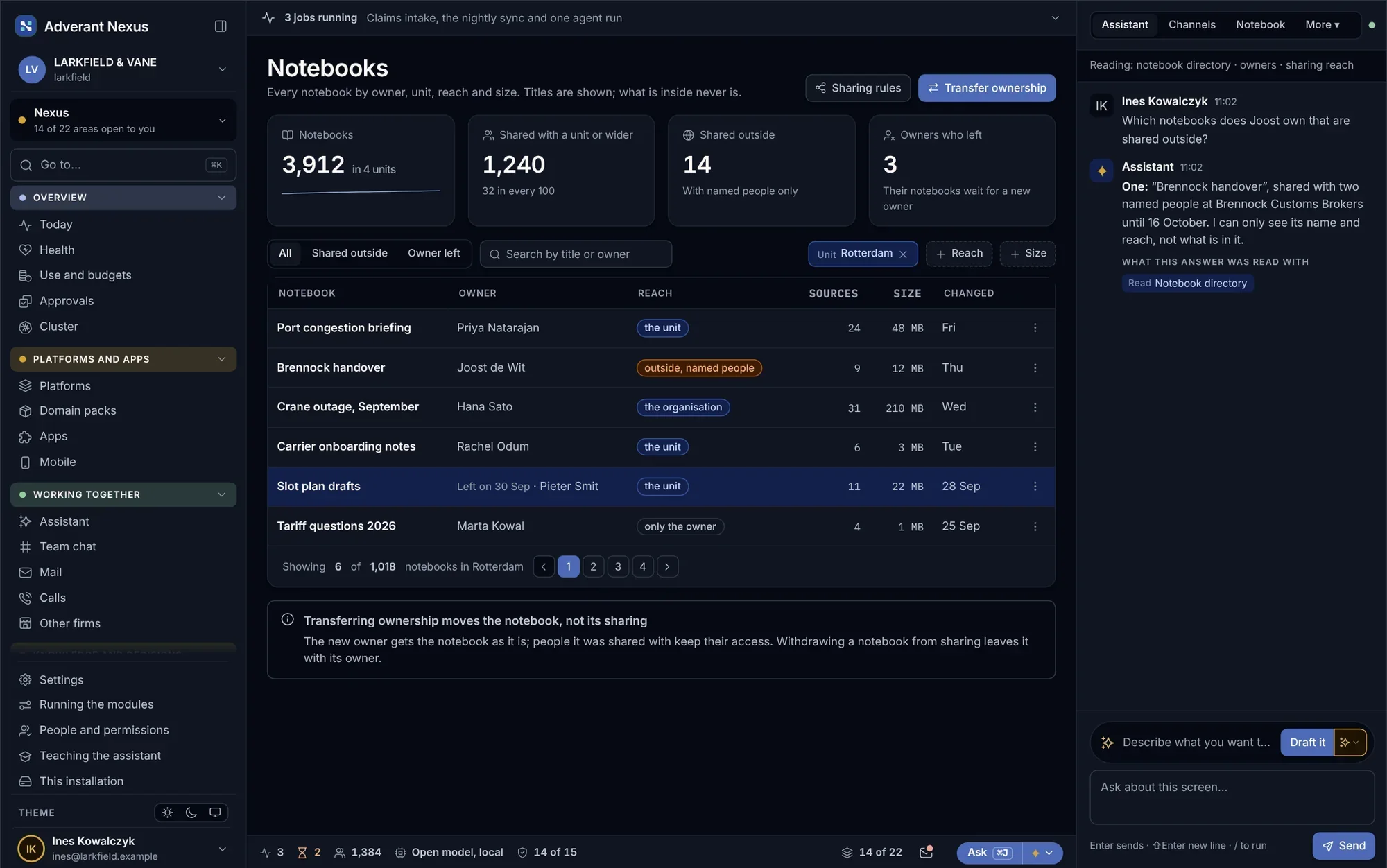
Shared notebooks for analysis and drafting. Every sentence the assistant writes links back to the page it came from. Sharing rules decide who can read, comment or copy out.
- Sources on every AI sentence
- Sharing rules per notebook
- Works on an air-gapped site
Calls
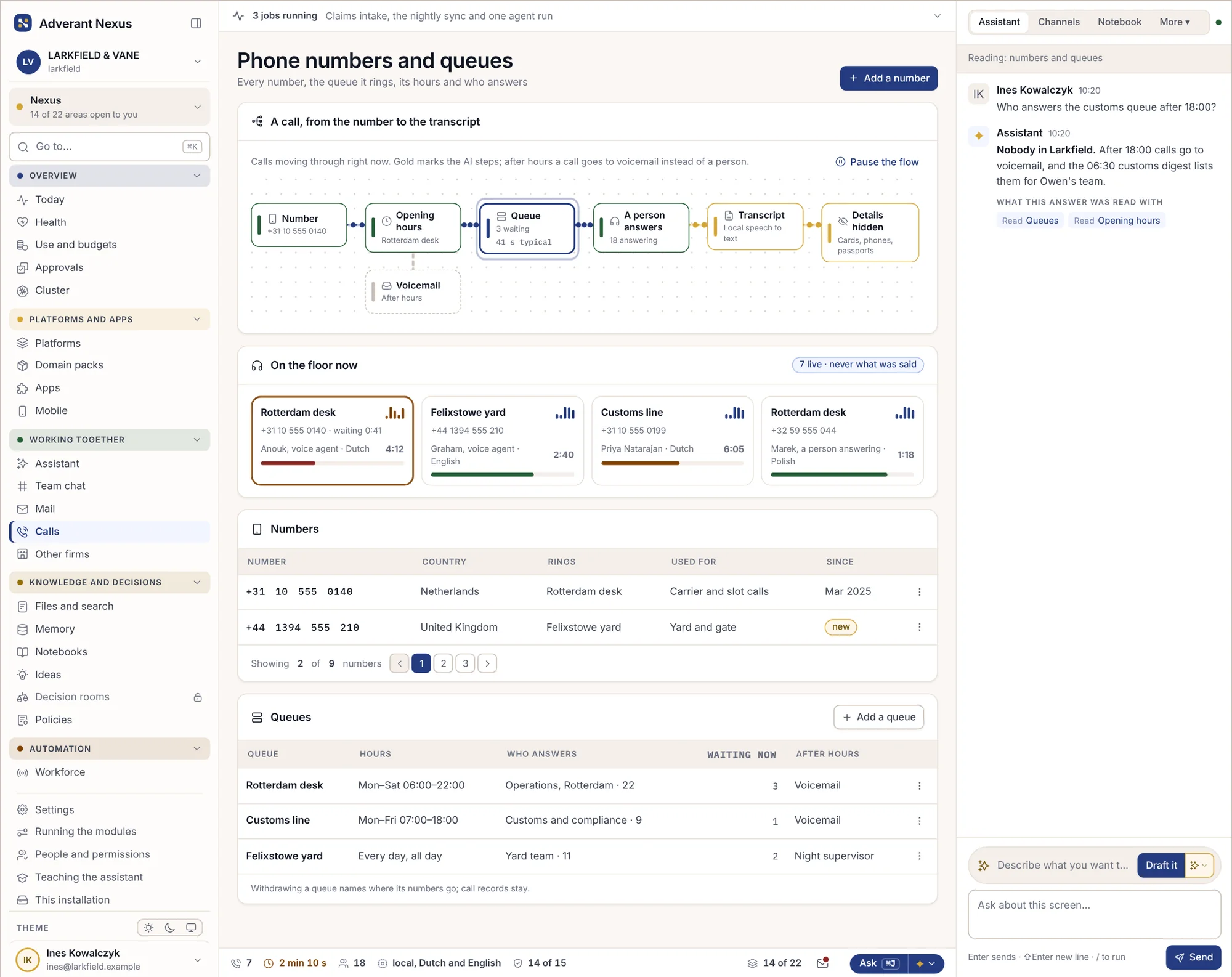
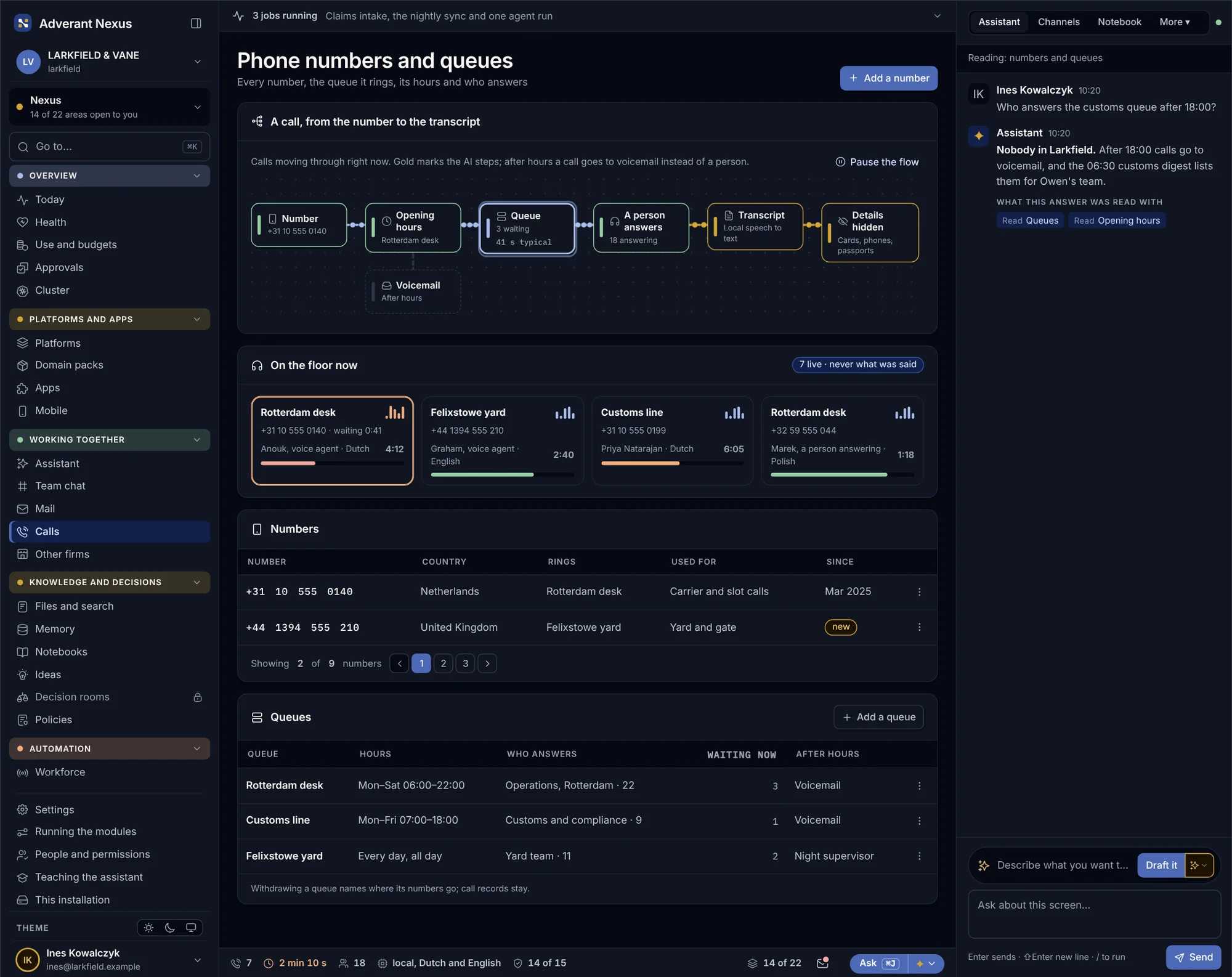
Phone numbers, queues and voices for every platform. Recording and consent follow the rules of each country, and transcripts go into the same record as the rest of the work.
- Numbers and queues per team
- Recording and consent by country
- Transcripts filed with the case
Team inboxes
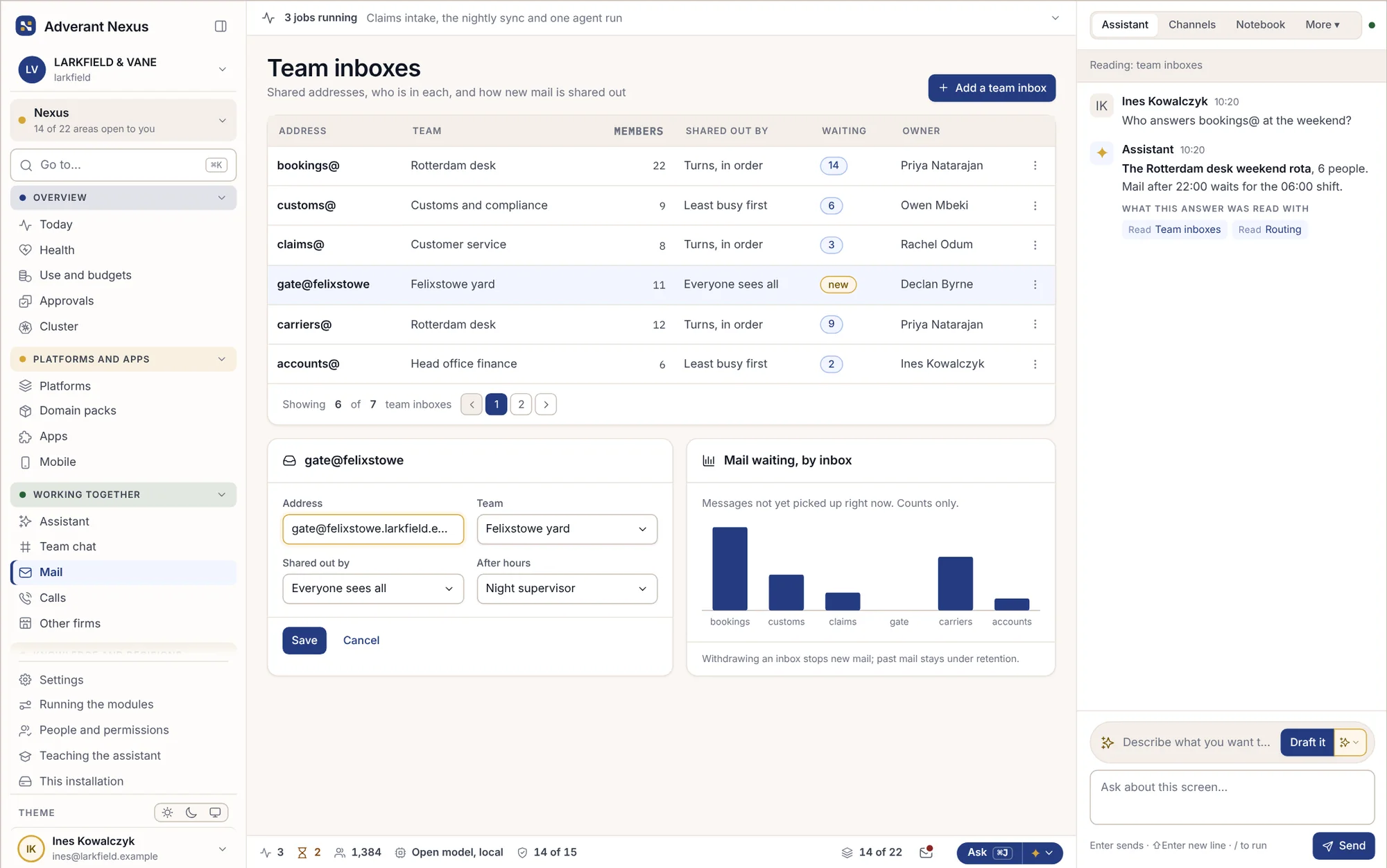
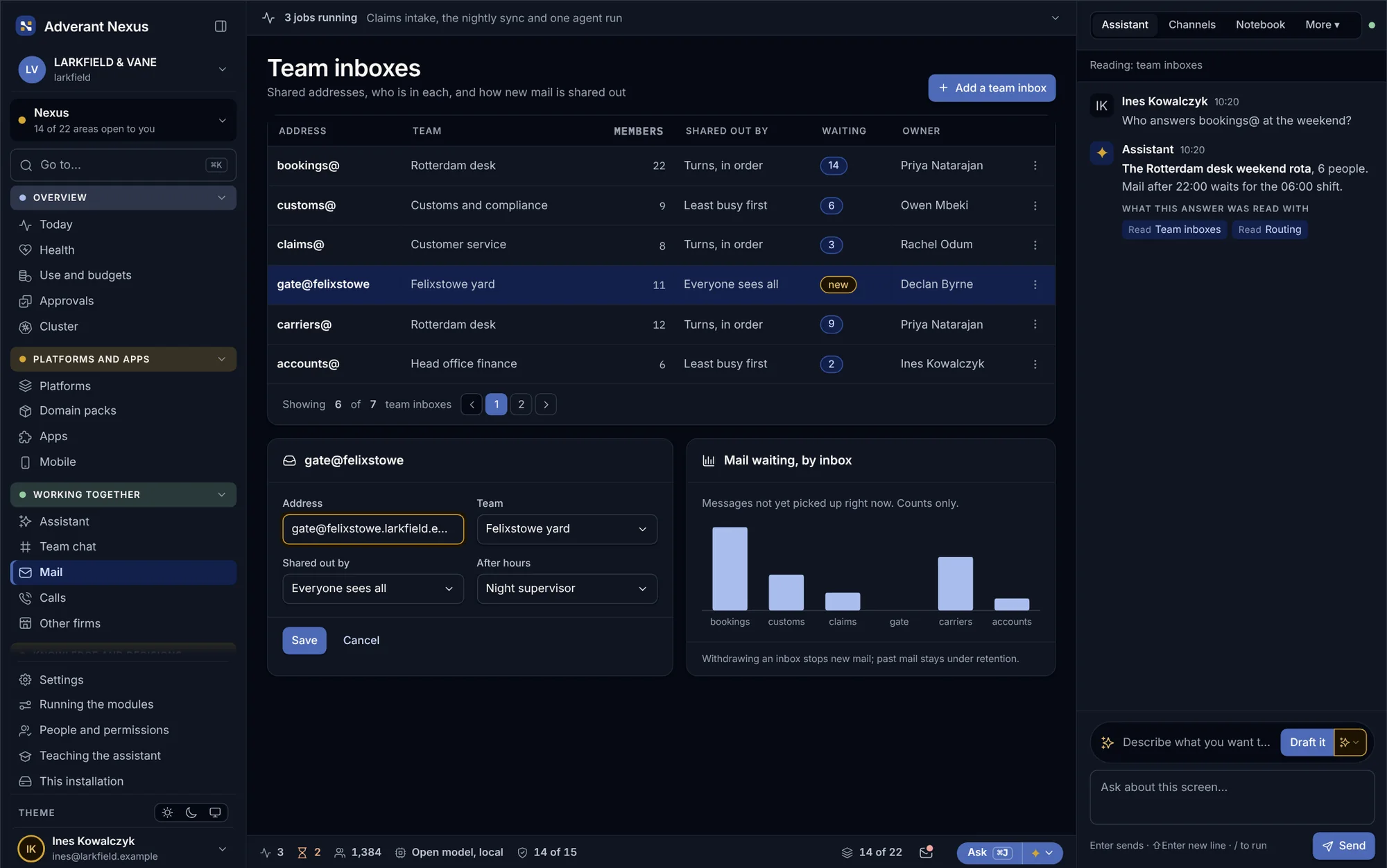
Connected mailboxes and shared team inboxes, with rules for incoming mail and checks before anything leaves. The assistant can sort, summarise and draft. A person sends.
- Shared team inboxes
- Checks before mail leaves
- Drafts by AI, sent by people
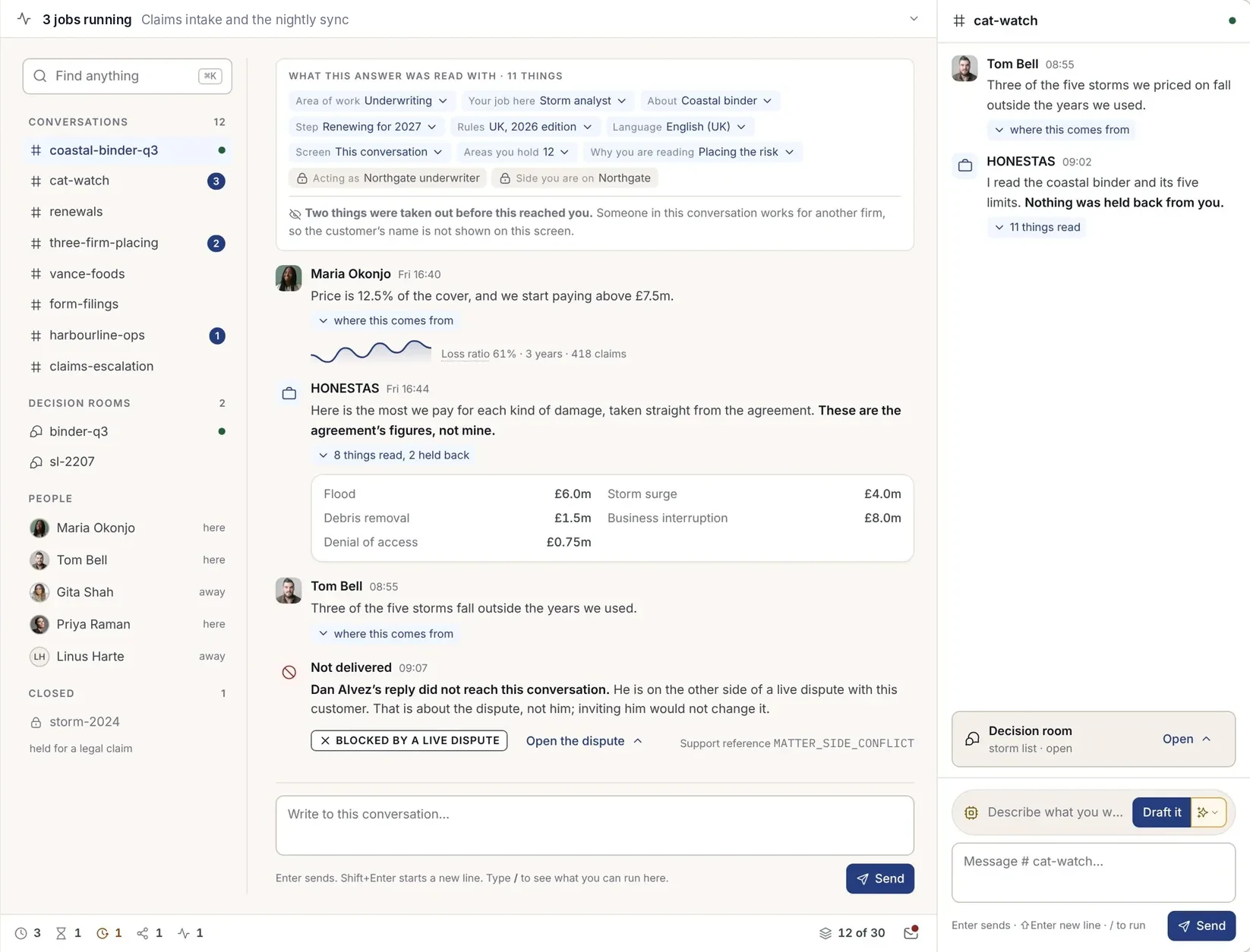
For the calls that matter, a person rules.
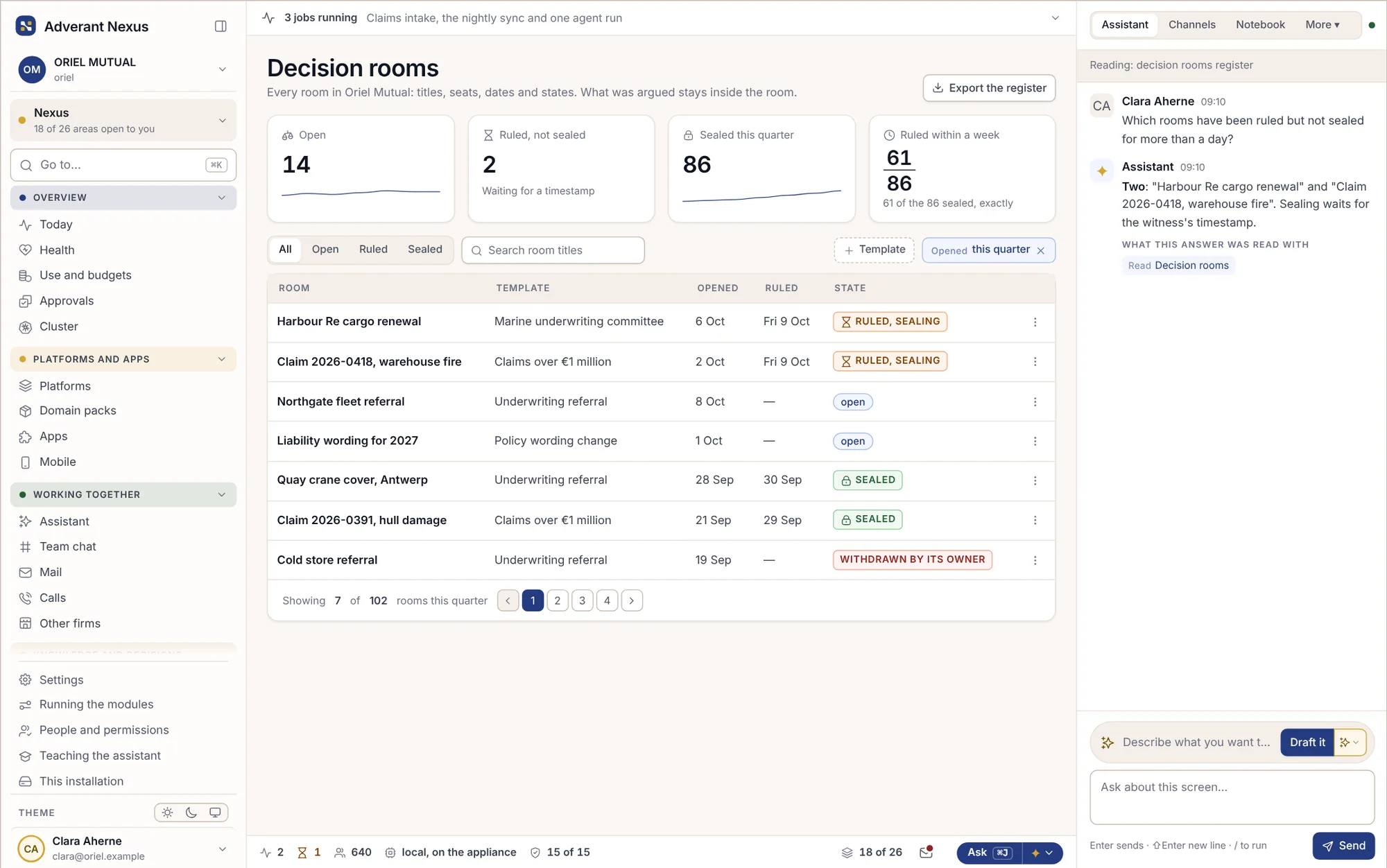
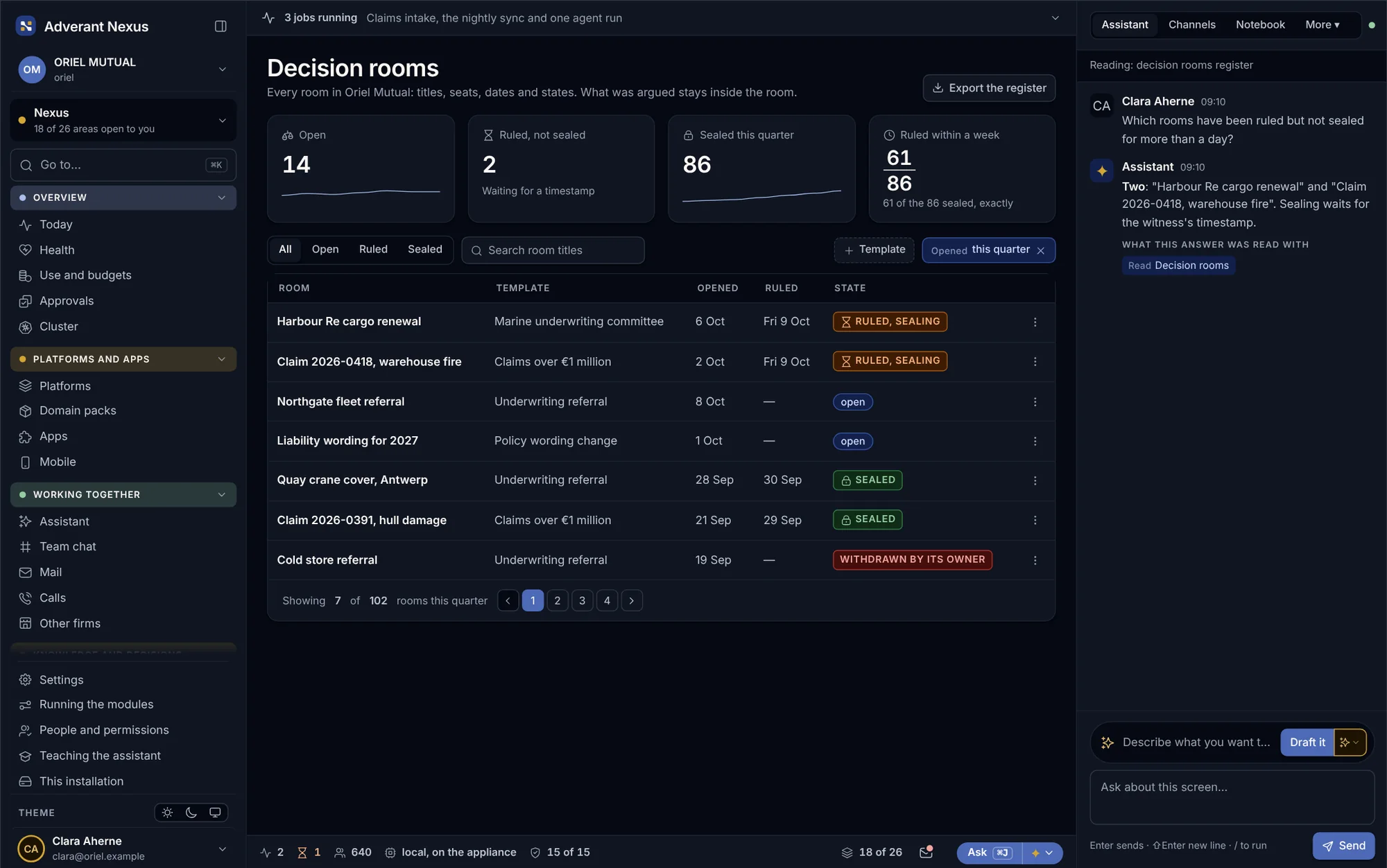
A decision room puts the facts, the rules and both sides of the argument in one place. AI can argue for and against. A named person makes the decision, and the ruling is sealed.
- Seats
A chair, the people who must be heard, and AI seats that make the case for each side.
- Signing rules
Who may rule, and when a second signature is needed.
- The ruling
Reasons in plain words, a time stamp from outside Adverant, and a record that cannot be quietly changed.
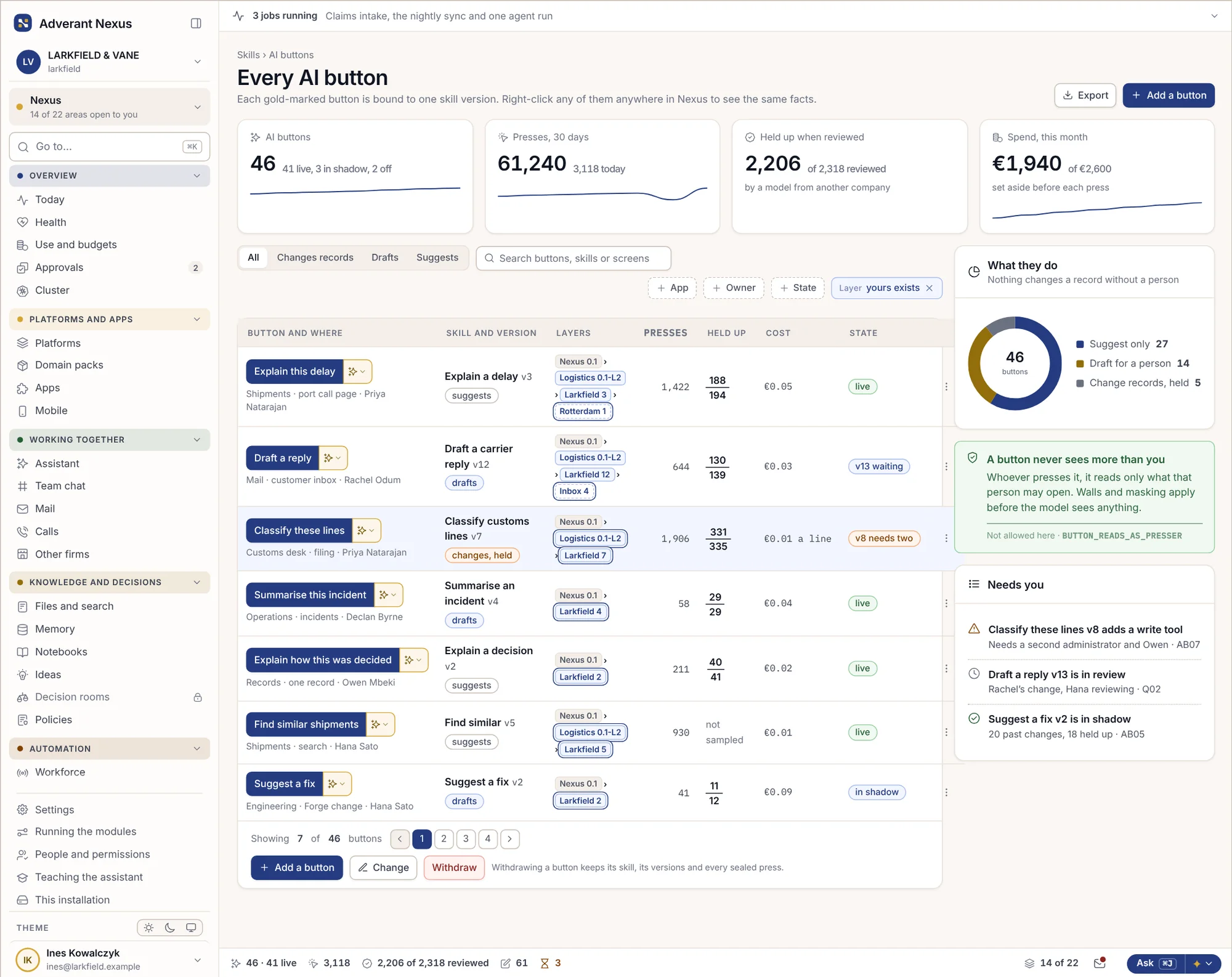
An AI button wherever people work.
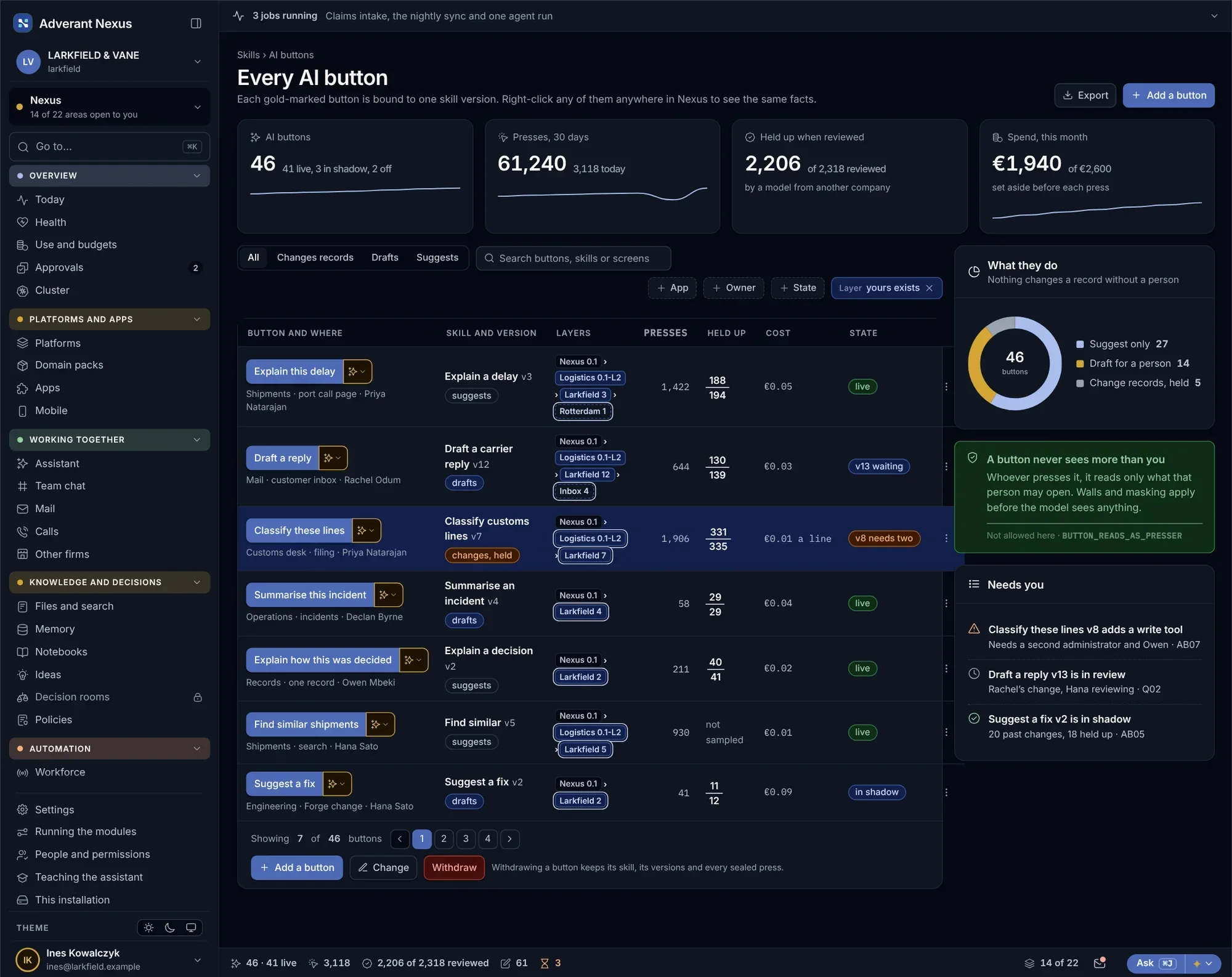
Summarise this claim. Draft the reply. Explain this chart. Each button is a small, tested skill with an owner. Right-click a real button to see what it does, which model it uses and who approved it.
- Every button tested before it ships
- Changes that write data need an approval
- A bad result becomes a test case, so it does not happen twice
Pipeline, quotes and deal rules, on the same platform.
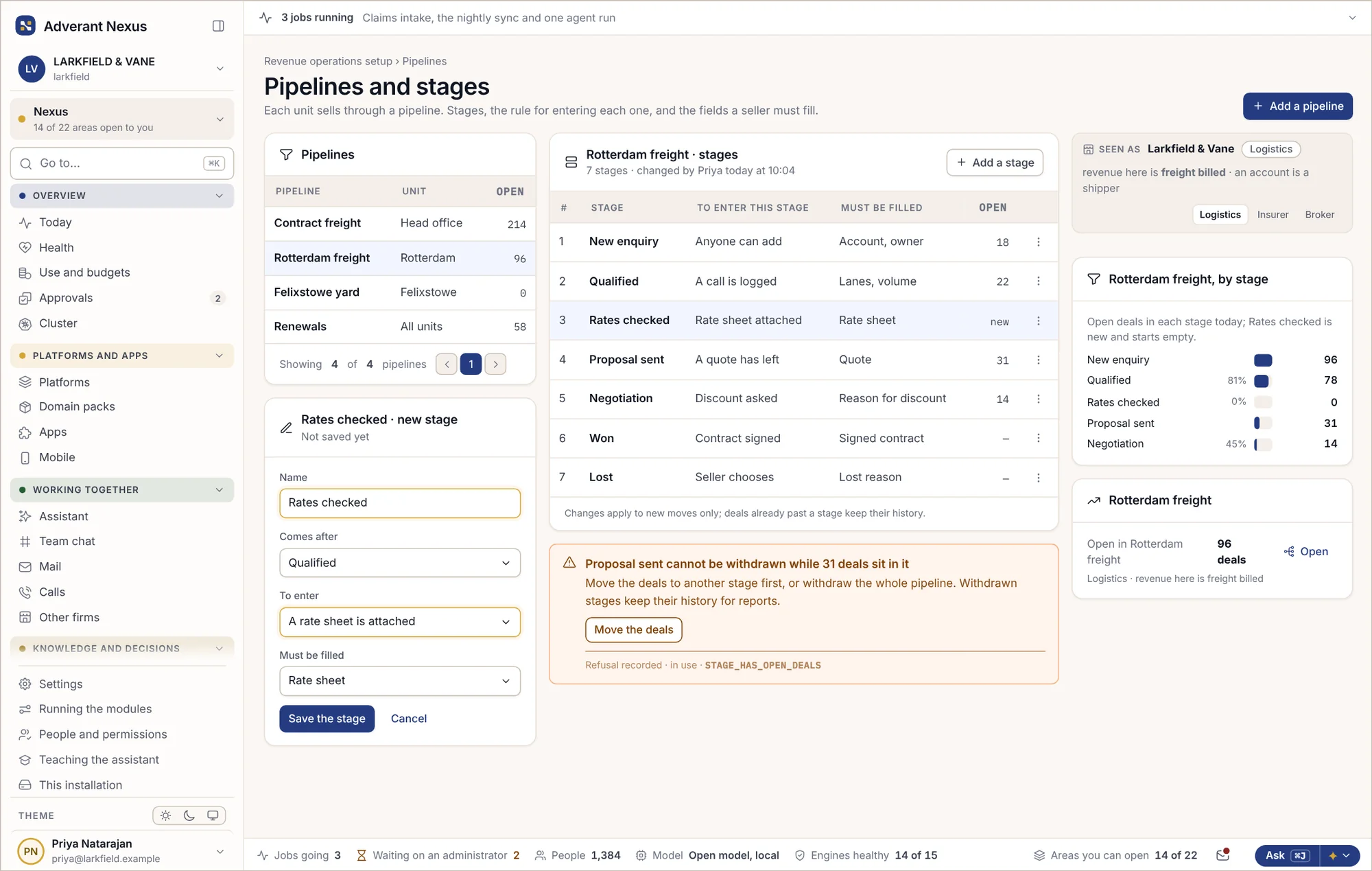
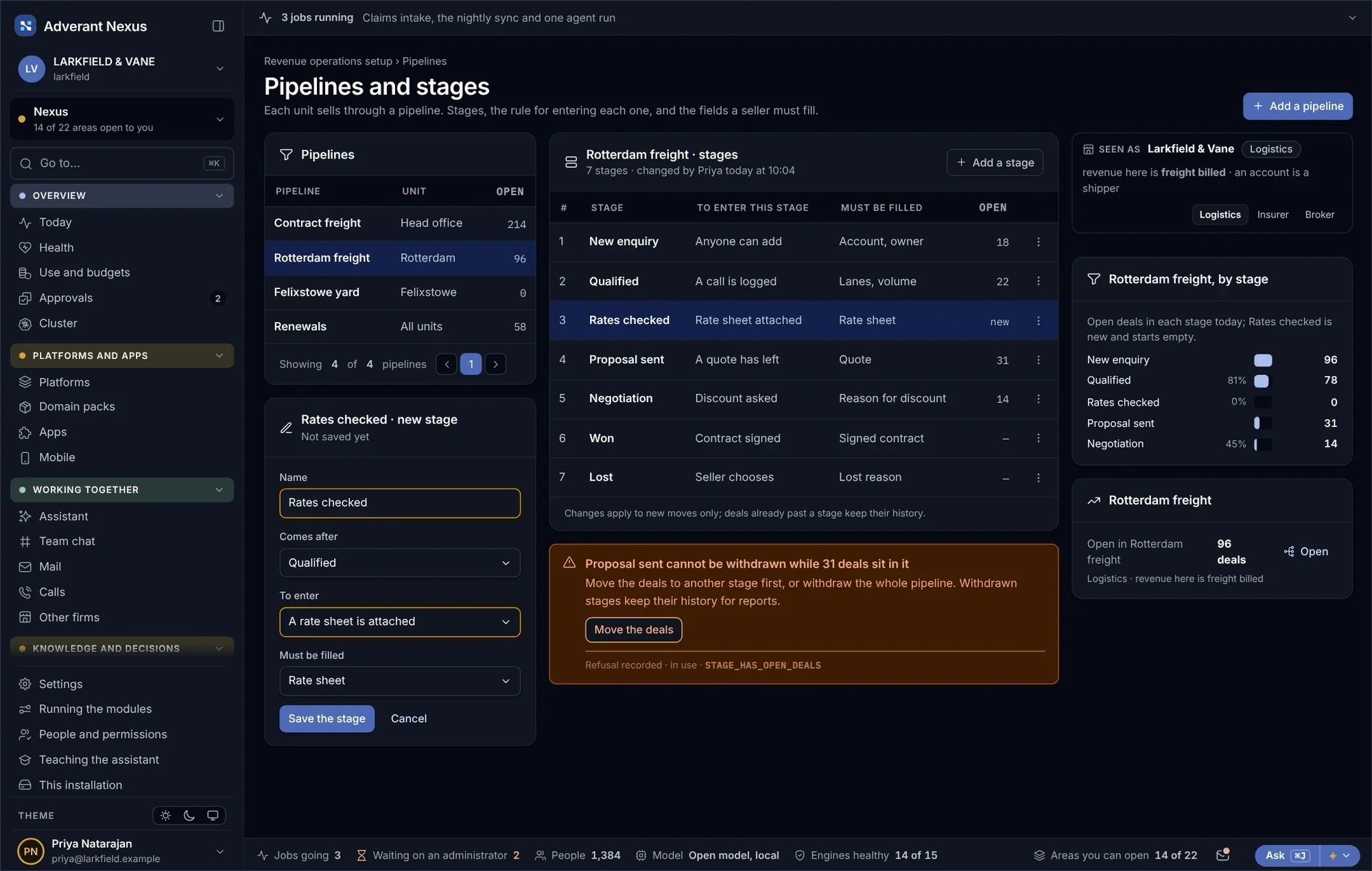
Revenue operations is a module you can add to any platform. Pipelines, territories, price lists and deal desk rules live next to the rest of the work, with the same permissions and the same records.
- Pipelines, stages and record types
- Territories and quotas
- Discount and deal desk rules with approvals
- Price lists and quote templates
- Payments, refunds and reconciliation to the ledger
Go deeper
See your team work on Nexus.
Bring a piece of work your team does together today. We will show it in chat, notebooks and a decision room, with sources on every answer.