

Every model call, routed where you allow.
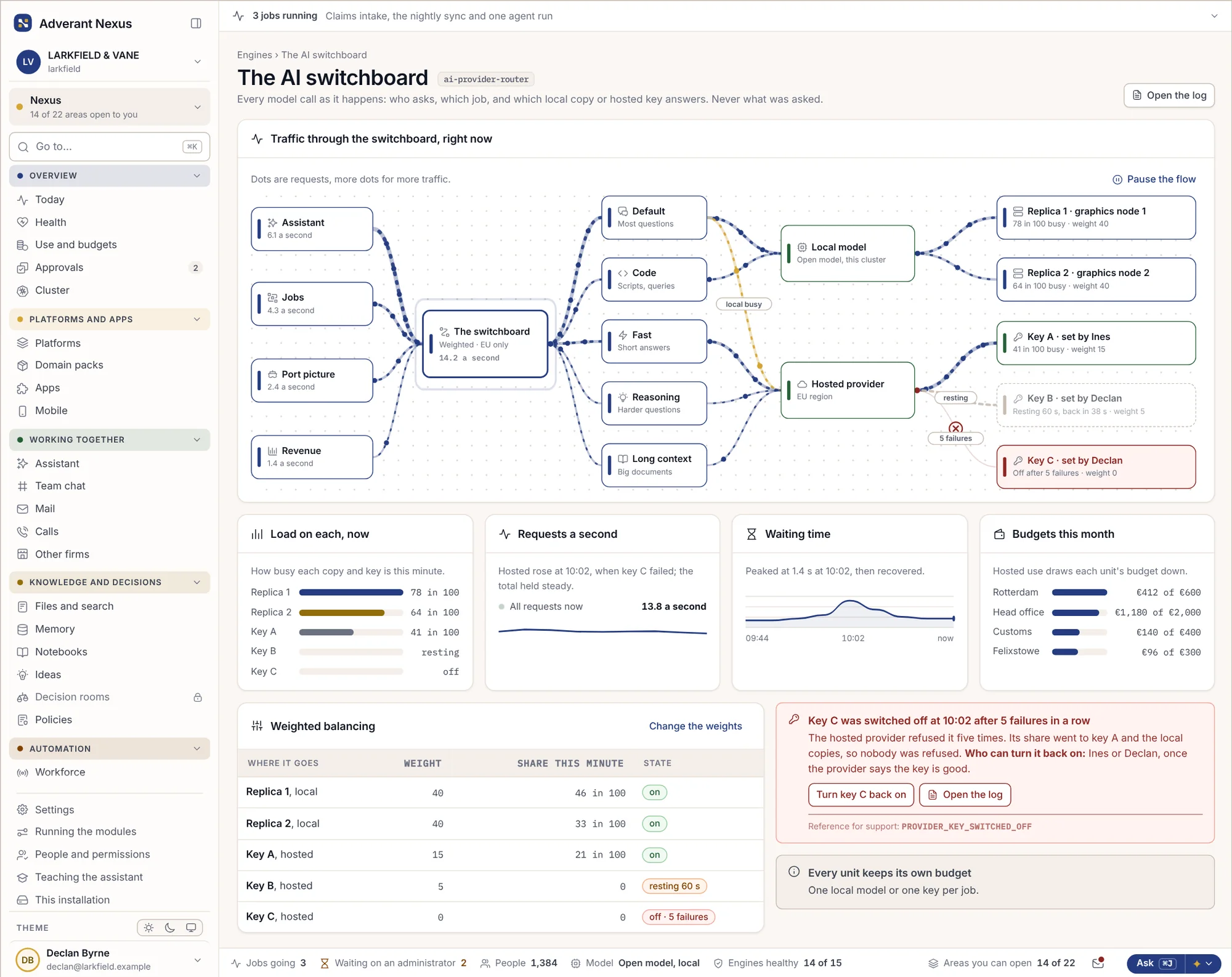
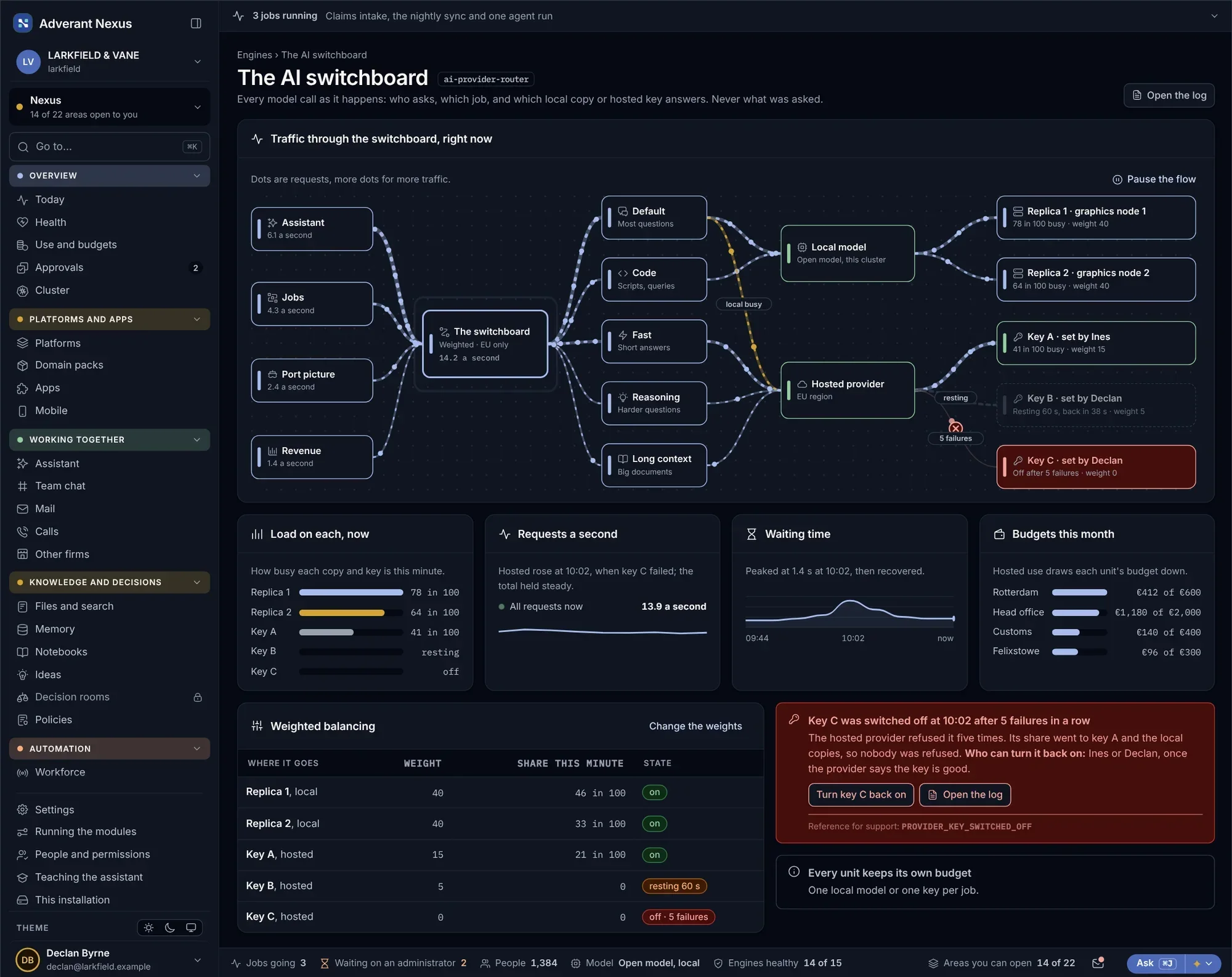
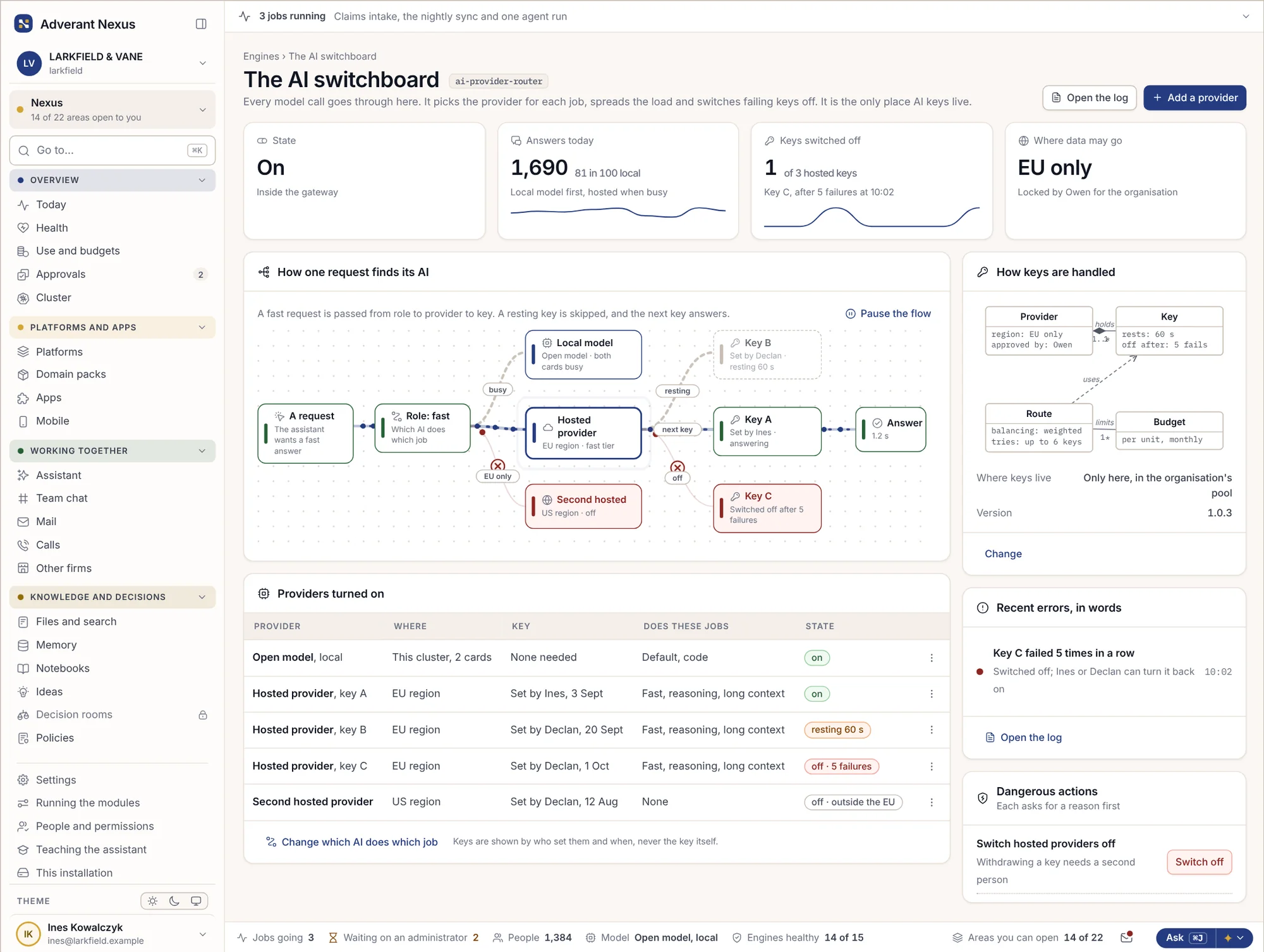
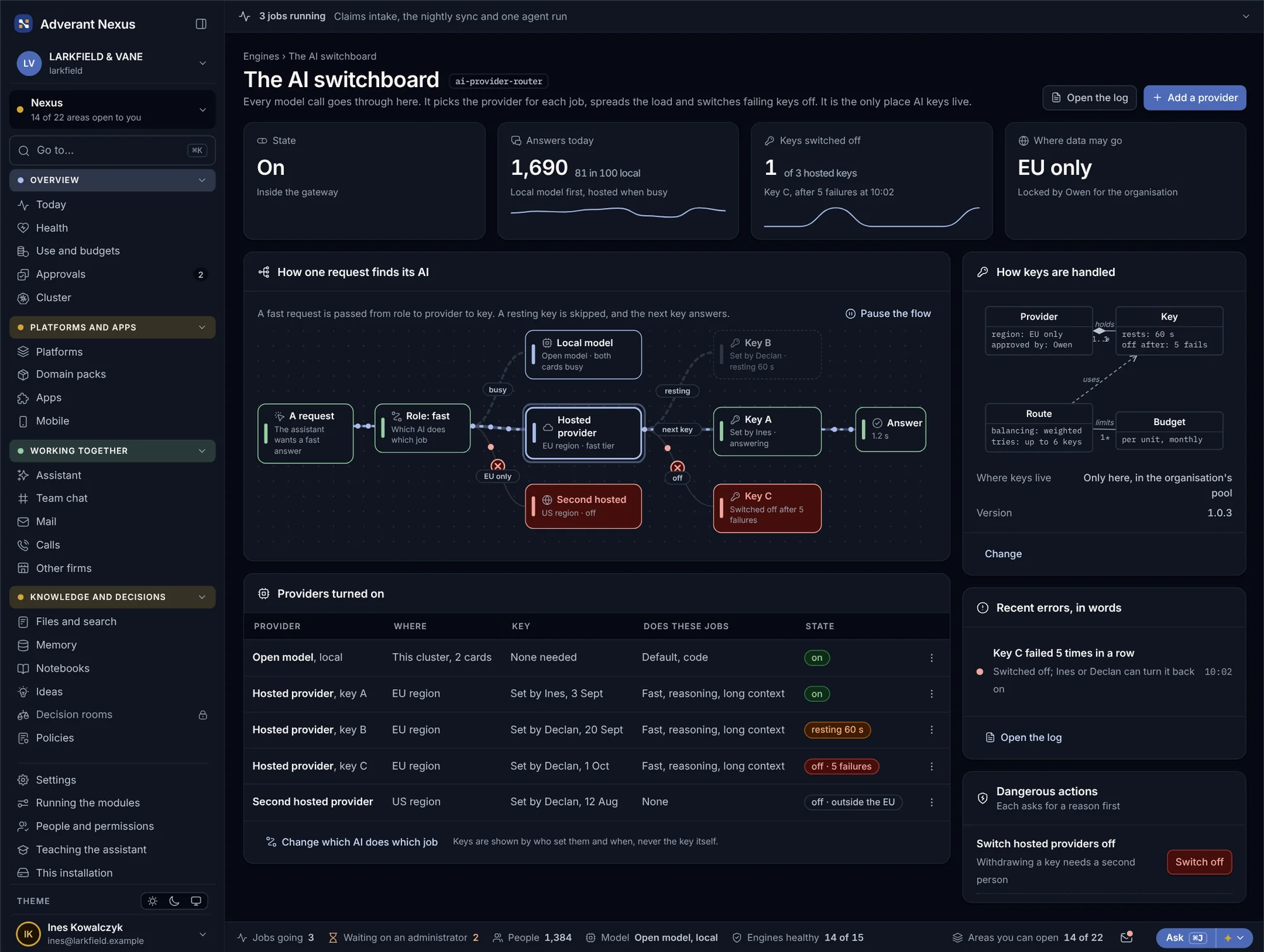
Platforms on Nexus never call a model directly. They ask the switchboard. It picks the model that fits the job, sends the call to a place your rules allow, and counts it against a budget someone owns.
One question. Four decisions, in milliseconds.
Before a call leaves, the platform labels it: which unit is asking, for which role, and how sensitive the data is. The switchboard routes on that label and never opens the call itself. If the first choice is busy or down, the next allowed choice takes over.
The job
Reading a scanned form, drafting a letter and checking a decision need different models. Each app says what kind of job it is.
The data
Personal or secret data can be held to your own models on your own hardware. Public data may use more.
The place
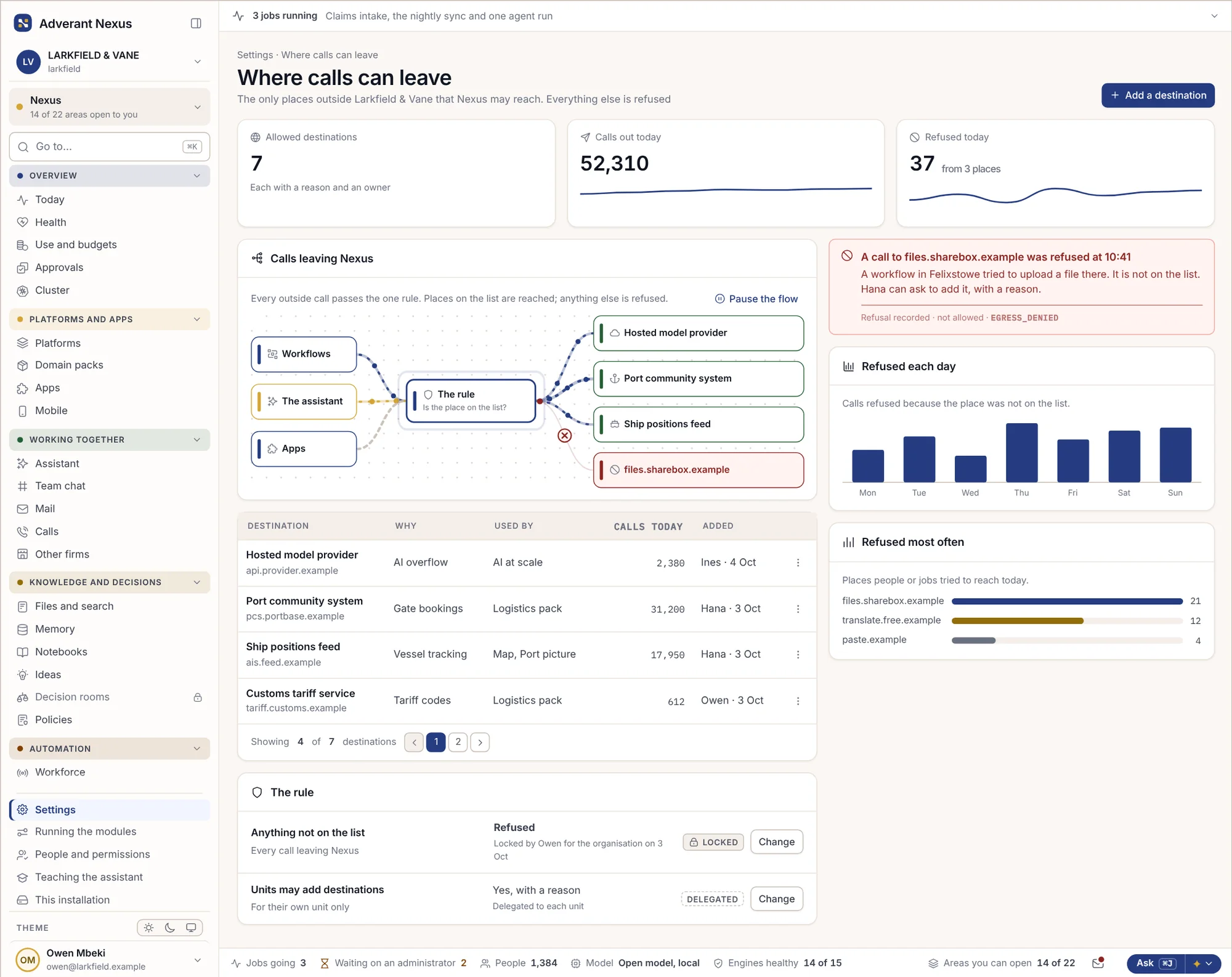
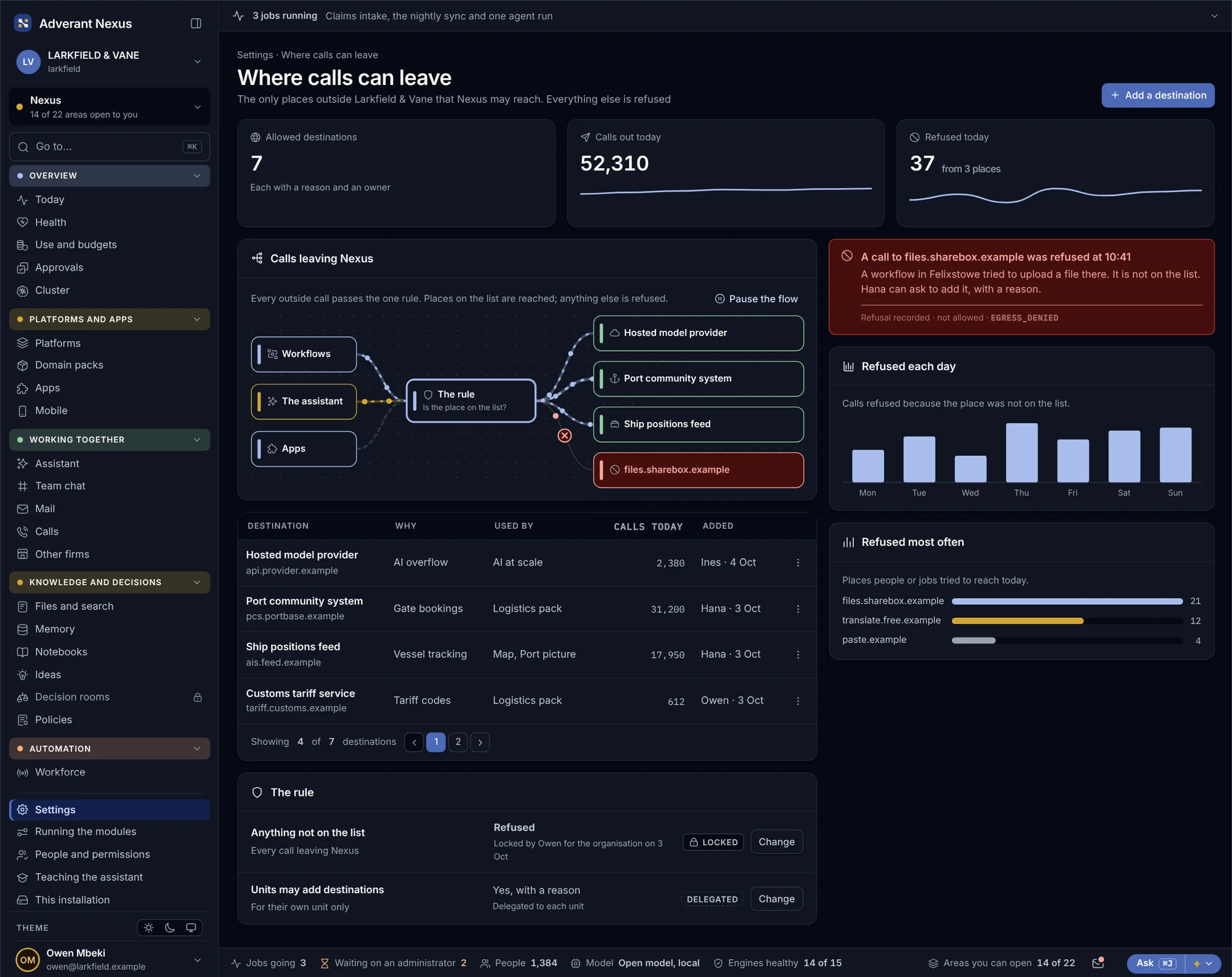
Calls only go to regions and providers the unit allows. A call that would leave is refused, and the refusal is logged.
The fallback
If a model is slow or down, the next allowed model answers. Nobody waits, and no rule is broken to get there.
Your rules decide where a call may leave to.
Set it once for the organisation, then narrow it for a unit or a platform. A defence unit can be held to models on its own hardware while the marketing team uses a hosted model in the EU.
- Your own models on your own GPUs, first
- Hosted models you approved, by region
- Per unit, per platform and per kind of data
- Every refused call written to the record
Every call counts against a budget someone owns.
Use is counted by person, team, app and day. Each budget has a named owner and a limit, and Finance sees one bill. We count use. We never read content.
- Budgets
Per unit and per app, with a warning before the limit and a person who can raise it.
- One bill
Every model, hosted or your own, on one statement Finance can follow.
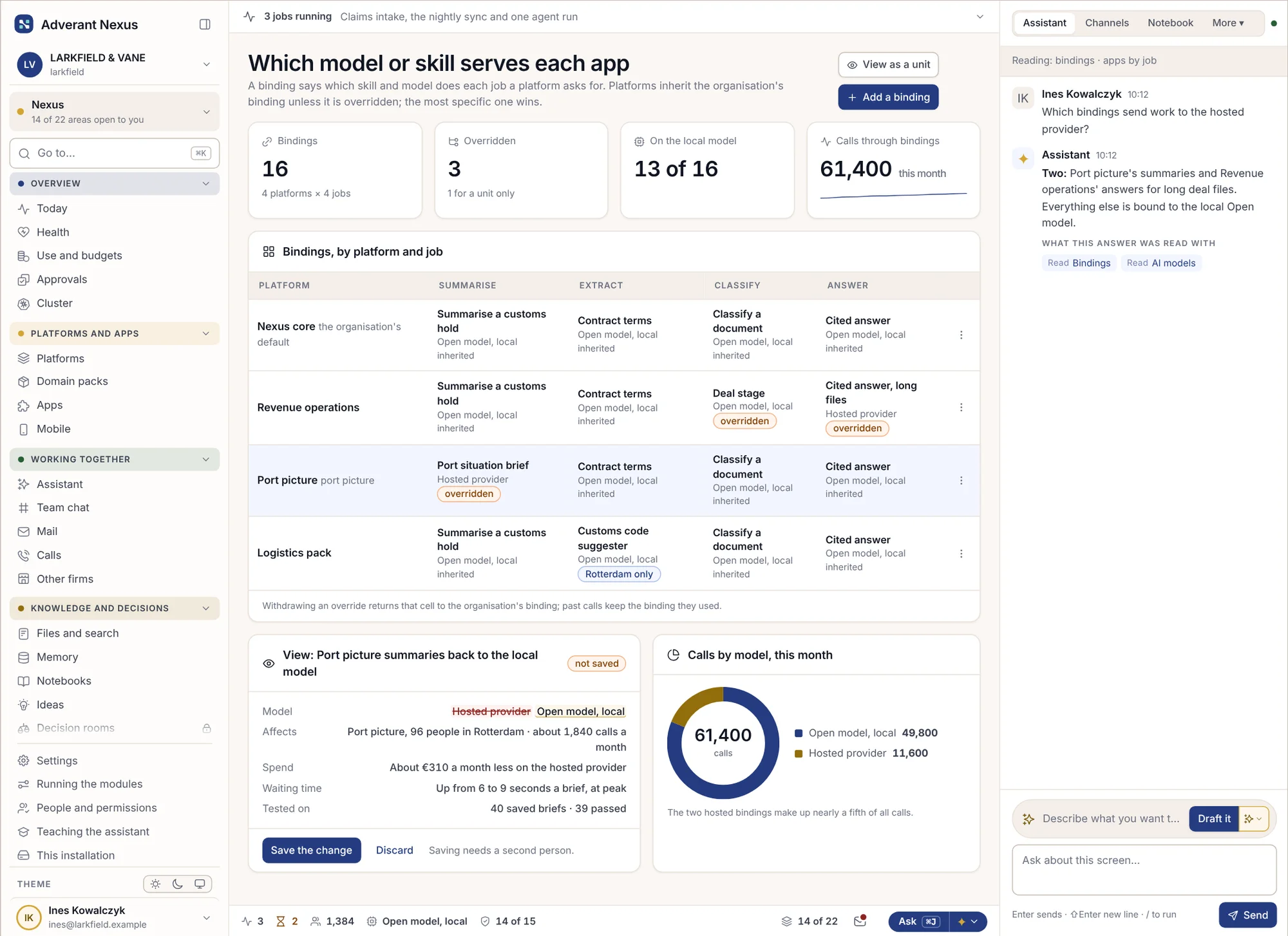
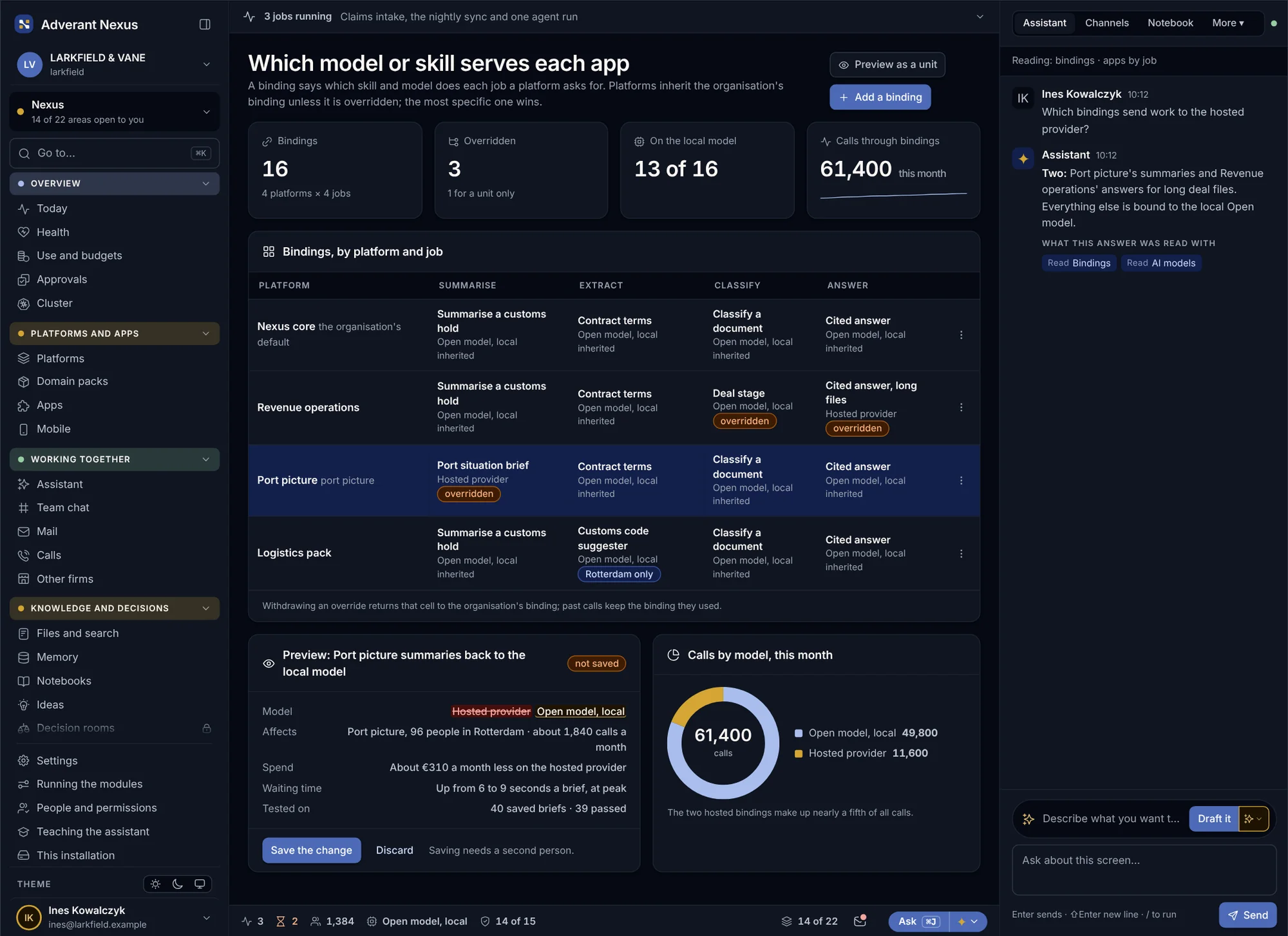
- Which model serves what
See which model or skill answers each app, and change it in one place.
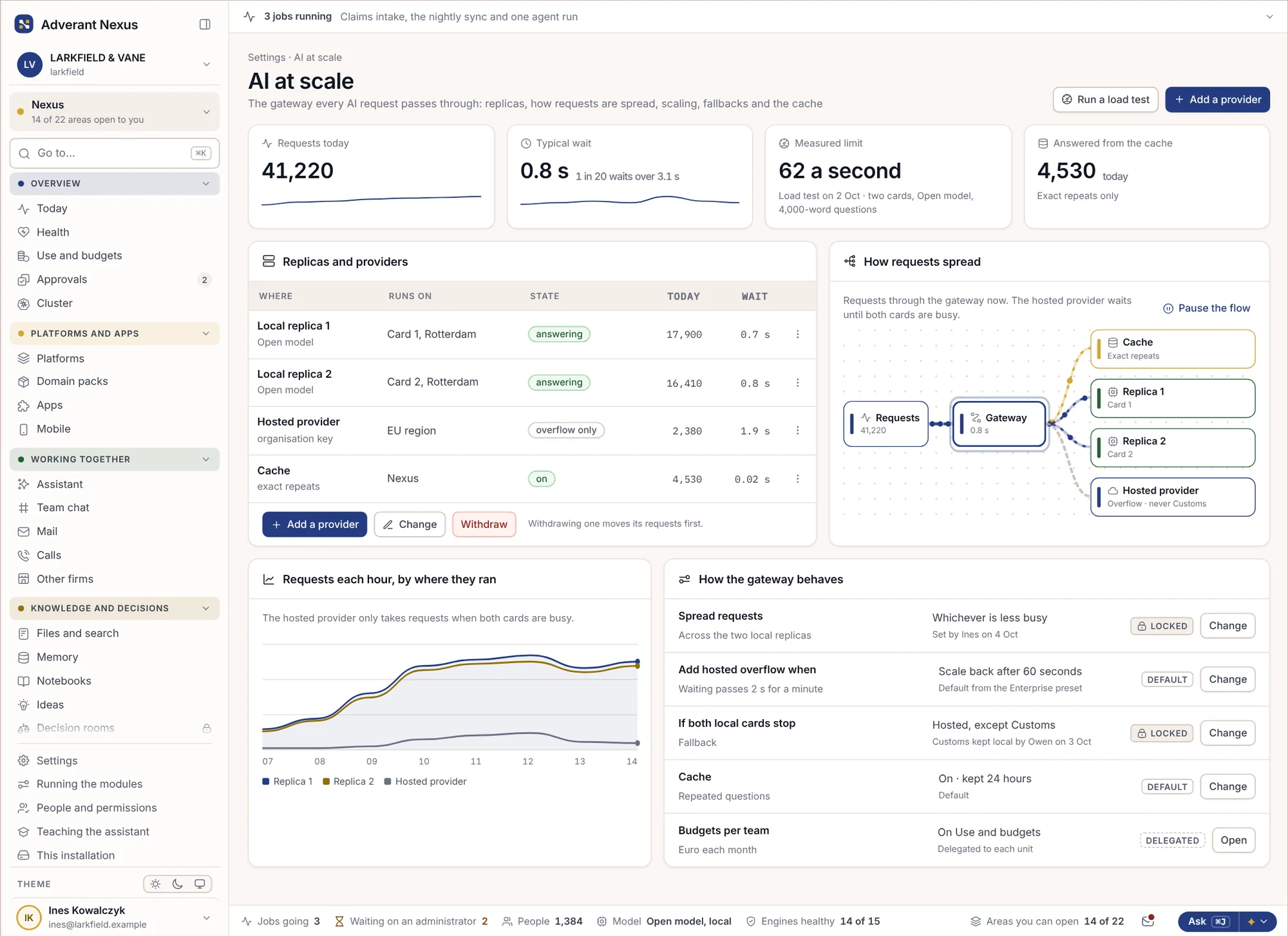
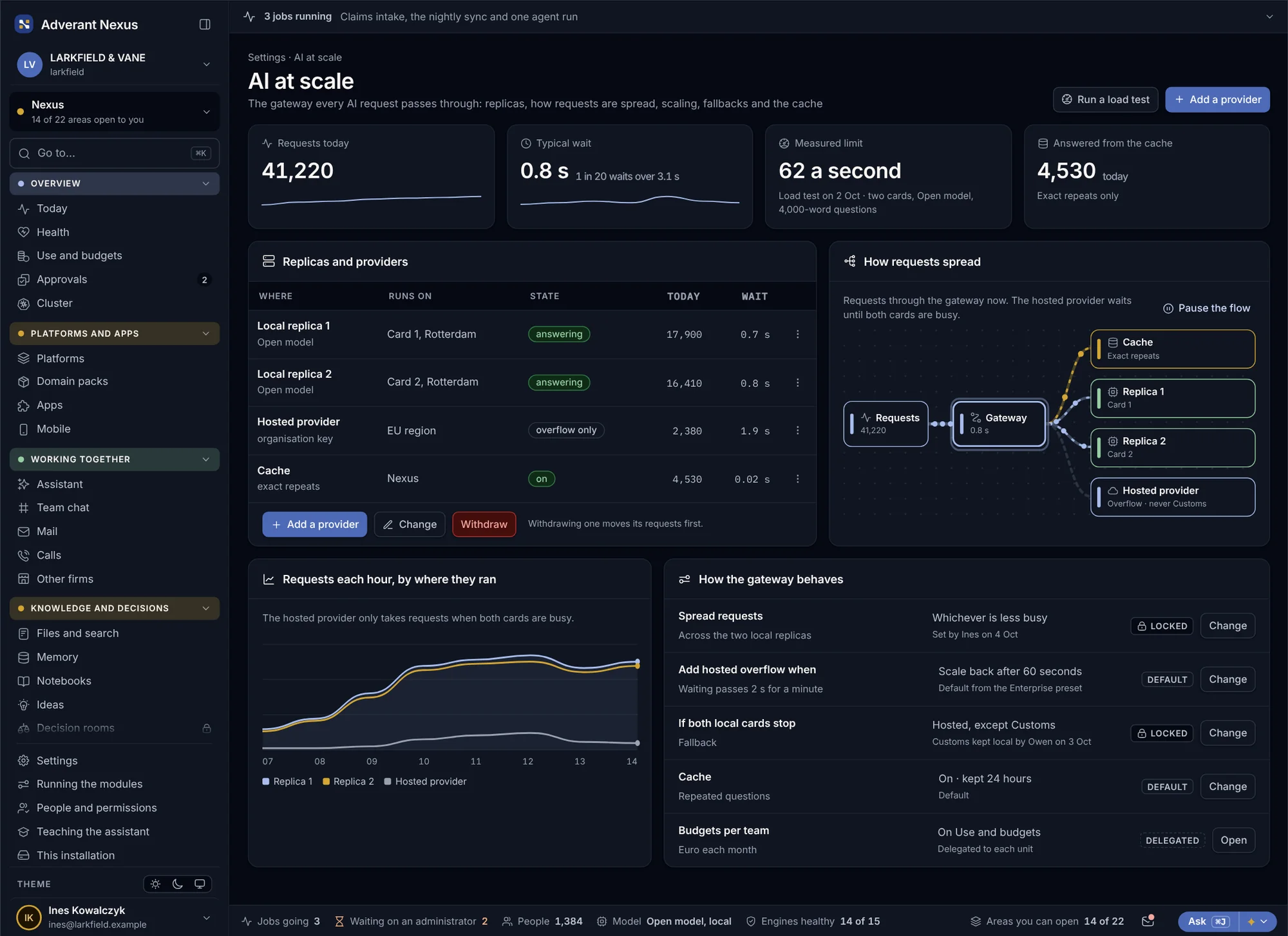
From one team to every unit.
As use grows, the switchboard spreads calls across copies of your models, caches what can be cached and keeps a fair share for each unit, so one busy team cannot slow everyone else.
What people ask about the switchboard.
Can we use our own models?
Yes. Connect models running on your own hardware or in your own cloud account. The switchboard treats them like any other model, and you can require them for some kinds of data.
Does Adverant see what our people ask?
No. The switchboard counts calls and measures time and cost. It does not store or read the content of a question or an answer.
What happens when a provider is down?
The next allowed model takes the call. If no allowed model is available, the call waits or fails with a clear reason. It never goes somewhere your rules forbid.
Can we set different rules for each unit?
Yes. Rules start at the organisation and can be narrowed for each unit, platform and kind of data. A unit can never be looser than the organisation.
Go deeper
See your models behind one switchboard.
Tell us which models you use today and where your data must stay. We will show the routing rules that fit.