

Inside the national cloud. Every decision explained.
The government pack helps case officers handle applications, permits and benefits. It reads registers and files inside your own jurisdiction, refuses any connection that would send data elsewhere, and drafts a plain-language reason for every decision a person makes.
- Name
- Ana Ferreira
- Signed in with
- National eID
- Household
- 2 adults, 1 child
- Consent
- Registers, for this claim only
- Income
- Below threshold
- Tenancy
- Registered, ends 30 Nov
- Other support
- None
- Source
- National registers, in-country
The household meets the income test1 and the tenancy ends within 60 days2. Rule 4.3 gives priority to families with children3.
The AI prepares the view. An officer decides, and the citizen is told why.
Faster casework. Decisions people understand.
Officers lose hours finding facts across registers and writing letters. The pack does the finding and the drafting. Officers keep the decision, and citizens get a reason they can act on.


Data stays in the country
Registers, files and models run inside the national cloud. A connector that would send data elsewhere is refused before it runs, and the refusal is logged.


Officers decide
The AI prepares the facts and a view. A named officer decides, and a second check is added where your rules ask for one.


Reasons a citizen can read
Each decision comes with a plain-language reason, the rules it rests on and how to appeal, drawn from the sealed record.
One pack. A lens for each role.
Officers, team leads, oversight staff and the people who answer appeals each get a lens on the same case.
- Case officer
The case, facts from the registers with their sources, the eligibility view and a drafted letter.
- Team lead
Cases waiting, second checks to sign, and patterns across the team's decisions.
- Oversight officer
AI decisions waiting for review, refusals of outside connections, and the AI register.
- Appeals officer
The sealed record of the original decision and everything it rested on.
- Citizen
Their own application, what was used, the decision and the reason, in their language.
From application to a reason the citizen reads.
The same path for every case, so every case leaves the same record.
Apply with eID
The citizen applies online with the national digital identity, and agrees which registers may be read for this case.
Gather from registers
Facts are read from national registers inside the country. Each keeps a link to where it came from.
Prepare a view
The pack tests the facts against the rules and drafts a view. Anything unusual is flagged for the officer.
Decide, explain, seal
An officer decides. The reason and how to appeal go to the citizen. The record is sealed.
Screens for public servants.
Sample screens with a fictional department. Product screens show the Nexus core the pack runs on.
Facts with their sources
Every fact in the case shows the register it came from and when it was read. Officers see what the AI concluded and why.
- Name
- Ana Ferreira
- Signed in with
- National eID
- Household
- 2 adults, 1 child
- Consent
- Registers, for this claim only
- Income
- Below threshold
- Tenancy
- Registered, ends 30 Nov
- Other support
- None
- Source
- National registers, in-country
The household meets the income test1 and the tenancy ends within 60 days2. Rule 4.3 gives priority to families with children3.
The AI prepares the view. An officer decides, and the citizen is told why.
A reason the citizen can use
The decision letter is drafted from the sealed record: the outcome, the facts used, the rule applied and how to appeal. Officers edit before it is sent.
We have approved your application for housing support of EUR 640 a month from 1 December.
Why: your household income is below the limit, your tenancy ends on 30 November, and you have a child living with you (rule 4.3).
What we used: your income from the revenue register and your tenancy from the tenancy register.
If you disagree: you can appeal within 30 days. A different officer will look at it.
Available in the citizen's chosen language.
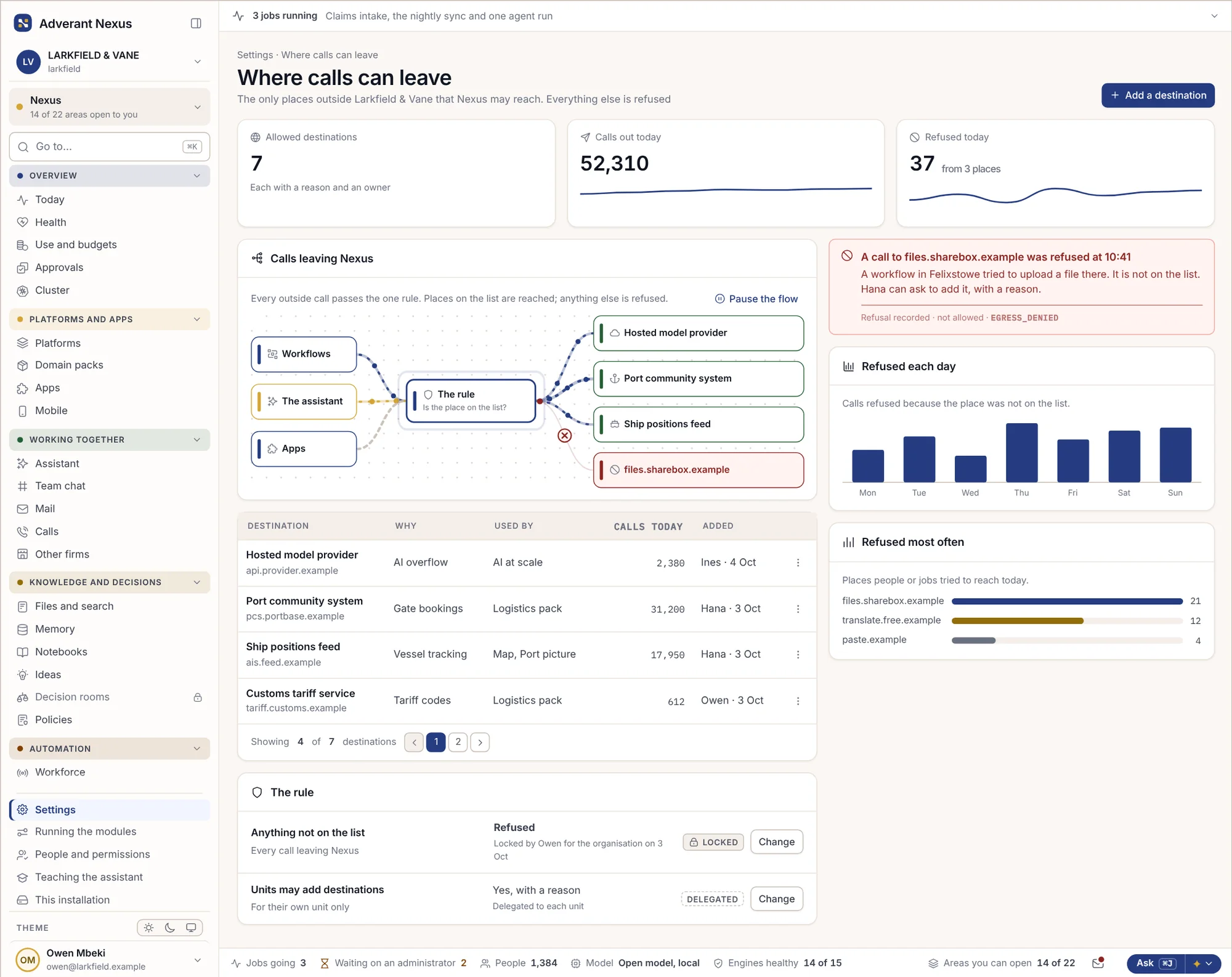
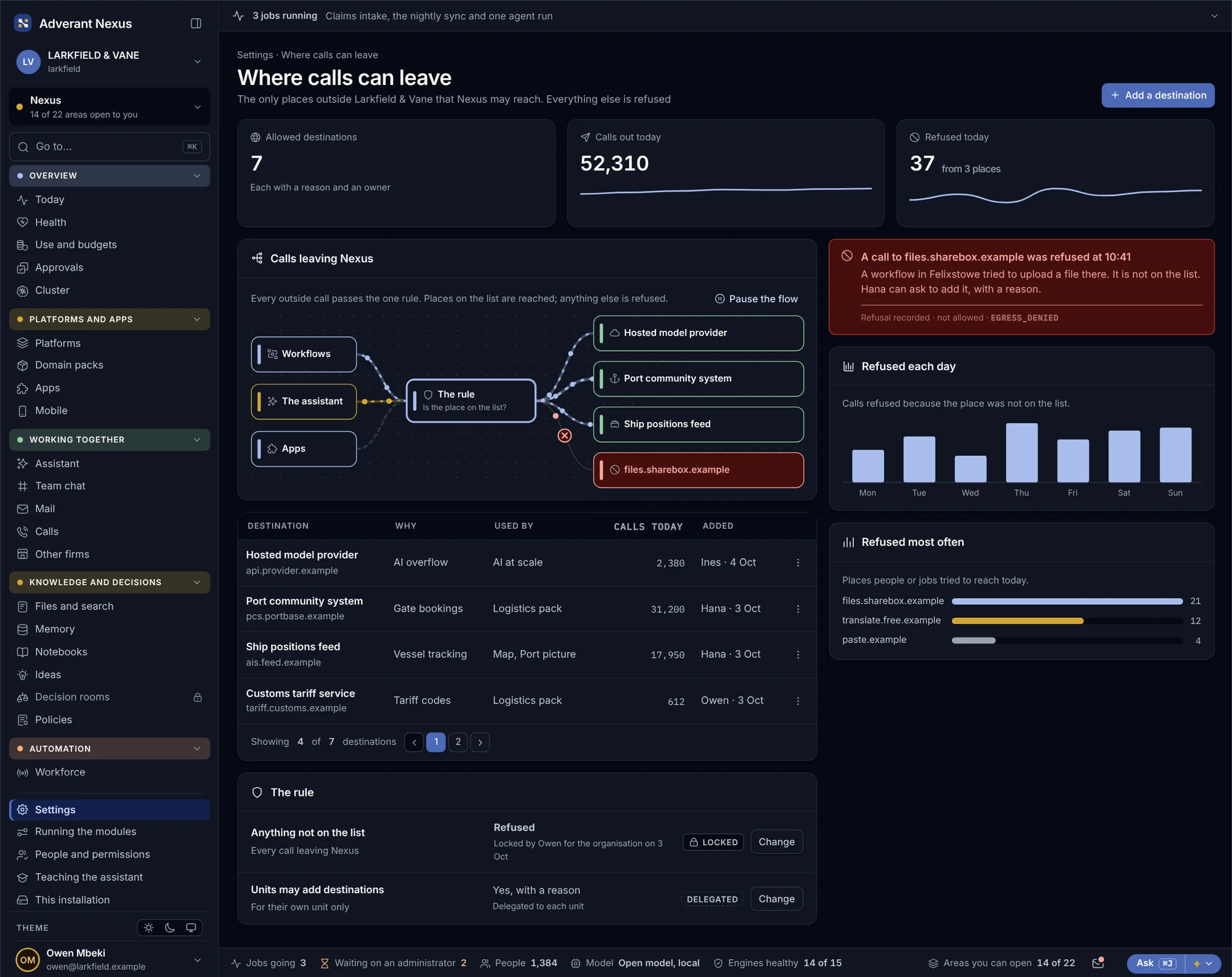
Outside calls refused by rule
Only destinations on the list may receive data. Anything else is refused before it leaves, and the refusal is shown to the people responsible.
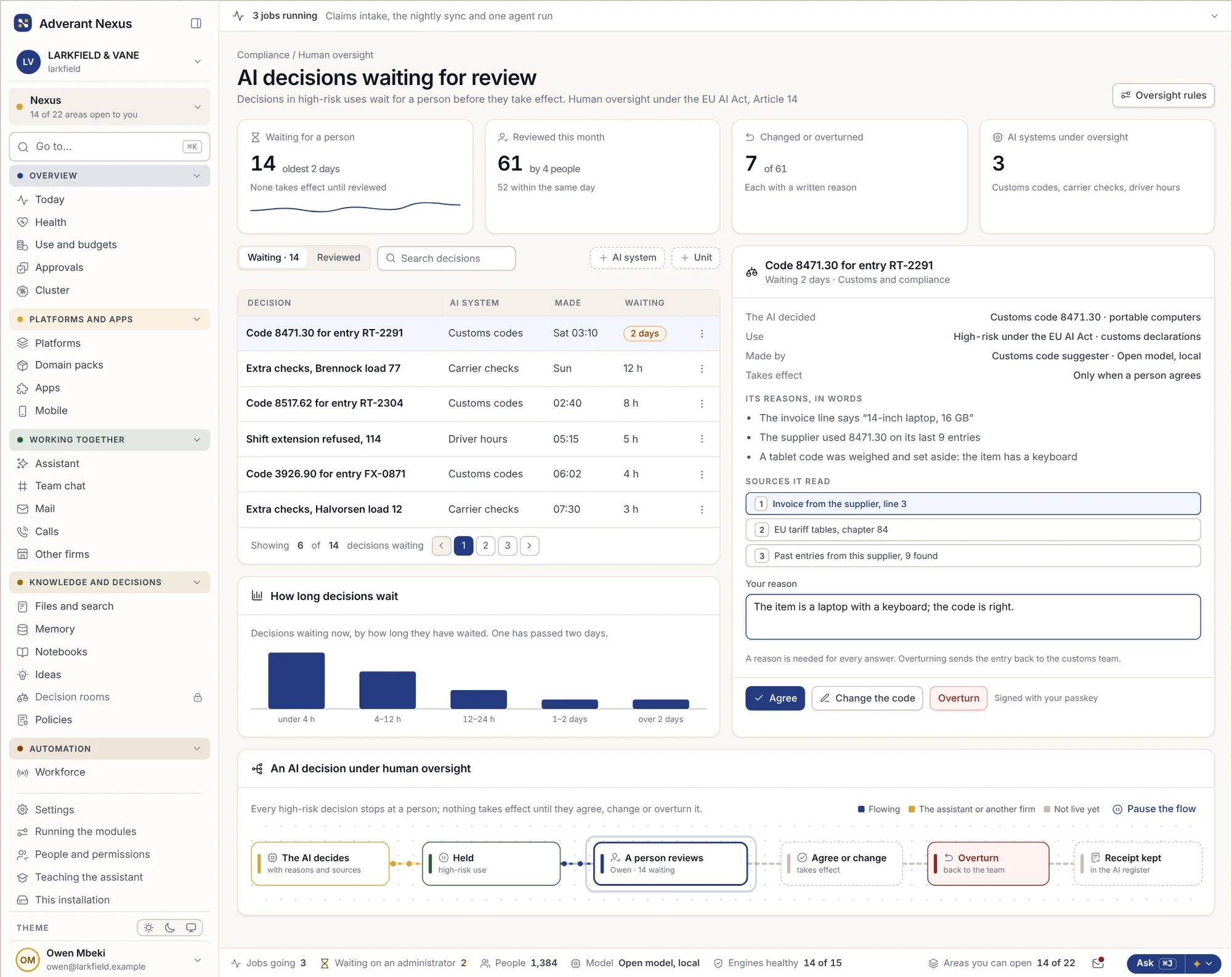
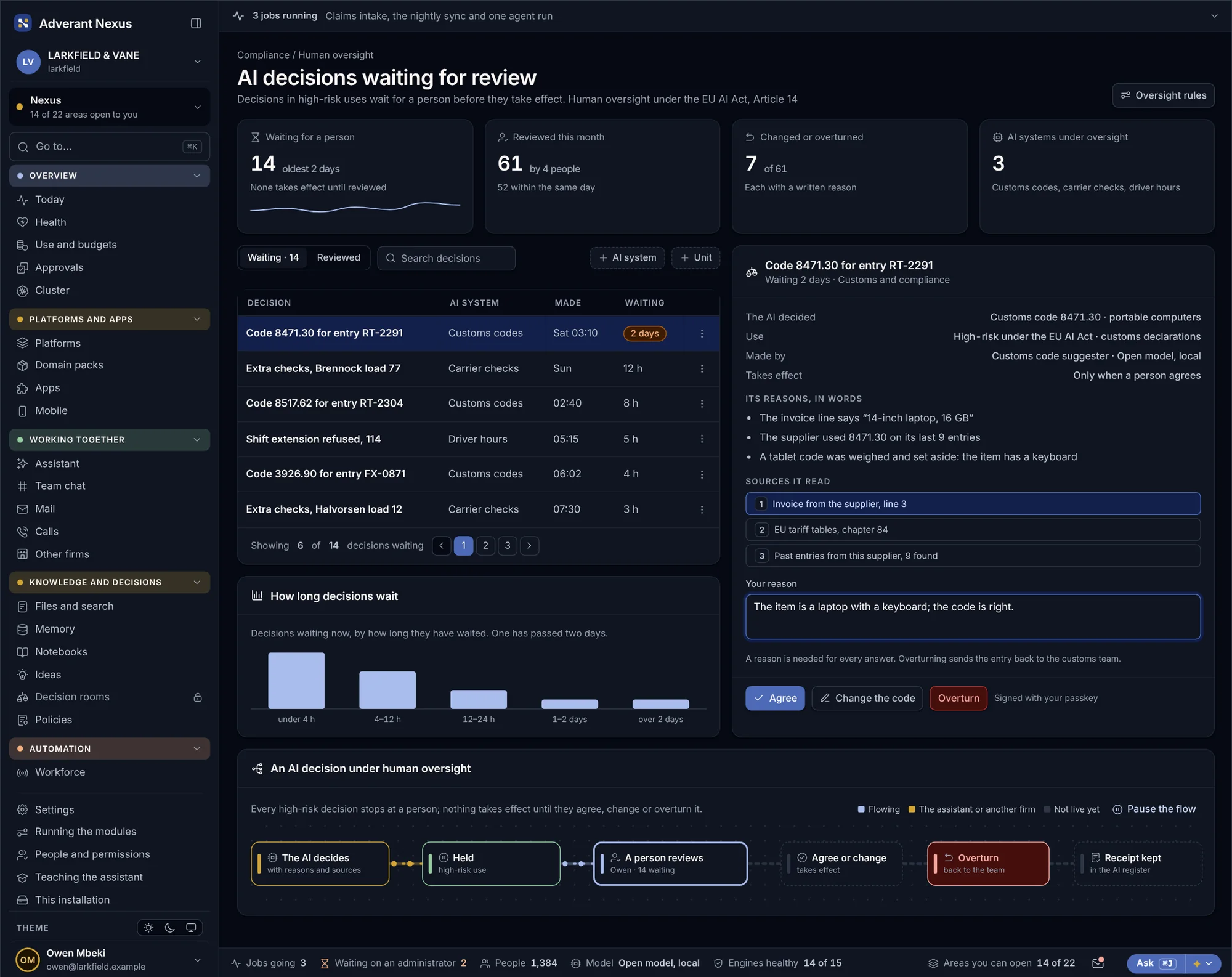
AI decisions waiting for review
High-risk AI outputs stop until a person reviews them. Reviewers see what the AI decided, why, and what it read, and can agree, change or overturn.
Each decision, sealed with its reasons.
When an officer decides, the decision, the facts, the rules and the letter are sealed together. An appeal starts from exactly what the first officer saw.
- Which officer decided, and who checked it
- Each fact with the register and time it was read
- What the AI suggested and whether the officer agreed
- The rule applied and the letter sent
- The time stamp, witnessed outside Adverant
An ombudsman, auditor or court can check the seal without an account. Try the seal check →
Decision · HS-2026-30881SampleMapped to the rules the public sector answers to.
Each sealed record is linked to the articles it helps answer, so oversight bodies get evidence, not promises.
- EU AI ActRegulation (EU) 2024/1689, Annex III 5(a)AI used to decide eligibility for public benefits and services is high-risk, with human oversight required.
- Rights impact assessmentEU AI Act, Article 27Public bodies must assess the effect on people's rights before using high-risk AI.
- Systems already in useEU AI Act, Article 111(2)High-risk AI already used by public authorities must comply by 2 August 2030.
- GDPRRegulation (EU) 2016/679Lawful basis, purpose limits, access and the citizen's rights.
- NIS2Directive (EU) 2022/2555Security and incident reporting for public administration bodies in scope.
- Interoperable Europe ActRegulation (EU) 2024/903Assessing and sharing interoperable public services across borders.
- European Digital IdentityRegulation (EU) 2024/1183 (eIDAS 2)Citizens signing in and sharing proofs with a digital identity wallet.
AI Act dates as amended by Regulation (EU) 2026/1744, the Digital Omnibus, published in the Official Journal on 24 July 2026. Not legal advice. Certification and legal opinions stay between you and your advisers.
Seven modules. One record per case.
Every module runs on the same Nexus core inside your own cloud. Open one to see what goes in, what comes out and who signs off.
Citizen intake
Takes applications online with the national eID and records exactly what the citizen agreed to share.
- Goes in
- Forms, eID, consent
- Comes out
- A case with its consent record
- Signs off
- Nobody: it only opens the case
Register reader
Reads national registers inside the country and keeps the time and source of each fact.
- Goes in
- Registers you connect
- Comes out
- Facts with sources
- Signs off
- Nobody: it only reads
Rules engine
Holds your scheme rules in plain words and tests each case against them.
- Goes in
- Facts, scheme rules
- Comes out
- An eligibility view with the rules that decide it
- Signs off
- Case officer
Second check
Adds a second officer where the amount, risk or your rules require it.
- Goes in
- Decisions above a threshold
- Comes out
- A checked decision
- Signs off
- Team lead
Letters
Drafts the decision letter from the sealed record, in the citizen's language.
- Goes in
- The decision and its reasons
- Comes out
- A plain-language letter with appeal rights
- Signs off
- Case officer
Appeals
Opens an appeal on the exact record the first officer saw, for a different officer.
- Goes in
- An appeal request
- Comes out
- A new decision linked to the first
- Signs off
- Appeals officer
Oversight and register
Lists every AI use, its risk class and its impact assessment, and queues outputs for review.
- Goes in
- AI uses, outputs, refusals
- Comes out
- Evidence for the AI Act and audits
- Signs off
- Oversight officer
Runs inside your jurisdiction.
Governments run the pack in a national or sovereign cloud, or in their own data centres. Some services run fully offline.


A sovereign cloud
In your country or the EU, in its own private space.
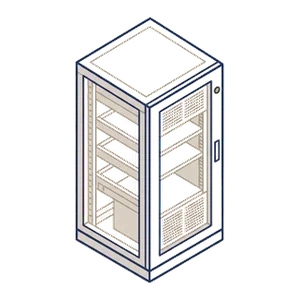

Your data centre
On the government's own Kubernetes.
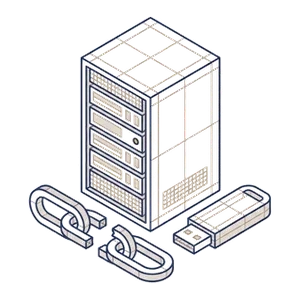

Fully offline
For classified or sensitive services with no outside connection.

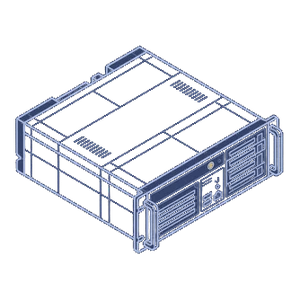
An appliance
For agencies and local offices that need their own box.
Questions public bodies ask.
Does the AI decide who gets support?
No. It prepares facts and a view. An officer decides, and the record shows whether they agreed with the view or not.
Can data leave the country?
Only to destinations you allow. Everything else is refused before it leaves, and each refusal is logged for the people responsible.
How are citizens told about AI?
Letters say when AI helped prepare a decision, what it did, and that a person decided. Citizens can ask for the record behind their decision.
Does it help with the rights impact assessment?
Yes. The pack keeps the AI register, the intended use, the people affected and the oversight in place, which is most of what the assessment needs.
Can it run in our own data centre?
Yes. Most governments run it in a national cloud or their own data centre. It can also run fully offline.
Which languages does it support?
Letters and screens can be in each citizen's language. Officers see the original and the translation.
Other packs
See the government pack on one of your schemes.
Bring a scheme's rules and a few anonymised cases. We will show you how they run, inside your own cloud.